
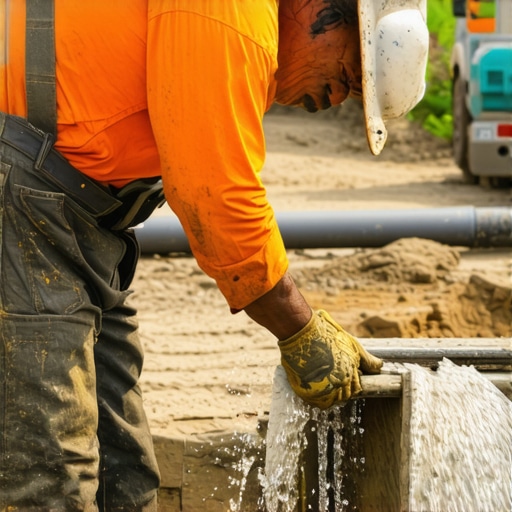
Fixing 2026 Irrigation Pipe Bursts with Slip Couplers
The sound of a main line irrigation failure is unmistakable. It is not a gentle trickle; it is a muffled, underground thud followed by the immediate loss of pressure across the zone. By the time you notice the water bubbling up through your high-tiller density turfgrass, the damage to the sub-grade soil is already done. In 2026, we are seeing a massive uptick in irrigation failures as infrastructure from the early 2000s housing boom hits its 25-year fatigue limit. These aren’t simple leaks; they are catastrophic material failures caused by decades of hydrostatic pressure, thermal expansion, and improper soil compaction.
The Autopsy of a Burst: Why 2026 is the Year of Irrigation Failure
Irrigation pipe bursts occur primarily due to material fatigue, excessive hydraulic shock (water hammer), and the settling of sub-grade soils which places localized stress on rigid PVC joints. In the 2026 season, many homeowners are discovering that previous sod install projects skipped the critical step of checking pipe depth, leading to frost-heave damage and eventual rupture. I always drill into my new crew members: if you don’t fix the soil grading first, every pipe you bury is under a ticking clock of hydrostatic pressure and shifting weight. Last week, I had to pull a junior tech off a site because he tried to bridge a gap with a standard coupling instead of accounting for the linear expansion of the pipe. If that pipe can’t move, it will shatter. It is that simple. Don’t skip the engineering for the sake of speed. We aren’t just mending a hose; we are restoring a pressurized hydraulic system. This requires precision, not just glue.
“Water hammer, or hydraulic shock, can generate pressures exceeding 300 PSI in residential systems, far beyond the static rating of standard Class 200 PVC.” – Texas A&M AgriLife Extension
Anatomy of the Slip Coupler: The Professional’s Secret
A slip coupler, or repair coupling, is a specialized PVC fitting designed without an internal center stop, allowing the sleeve to slide freely over the pipe to bridge a gap without the need for pipe bending or multiple elbows. Unlike traditional couplings that require you to pry the pipe upward—risking further cracks—the slip coupler allows for a telescopic repair. This is essential for 1-inch and 1.25-inch main lines where the pipe has no ‘give.’ When you are dealing with a burst in a tight trench, the slip coupler is the only tool that ensures a zero-stress joint. If you use a standard coupling and force the pipe into the socket, you create a point-source stressor. Within two seasons, that joint will shear. Use the right hardware.
| Repair Component | Application Method | Pressure Rating (PSI) | Longevity Factor |
|---|---|---|---|
| Standard Coupling | Solvent Weld w/ Pipe Flex | 200-280 | High Stress / Low |
| Slip Coupler (Telescopic) | Sliding Solvent Weld | 160-200 | Zero Stress / High |
| Expansion Joint | Gasketed / Mechanical | 150 | Thermal Movement / Med |
| Compression Fitting | Mechanical Nut | Under 100 | Emergency Only / Poor |
How to Install a Slip Coupler Without Flooding the Trench
To install a slip coupler, you must excavate a minimum of three feet of pipe, cut out the damaged section squarely, deburr the edges, and slide the fitting entirely onto one side before aligning and sliding it back over the gap. The technical precision here matters. Most DIYers fail because they don’t use a primer or they use too much solvent. Excessive solvent welds actually eat into the PVC wall, reducing the 1-inch pipe’s structural integrity by up to 30%. You need a clean, square cut. Use a ratcheting pipe cutter, not a hacksaw. A hacksaw leaves burrs that create turbulence and cavitation inside the pipe. Cavitation leads to vibration. Vibration leads to another burst.
- Step 1: Shut off the main backflow preventer and drain the system to 0 PSI.
- Step 2: Excavate a wide work area; yard cleanup is easier when you have room to move without knocking dirt into the open pipe.
- Step 3: Measure the gap. A slip coupler requires the gap to be slightly shorter than the fitting itself.
- Step 4: Apply purple primer to both the pipe and the inside of the slip coupler.
- Step 5: Apply medium-bodied PVC cement. You have roughly 15 seconds to slide the fitting into place.
- Step 6: Hold for 30 seconds. Do not let go. The tapered sockets will push the pipe out if you don’t hold it.
How much does it cost to fix a main line irrigation leak?
A professional repair for a main line irrigation burst typically costs between $250 and $600, depending on the depth of the pipe and whether a sod install is required to restore the landscape. The parts themselves are inexpensive—usually under $20—but the labor involves precise excavation and pressure testing to ensure the integrity of the solvent weld. Do not hire a ‘handyman’ for this. If they don’t understand PSI ratings, they will cost you thousands in water bills later.
Addressing the Root Cause: Soil Grading and Hydrostatic Stress
Soil grading and proper compaction are the primary defenses against irrigation failure, as they prevent water from pooling around fittings and reduce the impact of freeze-thaw cycles on buried assets. If your yard has poor drainage, the soil remains saturated. Saturated soil has lower shear strength. When the ground shifts, it takes the pipe with it. This is why a landscaping project that ignores drainage is a liability. You must ensure the 811-marked lines are buried at least 12 inches deep—ideally 18 inches in colder climates—to stay below the frost line. If the pipe is shallow, no coupler in the world will save it from the 2027 freeze.
“The integrity of a subsurface irrigation network depends entirely on the stability of the surrounding soil matrix and the elimination of point-source stress on fittings.” – Irrigation Association Design Standards