
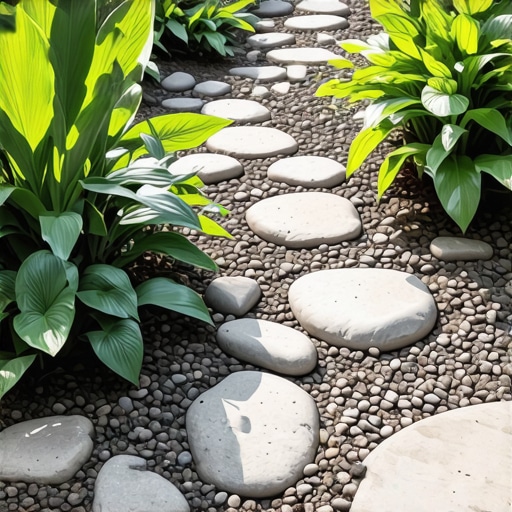
Foundational Requirements for Side Yard Drainage and Soil Stability
A successful side yard design featuring river rock and hostas requires a minimum 2% slope away from the foundation and a strategic 4-inch excavation to accommodate non-woven geotextile fabric and stone layers. Proper grading prevents hydrostatic pressure from compromising basement walls while establishing a stable, moisture-retentive environment for shade-tolerant perennials. It is a technical build, not a weekend cosmetic fix.
I always drill into my new crew members: if you don’t fix the soil grading first, every plant you put in the ground is just expensive compost. I have walked onto too many jobsites where the homeowner spent thousands on nursery stock only to have it drown in a literal swamp of their own making. They see the river rock and think it’s just a decoration. It’s not. In a side yard, that rock is a functional component of your irrigation and drainage system. Without a proper pitch, you are just building a very expensive pond against your rim joists. We start by stripping the sod and measuring the fall from the foundation to the property line. If we don’t see a quarter-inch drop per foot, we don’t lay a single stone. We dig. We grade. We compact. Only then do we talk about the plants.
“A retaining wall doesn’t fail because of the stone; it fails because of the water trapped behind it. The same logic applies to side yard rock beds—drainage is the invisible priority.” – Hardscape Engineering Axiom
How do I prepare a side yard for river rock and landscaping?
Preparation begins with a thorough yard cleanup that involves stripping all existing vegetation and excavating the soil to a depth of 4 to 6 inches. You must identify utility lines via 811 before digging to avoid severing irrigation pipes or electrical conduits. Once the area is cleared, the subgrade must be compacted using a plate tamper to prevent future settling. This isn’t optional. If the ground is soft, your rocks will migrate into the mud within two seasons. We use a heavy-duty, 4-ounce non-woven fabric. Do not buy the plastic-coated junk from big-box stores; it doesn’t breathe, and it creates a anaerobic environment that rots hosta roots. You need a fabric that allows water to percolate through to the water table while keeping the fines (soil particles) from migrating up into your clean river stone.
| Material Type | Recommended Depth | Purpose |
|---|---|---|
| 1″ – 3″ River Rock | 3 – 4 Inches | Drainage and Aesthetics |
| Non-Woven Geotextile | 1 Layer | Soil/Stone Separation |
| Modified Gravel (Base) | 2 Inches | High-Traffic Stability |
| Topsoil/Compost Mix | Depth of Root Ball | Hosta Nutrient Source |
Side Yard Preparation Checklist
- Mark all irrigation heads and valve boxes.
- Excavate to a minimum 4-inch depth.
- Check slope with a transit or laser level (2% minimum).
- Install 4-ounce non-woven geotextile fabric with 6-inch overlaps.
- Install edging (steel or heavy-duty poly) to contain the stone.
- Auger planting holes twice the width of the hosta root ball.
Planting Hostas in Rock Beds: Avoiding the Heat Sink Effect
Placing hostas in a river rock bed requires understanding the thermal mass of the stone, which can increase soil temperatures and lead to desiccation. To mitigate this, we use a larger 3-to-5 inch stone size which allows for better airflow and lower surface contact than pea gravel. We also ensure that each hosta is planted with a generous 12-inch diameter ring of hardwood mulch immediately surrounding the crown. This mulch acts as a buffer, preventing the hot rocks from touching the stems and leaves. When selecting varieties for a 2026 design, look for those with high turgidity and thick, waxy cuticles like Hosta sieboldiana ‘Elegans’. These are more resilient to the reflected heat and are less prone to slug damage, which is common in damp side yards.
How much river rock do I need for a 100 square foot side yard?
For a standard coverage depth of 3 inches, you will need approximately 1 cubic yard or 1.3 tons of river rock per 100 square feet. Calculating bulk density is critical here; larger stones have more void space but require more depth to hide the underlying fabric. Do not skimp. If you spread it too thin, the geotextile will show through, and UV rays will degrade the fabric within months. We recommend a 50/50 mix of 1-3 inch and 3-5 inch stones to create a natural,