
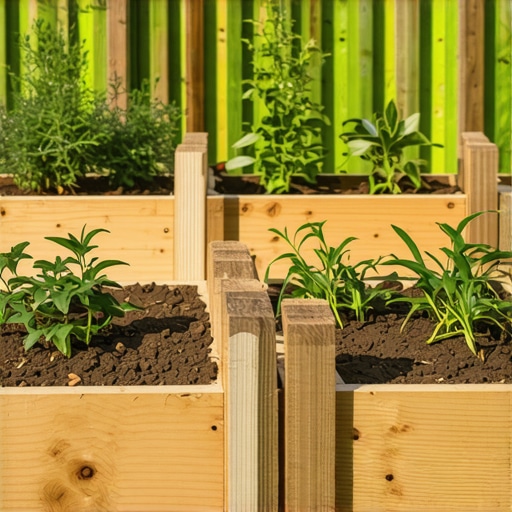
The Foundation of Longevity in Garden Design
Building 2026 raised beds with cedar 4×4 posts requires a focus on structural integrity and rot resistance to ensure a lifespan exceeding fifteen years in high-moisture environments. By utilizing Eastern Red or Western Red Cedar, you leverage natural thujaplicins—organic compounds that repel decay-causing fungi and wood-boring insects without the chemical leaching found in pressure-treated lumber.
I always drill into my new crew members: if you don’t fix the soil grading first, every plant you put in the ground is just expensive compost. I’ve seen guys throw together a bed using 2×4 pine and wonder why the structure bows and the soil turns anaerobic within two seasons. When we build, we build for the next decade. We start by stripping the site. If you are integrating this into a larger project, like a fresh sod install or a full yard cleanup, you have to treat the raised bed as a structural anchor. I’ve walked onto too many jobs where a homeowner tried to ‘eyeball’ a level on a 12-foot run of timber. By the time the soil settles, the whole bed looks like a sinking ship. We use laser levels and transit markers because gravity doesn’t negotiate.
The Engineering Physics of Cedar 4×4 Posts
Cedar 4×4 posts serve as the structural ‘skeleton’ of a raised bed, providing the necessary shear strength to resist the lateral hydrostatic pressure exerted by thousands of pounds of wet soil. These posts must be notched or reinforced with 5-inch GRK structural screws to prevent the corners from blowing out under the weight of saturated organic matter during spring thaws.
“Raised bed longevity is determined not by the thickness of the walls, but by the drainage efficiency at the soil-to-timber interface.” – Agricultural Engineering Handbook
When you’re dealing with a high-end landscaping project, you can’t cut corners on material dimensions. A 4×4 post provides the surface area needed for a secure ‘lap joint’ or a ‘butt-and-pass’ corner. This isn’t just about aesthetics; it’s about friction. The more surface area the fastener bites into, the less likely the wood is to warp as it cycles through wet and dry phases. In our 2026 builds, we are moving toward deeper post-setting, often driving the 4x4s twelve inches into the native subsoil and backfilling with 3/4-inch crushed stone to prevent moisture trap at the base. This acts as a mini-sump for the bed. If your yard has drainage issues, this is the time to address them before you lay a single piece of sod.
How deep should cedar 4×4 posts be buried for a raised bed?
For a standard 18-inch high bed, cedar 4×4 posts should be buried at least 8 to 12 inches into the ground to provide lateral stability. This prevents the bed from shifting or ‘walking’ over time due to frost heave or soil expansion, especially in climates with heavy clay or significant freeze-thaw cycles.
| Material Choice | Lifespan (Years) | Resistance to Rot | Chemical Leaching |
|---|---|---|---|
| Untreated Pine | 2-4 | Very Low | None |
| Pressure Treated (ACQ) | 10-15 | High | Copper/Chemicals |
| Western Red Cedar | 15-25 | Very High | None (Natural) |
| Composite Lumber | 20+ | Extreme | Microplastics |
Integrating Smart Irrigation and Soil Management
Modern raised beds are not passive boxes; they are active biological reactors that require precise irrigation management to prevent the ‘wicking’ effect where cedar draws moisture out of the root zone. We install dedicated 1/2-inch poly-tubing lines with pressure-compensating emitters directly into the frame to ensure deep, consistent saturation that reaches the lower 12 inches of the soil profile.
Too many people treat irrigation as an afterthought. They drag a hose over the side of a beautiful cedar frame, eventually rotting the top cap and creating uneven moisture pockets. In 2026, we integrate the lines through the 4×4 corner posts. This keeps the lines protected from UV degradation and string trimmers. It also allows for a cleaner look when we finish the surrounding area with a professional sod install. You don’t want black tubes snaking across your high-traffic turf areas. It’s messy and lazy. Use a manifold. Sub-surface lines are the only way to go for professional results.
What is the lifespan of a cedar raised bed in 2026?
A properly constructed cedar raised bed using 4×4 posts and 2×6 or 2×8 wall planks will typically last 15 to 20 years. Longevity is increased by using stainless steel fasteners, ensuring proper soil-to-wood drainage, and avoiding the use of plastic liners that can trap anaerobic moisture against the wood fibers.
- Site Prep: Clear all debris and perform a thorough yard cleanup to expose the native soil.
- Excavation: Dig post holes 12 inches deep at each corner and at 4-foot intervals for beds longer than 8 feet.
- Leveling: Use a transit or laser level to ensure the base course is perfectly horizontal.
- Fastening: Use 5-inch structural lag screws; do not use standard deck screws for 4×4 joints.
- Drainage: Add a 2-inch layer of washed gravel at the bottom of the post holes.
- Backfill: Use a high-quality loam/compost mix, avoiding cheap ‘filler’ dirt from big-box stores.
“Soil compaction within a raised bed can reduce oxygen availability by 60%, leading to root rot regardless of the timber quality used.” – Penn State Extension: Soil Science
The Ground-Up Build: Execution Strategy
Start with the corners. If your corners aren’t square, the whole project is a failure. We use a 3-4-5 triangle method to ensure every 90-degree angle is true. Once the 4×4 posts are set, we start the first course of cedar planks. This first course is the most important. It must be partially subterranean—roughly 2 inches below the finished grade of your landscaping or mulch line. This prevents soil from washing out from under the bed. It’s a common ‘hack’ move to just set the bed on top of the grass. Don’t do it. You’ll have weeds invading from underneath and your soil will migrate every time it rains. Dig a trench. It sucks, but it’s the right way to do it.
After the frame is up, we look at the ‘floor’ of the bed. If you have gophers or moles, this is where you staple down 1/2-inch hardware cloth. If you skip this, your raised bed becomes a subterranean buffet. Finally, consider the aesthetic transition. A raised bed shouldn’t look like an island. Integrate it into your sod install by cutting a clean spade edge around the perimeter. This creates a ‘V’ trench that stops grass rhizomes from jumping into the bed and provides a professional finish that says a pro was here, not a weekend warrior with a credit card and a dream. Keep your tools sharp. Keep your levels true. Build it once, and build it to last.