
The Hardscape Autopsy: Why Mapping Before You Dig Is Non-Negotiable
I recently got called out to tear up a $30,000 bluestone patio that was sinking in the northwest corner because the previous contractor was a hack. He didn’t just fail on the compacted gravel base; he buried three active irrigation lateral lines directly under the hearth with zero access points. Within two years, a hairline fracture in a cheap Class 200 PVC pipe turned the subgrade into a soup of mud. The hydrostatic pressure had nowhere to go, so it heaved the stone. I spent four days excavating what should have been a simple repair. This is the cost of laziness. If you don’t map your 2026 sprinkler zones with precision today, you are essentially burying a time bomb under your landscaping or your sod install. It will leak. It will fail. And you will pay me or someone like me triple to fix it.
The Critical Role of Zone Mapping in Irrigation Design
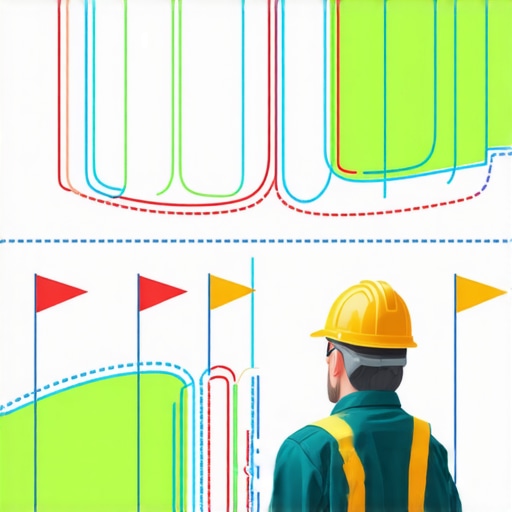
Mapping 2026 sprinkler zones involves the systematic identification of subsurface hydraulic lines using color-coded markers to ensure 100% distribution uniformity and prevent future utility strikes. By utilizing the colored flag fix, contractors and homeowners can visualize the hydraulic flow before yard cleanup or sod install begins, ensuring that every square inch of turf receives matched precipitation. Failure to do this leads to dry spots, fungal outbreaks, and wasted water.
“Standard pipe velocity should not exceed 5 feet per second to prevent water hammer and premature fitting failure.” – Irrigation Association Design Standards
How many sprinkler heads per zone can my pump handle?
To determine your head capacity, you must calculate your total Gallons Per Minute (GPM) available at the service meter or pump, then divide that by the GPM requirement of your chosen nozzles. For instance, if you have 10 GPM available and use 1.5 GPM rotors, you can safely run 6 heads per zone, leaving a 10% safety buffer for hydrostatic pressure drops. Don’t skip the math. It’s the difference between a system that works and a system that just dribbles.
The Colored Flag Protocol: A Scientific Breakdown
We don’t just throw flags in the dirt because they look pretty. We use a standardized system to prevent catastrophic errors during irrigation installs. In my crews, we use the following matrix for every 2026 project:
- Red Flags: High-volume rotor zones for large turf areas.
- Blue Flags: Fixed spray zones for tight corners and garden beds.
- Green Flags: Sub-surface drip irrigation for foundation plantings.
- Yellow Flags: Existing utilities (Call 811 before you touch a shovel).
- White Flags: Proposed excavation limits for yard cleanup or new bed edges.
Mapping isn’t just about where the water goes. It is about where the water shouldn’t go. You don’t want 45 PSI hitting your siding. You don’t want water pooling against the foundation. Every flag represents a calculated decision on nozzle trajectory and radius. Use them.
Soil Texture and Infiltration Rates: The Physics of Water
You can have the best irrigation system in the world, but if you have heavy clay soil and you run your zones for 30 minutes straight, you’re just creating a swamp. The water won’t soak in; it will run off. This is where sod install fails most often. You need to understand your soil infiltration rate to set your 2026 controller properly.
| Soil Type | Infiltration Rate (Inches/Hour) | Best Irrigation Method |
|---|---|---|
| Heavy Clay | 0.1 – 0.2 | Cycle and Soak (Short bursts) |
| Loam | 0.5 – 1.0 | Standard Rotors |
| Sandy Soil | 1.5 – 2.0 | Drip or High-Volume Sprays |
If you’re working in clay, you have to force the roots to chase the moisture. Deep, infrequent watering is the only way to build a resilient lawn. Shallow watering creates weak grass. Weak grass dies in July. It’s that simple.
What do the different colored flags mean in landscaping?
In landscaping, colored flags indicate the location of buried assets or proposed changes; yellow typically marks gas or power lines, while blue marks potable water or irrigation zones. Following this colored flag fix prevents you from severing a $5,000 fiber optic line while trying to install a $20 sprinkler head. Always verify with local 811 services, as color codes can vary slightly by municipality, though the APWA standards are generally universal.
The 2026 Irrigation Audit Checklist
Before you lay a single piece of sod, you must perform a full system audit. A yard cleanup isn’t finished until the hydraulics are verified. Follow this checklist to the letter:
- Static Pressure Check: Ensure source pressure is between 40-70 PSI.
- Head-to-Head Coverage: Ensure the spray from one head hits the base of the next. No gaps.
- Swing Pipe Installation: Use flexible funny pipe for every head to prevent breakage from heavy mower traffic.
- Nozzle Clean-out: Flush all lateral lines before installing the final nozzles. Construction debris will clog them instantly.
- Controller Programming: Set specific run times based on the soil table above.
“Irrigation efficiency is not just about the hardware; it’s about the distribution uniformity across varying soil profiles.” – Texas A&M AgriLife Extension
The Engineering Behind the Base Layer
When we talk about landscaping and sod install, people forget about the subgrade. If you just had a pool put in or a major yard cleanup, your soil is likely compacted. Compacted soil has no pore space. No pore space means no oxygen for the roots and zero water penetration. You need to core aerate or mechanically rip the soil to at least 6 inches deep before mapping your zones and laying sod. If the tamper bounces off the ground like it’s hitting concrete, you aren’t ready for grass. You’re just laying green carpet on a parking lot. It will rot.
The Long-Term Maintenance of Your Map
Once the flags are pulled and the grass is down, that map needs to live in your garage. Take photos of the flags before they are removed. Use fixed landmarks like the corner of the house or a fence post to triangulate the location of your valve boxes. In three years, when you want to plant a tree, you’ll thank me when you don’t put a spade through a 1-inch main line. Precision is the mark of a professional. Hacks guess; we measure.