
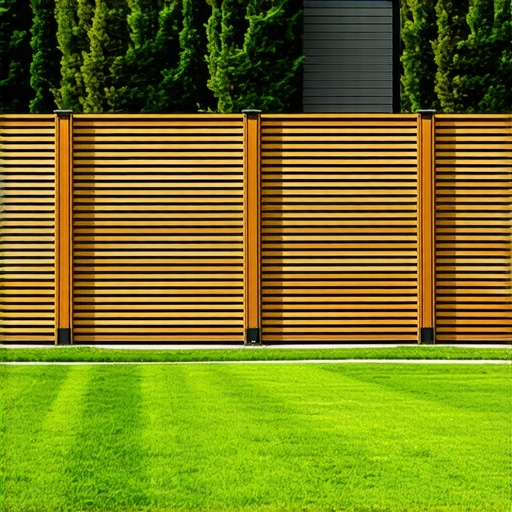
The Critical Failure of Modern Fencing Aesthetics
A horizontal cedar slat fence serves as a structural barrier that requires precision engineering, specifically focusing on clear-grade Western Red Cedar and reinforced post footings to withstand lateral wind loads. Unlike vertical fences, horizontal designs act as a sail, catching wind and putting immense pressure on the 6×6 timber or steel posts. To ensure longevity, the installation must account for wood expansion and hydrostatic pressure at the ground level.
I recently got called out to tear up a $30,000 patio and fence project that was sinking and leaning after just two seasons. The previous contractor had used 4×4 pine posts and set them in concrete reaching the surface. Because they didn’t understand the local clay soil drainage, water stayed trapped against the wood. The posts rotted at the exact point they met the concrete. The horizontal slats, beautiful as they were, had warped into bows because they were face-nailed with cheap galvanized fasteners. It was a total loss. We had to excavate the entire perimeter, redo the grading, and start from the dirt up. This is the reality of hiring for looks instead of engineering. Landscaping is not a cosmetic layer; it is a management system for water and weight.
Planning the Ground-Up Build
The planning phase for horizontal fencing involves calculating property setbacks, identifying underground utilities via 811, and determining the frost line depth for post stability. You do not just dig holes. You analyze the site for soil compaction and drainage patterns to prevent post-heave. If the yard cleanup is not performed first to establish a clear grade, your fence line will never look straight. Every inch of elevation change must be accounted for in the slat spacing.
How deep should fence posts be for horizontal slats?
For a standard six-foot horizontal fence, posts should be buried at least 36 inches deep or one-half the height of the fence, whichever is deeper. In regions with high wind or soft soil, using 6×6 pressure-treated posts or galvanized steel posts is mandatory to prevent the lateral load from snapping the supports at the ground line.
| Material Component | Standard Specification | Service Life Expectancy |
|---|---|---|
| Post Material | 6×6 PT Ground Contact / Steel | 25+ Years |
| Slat Grade | Clear Western Red Cedar | 15-20 Years (Maintained) |
| Fasteners | 304 or 316 Stainless Steel | Lifetime |
| Base Material | 3/4-inch Clean Crushed Stone | Indefinite |
“A retaining wall doesn’t fail because of the stone; it fails because of the water trapped behind it. The same hydraulic principles apply to fence footings in expansive clay soils.” – Hardscape Engineering Axiom
Soil Mechanics and Post Installation
Effective fence post installation requires a gravel sleeve at the base of the hole to allow water to drain away from the wood fibers. Never encase the bottom of the post in a concrete ‘cup’ that traps moisture. Instead, use six inches of crushed stone at the bottom of the 12-inch wide hole. Pour the concrete around the post, stopping two inches below the grade. Fill the remaining space with soil or turf. This prevents the concrete from acting as a moisture wick. [IMAGE_PLACEHOLDER]
Integrating Sod and Irrigation Systems
Successful sod install near a new cedar fence requires a physical barrier or a defined edge trench to prevent moisture from the turf from saturating the bottom slats. If the grass is pushed directly against the cedar, the lack of airflow will cause fungal rot within 36 months. We recommend a 12-inch rock mulch or wood chip buffer between the fence line and the start of the lawn. This also makes yard cleanup and string trimming much safer for the wood.
Can you install irrigation heads near a cedar fence?
Irrigation heads should be placed at least 18 inches away from a cedar fence and must use pressure-regulated nozzles with a matched precipitation rate. Ensure the spray arc is adjusted to prevent water from hitting the wood, which causes tannin leaching and premature graying. Sub-surface drip irrigation is the preferred method for perimeter plantings near horizontal slats to keep the wood dry while hydrating the root zones.
- Step 1: Clear the perimeter of all debris and invasive root systems.
- Step 2: Establish the highest and lowest points of the grade using a laser level.
- Step 3: Install the corner and gate posts using 3/4-inch gravel bases.
- Step 4: Pre-stain all six sides of the cedar slats before mounting.
- Step 5: Use 1/4-inch spacers between slats to allow for wood expansion.
- Step 6: Install irrigation laterals before the final sod installation.
The Biology of Western Red Cedar
Western Red Cedar (Thuja plicata) contains natural oils called thujaplicins that resist decay, but these chemicals are water-soluble. When a fence is constantly hammered by a sprinkler system or sits in saturated soil from poor drainage, those protectors leach out. This leaves the cellulose vulnerable to rot. This is why we insist on proper irrigation spacing and soil grading during the landscaping phase. You are not just building a wall; you are managing a biological material in a high-moisture environment.
“Effective turf management requires deep, infrequent watering cycles to force root systems to chase moisture downward, rather than shallow daily watering that promotes surface rot and thatch buildup.” – Agronomy Extension Manual
When we perform a yard cleanup, we are looking for more than just leaves. We are looking for thatch buildup and soil compaction that could prevent water from infiltrating the ground. If the water can’t go down, it goes sideways, often pooling against the fence or the house foundation. Aeration is often required before a new sod install to break up the interface between the new turf and the existing subsoil. If you skip this, the sod will never ‘knit’ and will remain a separate, dying layer of organic matter. It will rot. Don’t skip this. We use 2.5-inch core aerators to ensure the nitrogen cycles can actually reach the rhizosphere.