
The Foundation of Winter Lawn Health
I always drill into my new crew members: if you don’t fix the soil grading first, every plant you put in the ground is just expensive compost. This technical wisdom applies double when preparing a yard for winter dormancy. Most homeowners view the end of the season as a chance to just walk away, but the professional understands that October and November are the months where you actually build next year’s root system. If your yard has poor drainage or improper grading, the freeze-thaw cycle will create ice lenses that heave your sod install and kill the grass crown. You aren’t just cutting grass; you are managing a biological transition. Failure to account for soil moisture and carbohydrate sequestration now leads to a dead, brown mess in April.
The Biological Clock of the Final Mow
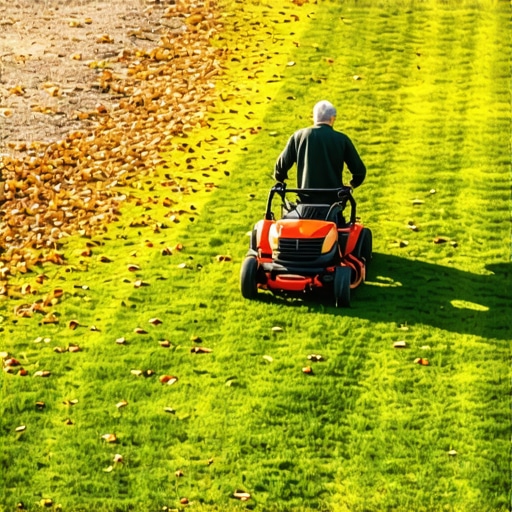
The final mow should occur when soil temperatures drop consistently below 45°F and top-growth slows to less than 0.5 inches per week. For most cool-season grasses, this means a target height of 2.5 inches to balance root insulation with the prevention of snow mold and other fungal pathogens that thrive in matted, long turf grass. During this phase, the plant is shifting its energy from foliar production to root-zone carbohydrate storage. Cutting too early forces the plant to use those reserves to regrow blades, leaving it vulnerable to desiccation. Cutting too late, or leaving the grass too long, allows snow to press the blades flat against the soil, creating an anaerobic environment perfect for Typhula blight.
How short should I cut my grass for the last mow of the year?
Professional standards dictate a gradual reduction in height over the last three mows, finishing at 2.0 to 2.5 inches for species like Kentucky Bluegrass and Tall Fescue. This height is short enough to prevent matting but tall enough to protect the crown from extreme temperature fluctuations. Never remove more than 1/3 of the blade in a single pass, as this triggers a stress response that redirects nitrogen away from the roots.
| Grass Type | Final Mow Height (Inches) | Primary Winter Threat | Nitrogen Requirement |
|---|---|---|---|
| Kentucky Bluegrass | 2.5″ | Snow Mold | Low (Late Fall) |
| Tall Fescue | 2.5″ – 3.0″ | Desiccation | Moderate |
| Perennial Ryegrass | 2.0″ | Crown Freeze | Low |
| Bermuda (Dormant) | 1.5″ – 2.0″ | Thatch Rot | None |
“A lawn mowed too short in late autumn loses its ability to insulate the soil, leading to deeper frost penetration and potential root death.” – Penn State Center for Turfgrass Science
The Chemical Engine: Potassium and NPK Ratios
Winterizing a lawn requires a specific shift in your fertilizer program. While spring is about Nitrogen (N) for green-up, the final prep is about Potassium (K). Potassium regulates the osmotic pressure within the plant cells, effectively acting as an internal antifreeze by increasing the concentration of solutes in the cell sap. This prevents the cell walls from rupturing when the water inside them freezes. Look for a 10-0-20 or 5-10-15 ratio. Avoid high-nitrogen ‘quick release’ fertilizers after the first frost, as this forces tender new growth that will be instantly killed by the next freeze, leading to a massive surge in fungal activity. Your soil pH should also be checked; if you are below 6.0, your grass cannot even uptake the nutrients you are applying.
Should I fertilize my lawn before the first frost?
Yes, apply a high-potassium winterizer fertilizer approximately 2 to 3 weeks before the ground freezes. This timing ensures the rhizomes and stolons can absorb the nutrients while the soil microbiology is still active. Avoid nitrogen-heavy products that could stimulate foliar growth during a warm spell, which weakens the plant’s overall cold hardiness.
Engineering the Yard: Irrigation and Drainage
A professional yard cleanup is incomplete without addressing the irrigation system. Water trapped in PVC or polyethylene lines will expand by 10% when it freezes, shattering valves and cracking pipes. You cannot just ‘drain’ a modern irrigation system; it must be blown out with a high-volume air compressor. I am not talking about a small garage compressor. You need a minimum of 100-185 CFM (Cubic Feet per Minute) to ensure the air velocity is high enough to carry the water out of the low spots in the lines. Keep the pressure below 80 PSI for PVC and 60 PSI for poly pipes to avoid friction-heat damage to the seals. This is engineering, not guesswork. If you skip this, your spring will start with a $2,000 repair bill for a manifold blowout.
- Calibrate irrigation: Switch controller to ‘Off’ or ‘Winter’ mode after the blowout.
- Core Aeration: Pull 3-inch plugs to relieve soil compaction and allow oxygen to reach the roots.
- Debris Removal: Clear every leaf. Deciduous leaves create a wet mat that smothers grass and traps pathogens.
- Edge Checks: Ensure the soil grading slopes away from the foundation at a 2% minimum grade.
- Tool Maintenance: Sharpen mower blades to a 30-degree bevel to ensure clean cuts that heal quickly.
“Excessive nitrogen applications in late fall can increase the susceptibility of turfgrass to several diseases, including pink snow mold.” – University of Minnesota Extension
The Settling In Period
Once the final mow is complete and the irrigation is blown out, the lawn enters true dormancy. This is not a state of death, but a state of metabolic slowdown. During this time, the soil structure is fragile. Walking on frozen turf can actually shatter the grass blades and compress the soil, leading to permanent ‘footprint’ scars in the spring. If you performed a late-season sod install, keep an eye on the moisture levels. If the winter is unusually dry and the ground isn’t frozen, dormant sod still needs occasional hydration to prevent the roots from shriveling. It is a calculated process. Precision in November ensures a resilient landscape in May. Stop guessing and start measuring. The dirt doesn’t lie.{“@context”:”https://schema.org”,”@type”:”Article”,”headline”:”Prep Your Lawn for Winter: When to Apply the Final Mow”,”author”:{“@type”:”Person”,”name”:”Veteran Horticulturist”},”description”:”A professional guide on winterizing your lawn, focusing on the timing of the final mow, irrigation blowouts, and soil chemistry.”,”mainEntityOfPage”:{“@type”:”WebPage”,”@id”:”https://example.com/prep-lawn-winter”},”faqPage”:{“@type”:”FAQPage”,”mainEntity”:[{“@type”:”Question”,”name”:”How short should I cut my grass for the last mow of the year?”,”acceptedAnswer”:{“@type”:”Answer”,”text”:”Final mows should be between 2.0 to 2.5 inches for most cool-season grasses to prevent snow mold while protecting the crown.”}},{“@type”:”Question”,”name”:”Should I fertilize my lawn before the first frost?”,”acceptedAnswer”:{“@type”:”Answer”,”text”:”Apply a high-potassium fertilizer 2-3 weeks before the first hard freeze to strengthen root cell walls for winter.”}}]}}