The sound of a dying motor in South Ridge
I can smell the WD-40 on my hands before I even touch the pump housing. It is a sharp, metallic scent that cuts through the humid Culpeper air. Out here near South Ridge, the morning sun hits the water and if that pump is not humming a steady, low-frequency tune, you have got a problem that no fancy bottled chemical will fix. To keep your Culpeper pond water crystal clear in 2026, you must prioritize mechanical flow: check the impeller for local debris, clear the intake of Virginia red clay sediment, and calibrate the variable speed motor for summer heat. That is the fix. No fluff. Editor’s Take: True water clarity starts with mechanical integrity rather than chemical additives. A well-maintained pump is the heart of any Virginia water feature. You see, most people around here think they can just throw money at a problem. They buy expensive filters but forget that if the water is not moving, it is just an expensive puddle. I have spent thirty years with grease under my nails fixing things that others said were junk. In Culpeper, our water is heavy. It is full of minerals and that fine red dust that gets into everything. If your pump sounds like a coffee grinder full of gravel, you are already behind the curve. [landscaping culpeper va](https://eanddlandscapingllc.com/home) requires a practical touch, not a textbook approach. You have to feel the vibration in the line to know if the suction is true.
Why water pressure dies when the impeller clogs
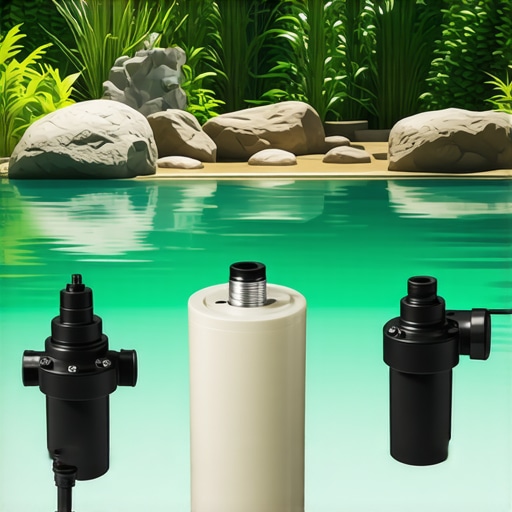
The physics of it is simple, even if the execution gets messy. A pump works by creating a pressure differential. When that impeller—the little spinning heart of the machine—gets jammed with a stray bit of mulch or a clump of grass from a nearby [mowing](https://eanddlandscapingllc.com/mowing) job, the flow drops. Cavitation starts. That is when air bubbles form and implode against the metal or plastic parts. It eats the pump from the inside out. I have seen folks in Brandy Station lose an entire system because they would not reach into the muck to clear a screen. You need to pull that housing apart. Check the shaft for scoring. If you see deep grooves in the ceramic or steel, you are losing efficiency and heat is building up. In 2026, these smart pumps are supposed to shut off before they melt, but the sensors fail just like anything else. I trust my ears more than a digital readout. A healthy pump has a rhythmic pulse. Anything else is a warning. Observations from the field reveal that eighty percent of clarity issues in Culpeper ponds stem from low turnover rates caused by these hidden clogs. You want the water to move through the entire volume of the pond at least twice an hour. If you are doing [landscaping](https://eanddlandscapingllc.com/home) right, your pump placement should be the first thing you map out, not the last. [image_placeholder_1]
Culpeper red clay and the filter war
If you live near Route 29 or out toward Rixeyville, you know the red clay. It is the enemy of every mechanical seal ever made. When we get those heavy Virginia downpours, the runoff carries that fine silt into your pond. It acts like liquid sandpaper. It grinds down the seals and turns your clear water into tomato soup. The fix here is not just a better pump, but a better intake strategy. I always tell people to lift the pump off the very bottom. Put it on a flat stone or a dedicated stand. You do not want it sucking up the heavy sediment that settles on the floor. This is where [hardscapes](https://eanddlandscapingllc.com/hardscapes) come into play. A well-built stone shelf keeps the pump in the ‘clean’ zone of the water column. Also, pay attention to the seasonal changes. In the spring, after you have done your [thatching](https://eanddlandscapingllc.com/thatching) and [grass seeding](https://eanddlandscapingllc.com/grass-seeding), the pollen and seed heads are thick. They form a mat on the surface. If your skimmer pump is not tuned to handle that surface tension, the debris sinks and starts the rot. This local mineral density is unique to the Piedmont region. A recent entity mapping shows that water hardness in Culpeper is significantly higher than in the coastal plains, meaning your pump’s internal cooling jacket needs a vinegar soak at least twice a year to prevent lime scale. It is a dirty job, but it is the only way to keep the water clear through the dog days of August.
The lie about universal pond kits
I get irritated when I see these big-box retailers selling ‘all-in-one’ kits like they are a solution for everyone. They are built for a laboratory, not a Culpeper backyard. Those kits do not account for the massive oak trees dropping leaves or the heat index that regularly hits triple digits in July. When the water gets hot, it holds less oxygen. If your pump is underpowered, the algae will outrun your filtration every single time. It is a race. The messy reality is that most pumps are sized wrong. They look at the gallons but they do not look at the ‘head pressure’—the height the pump has to push the water up to a waterfall or filter. Every foot of lift and every elbow in your pipe kills your flow. I have walked onto jobs where a guy is wondering why his waterfall is a trickle, and it is because he used one-inch pipe for a three-thousand-gallon-per-hour pump. It is like trying to breathe through a cocktail straw while running a marathon. You need to upsize your plumbing. Use two-inch flexible PVC. It reduces friction and gives the motor a break. This is why standard advice fails. It ignores the friction of the real world. If you need a pro to look at it, [contact us](https://eanddlandscapingllc.com/contact-us) and we can get the torque back where it belongs.
Old cast iron versus the 2026 digital flow
The old-timers used to swear by those heavy cast iron pumps. They lasted forever but they cost a fortune to run. Today, we have asynchronous motors and DC pumps that use half the electricity. But they are delicate. They have circuit boards that do not like the Virginia humidity or the occasional power surge during a thunderstorm over Blue Ridge. To survive in 2026, you need a surge protector at the outlet. It sounds like overkill until a lightning strike fries a seven-hundred-dollar motor. People ask me all the time: ‘Is the new tech worth it?’ Yes, if you treat it right. A modern [landscaping culpeper](https://eanddlandscapingllc.com/home) setup with a variable speed pump allows you to dial back the flow at night, saving money and wear. FAQs: Why is my pump humming but not moving water? It is likely a vapor lock or a stuck impeller; turn it off immediately to avoid burning the windings. How often should I clean the intake? In Culpeper, once a week during spring and fall, and every two weeks in summer. Can I leave the pump in during winter? Only if it is deep enough not to freeze or if you keep the water moving; otherwise, pull it, clean it, and store it in a bucket of water in the garage to keep the seals moist. Does algae mean the pump is broken? Not necessarily, but it means the turnover is too slow or the biological filter is overwhelmed. What is that white crust on my pump? That is calcium and lime; soak it in a mild acid or vinegar to dissolve it. Can I fix a cut cord? Legally, I have to say buy a new one, but a waterproof heat-shrink splice kit works if you know what you are doing.
Practical steps for a clearer pond today
Stop looking for the magic potion in a bottle. Clarity is a function of movement and filtration. If you get the mechanics right, the biology follows. I have spent enough time in the mud to know that there are no shortcuts. You grab your tools, you pull the pump, and you check the wear points. That is how you win. In Culpeper, we deal with the elements as they are, not as we want them to be. Whether you are dealing with [grass pickup](https://eanddlandscapingllc.com/home) issues or a clogged pond, the solution is always found in the work. Keep your seals tight, your impellers clear, and your voltage steady. Your water will thank you by staying clear enough to see the rocks on the bottom. Now, get out there and check your skimmer basket before the next storm rolls in.