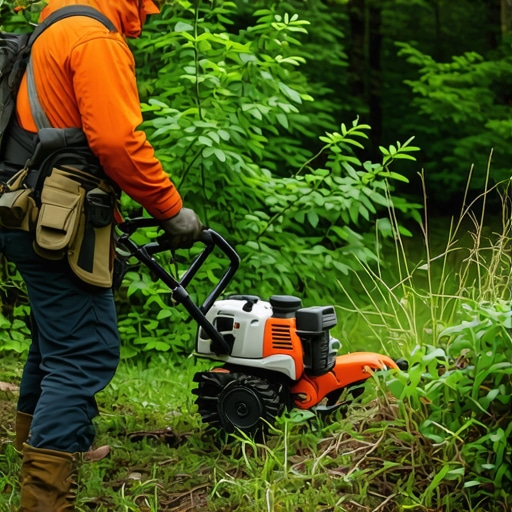
Mastering Land Reclamation: Why 80% of Brush Clearing Happens Before the First Cut
Stop the Overgrowth: 4 Pro Tactics to Clear Brush in 2026 requires a fundamental understanding of woody plant physiology, soil stabilization, and mechanical hydraulic capacity to prevent immediate regrowth. Successful land reclamation involves identifying invasive species, assessing soil moisture levels, and selecting tools that manage understory density without destroying topsoil structure.
I always drill into my new crew members: if you don’t fix the soil grading first, every plant you put in the ground is just expensive compost. Last year, I saw a greenhorn try to clear a three-acre lot with a standard brush hog. He didn’t account for the hydrostatic pressure of the local water table or the allelopathic chemicals leaked by the invasive Ailanthus trees he was cutting. Within three months, the lot wasn’t just overgrown; it was a biological wasteland of root suckers and stagnant mud. You cannot treat a yard cleanup like a simple haircut. It is a surgical extraction. If you ignore the root flare of the remaining trees or the compaction rating of your equipment, you are failing the land. Real landscaping is civil engineering with a biological component. We don’t just ‘clear’ brush; we reset the ecological clock of the property.
The Planning Phase: Analyzing the Understory Inventory
Before you turn a key on a skid steer, you need to know what you’re fighting. In 2026, we are seeing a massive surge in resilient invasive species that have adapted to common herbicides. You need to distinguish between herbaceous perennials and woody brush. Most homeowners see green and want it gone. A pro looks at the caliper size of the stems and the tensile strength of the vines. If you have Oriental Bittersweet or Kudzu, a simple mow-and-blow approach will actually spread the nodes and double your problem next season. Ground-up builds require a clean slate, but that slate must be stable. If you strip the vegetation and don’t address the grade, the first rainstorm will wash your nitrogen-rich topsoil straight into the municipal storm drain.
“Effective brush management is not a single event but a process that requires understanding the growth cycle of the target species and the subsequent response of the plant community.” – Texas A&M AgriLife Extension Service
Tactic 1: High-Flow Forestry Mastication
Forestry mastication involves using a high-torque drum or disk mulcher to grind standing vegetation into a fine organic mulch layer, which instantly stabilizes the soil and prevents surface erosion. This isn’t your grandfather’s bush hog. We are talking about machines running at 3,500 PSI of hydraulic pressure. The benefit here is biomass retention. Instead of hauling away debris—which is a waste of carbon—we turn the brush into a protective blanket. This blanket regulates soil temperature and prevents the germination of weed seeds triggered by sunlight exposure. However, you must monitor the depth of the mulch. Anything over 4 inches will lead to anaerobic conditions, effectively suffocating the soil microbiology. It will rot. Don’t skip the depth check.
Tactic 2: Systemic Chemical Suppression and Surfactants
Systemic chemical suppression utilizes targeted herbicides like Triclopyr or Glyphosate combined with non-ionic surfactants to ensure the active ingredients penetrate the waxy cuticle of stubborn leaves. In 2026, we don’t ‘broadcast’ spray like hacks. We use basal bark treatments or cut-stump applications. This is precision chemistry. By applying the chemical directly to the cambium layer of a freshly cut stump, you force the toxin down into the rhizome system. This kills the plant at the engine. If you just spray the leaves, the plant might defoliate, but the root energy remains. You’ll see ‘epicormic sprouting’ within weeks. That is a failure of technique. Always check the wind speed and Delta T before application to prevent chemical drift.
Clearance Method Comparison Matrix
| Method | Target Material | Cost Per Acre | Soil Impact | Recovery Time |
|---|---|---|---|---|
| Mastication | Heavy Woody Brush | $800 – $1,500 | Low (Mulch Layer) | Immediate |
| Grubbing | Deep Root Systems | $1,200 – $2,500 | High (Disturbance) | 6 – 12 Months |
| Chemical | Herbaceous/Vines | $200 – $500 | Minimal (Residual) | 2 – 4 Weeks |
| Hand Cutting | Selective Thinning | $3,000+ (Labor) | Zero | Immediate |
Tactic 3: Mechanical Grubbing and Sub-Surface Extraction
Mechanical grubbing involves using a root rake attachment to physically extract the root crowns and lateral runners from the top 12 inches of soil. This is the only way to ensure 100% kill rates for species like Buckthorn or Multiflora Rose. You are essentially mining for roots. But here is the catch: when you pull those roots, you create voids. If you don’t backfill and compact those areas to at least 85% Proctor density, you will have sinkholes in your yard within a year. This is where most ‘landscaping’ companies fail. They pull the brush and leave the holes. I make my crew use a jumping jack tamper on any hole larger than a basketball. It’s the difference between a flat lawn and a twisted ankle.
“Soil compaction from heavy equipment can reduce pore space by 50%, severely limiting oxygen availability to root systems and increasing surface runoff.” – Penn State Department of Plant Science
Tactic 4: Post-Clearing Stabilization (Sod Install and Irrigation)
Post-clearing stabilization requires the immediate installation of sod or a hydroseeded cover crop to lock down the soil and utilize the newly available soil nitrates. Once the brush is gone, the sun hits soil that hasn’t seen light in decades. This triggers a dormant seed bank. If you don’t put down a pre-emergent barrier and sod install immediately, you’ll have a new forest of weeds in 30 days. This is also the time to check your irrigation. Clearing brush often reveals old, crushed lines or requires a total redesign of your zone coverage. We calculate head-to-head overlap to ensure the new grass gets the 1 inch of water per week it needs to force roots deep into the newly cleared earth.
How much does it cost to clear 1 acre of brush in 2026?
The cost to clear one acre of brush typically ranges from $1,000 to $4,500, depending on the density of vegetation, the slope of the terrain, and the required disposal method. Heavy forestry mulching is usually the most cost-effective for large areas, while manual extraction in sensitive areas significantly increases labor costs.
What is the best month to clear overgrown land?
The best time to clear land is during the late winter or early dormant season when sap flow is minimal and the ground is firm or frozen. This reduces soil compaction from heavy machinery and prevents the spread of active fungal pathogens or seeds that would be more mobile during the spring growing season.
Pro Checklist: The 24-Hour Post-Clearance Protocol
- Flag Utility Lines: Never assume the previous owner didn’t bury a secondary power line to a shed.
- Check Soil pH: Brush piles often acidify the soil. You likely need a pelletized lime application.
- Inspect for Root Girdling: Ensure the machines didn’t nick the bark of ‘keeper’ trees.
- Monitor Drainage: Observe the first rain. If water pools, your grade is wrong. Fix it now.
- Seal the Stumps: If not grubbing, apply herbicide concentrate within 15 minutes of the cut.