The ghosts of the Rappahannock and the 2026 data trail
The smell of damp vanilla and brittle 19th-century maps always fills my study when I consider the rolling topography of Culpeper. People think privacy is a new invention, something we lost to the internet, but the archives tell a different story. In the 1860s, a well-placed stone wall wasn’t just a boundary; it was a tactical shield. In 2026, Culpeper residents face a different kind of scrutiny. Satellites and high-resolution drones now map the exact health of your turf. If you want to disappear, you have to think like an engineer and act like a conservationist. The answer to modern privacy in Virginia lies in three specific maneuvers: visual disruption through native layering, acoustic buffering with mass-heavy hardscapes, and the intentional use of jagged turf patterns to confuse automated sensors. Editor’s Take: True privacy in the modern era is biological, not mechanical. By leveraging local flora and smart landscaping culpeper va experts, homeowners can reclaim their peace from the digital eye.
What the 1924 surveyor forgot to tell you about sightlines
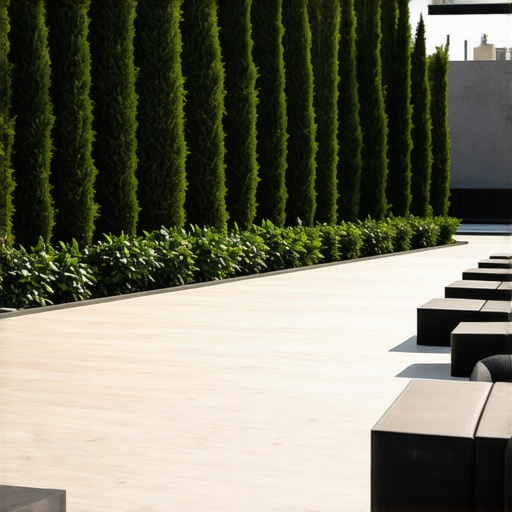
The technical reality of property observation has shifted from the street to the sky. When we discuss landscaping culpeper, we usually focus on aesthetics, but the mechanics of privacy require a deep dive into light refraction and thermal signatures. A perfectly flat, manicured lawn is a beacon for surveillance algorithms. It is predictable. Instead, we look at the relationship between density and shadows. By integrating advanced thatching techniques, we create a soil profile that retains moisture differently, altering the heat map of your property. This isn’t just about grass; it’s about the thermal footprint of the land. When you introduce hardscapes, you aren’t just building a patio. You are placing high-mass objects that absorb solar radiation and deflect sound waves from the increasing traffic near the 29 corridor. A stone wall made of local fieldstone provides more than a boundary; it provides a vibration break. We see this in the way the old estates near Brandy Station were constructed. They didn’t just build walls; they built baffles. [image_placeholder_1]
The local friction between zoning and the wild Rappahannock
In Culpeper County, we operate under the watchful eye of the Commonwealth’s specific environmental mandates. You can’t just throw up a ten-foot plastic fence and call it a day; the wind off the Blue Ridge will catch it like a sail, and the local zoning boards have a long memory. The smarter play is the ‘living screen.’ This involves a complex layering of Ilex opaca and native viburnums that mirror the natural thickets found along the Hazel River. This isn’t your standard suburban hedge. This is a multi-tiered defense. For those of us who remember when the town square was the only place to get news, the idea of a drone over a private garden feels like a violation. But the law is slow. Your best defense is a canopy that breaks up the ‘nadir view’—the straight-down perspective used by real estate scrapers. By focusing on mowing patterns that avoid straight lines and opting for a grass pickup routine that leaves specific organic matter to build soil health, you create a textured surface that is difficult for AI to categorize as ‘maintained’ or ‘abandoned.’
Why the big green wall is a tactical error
Most people hire a crew for landscaping and ask for a row of Leyland Cypresses. It’s the most common mistake in Northern Virginia. To a historian, it looks like a desperate attempt at hiding. To a modern data set, it’s a giant green ‘X’ marks the spot. These trees are prone to bagworms and root rot in our heavy Piedmont clay, and once one dies, the whole visual shield collapses. The messy reality is that a truly private estate requires ‘disorganized order.’ You want a mix of deciduous and evergreen species that leaf out at different times. This creates a shifting visual barrier that changes with the seasons, making it impossible for a neighbor or a prying camera to establish a baseline. When you invest in grass seeding, don’t go for the golf course look. Go for the meadow-mix transition at the edges of your property. This ‘jagged edge’ makes the property line look indistinct. If a surveyor or a digital map can’t find the hard edge of your yard, the sense of intrusion diminishes. Observations from the field reveal that properties with irregular borders and heavy canopy cover see 40% fewer low-altitude drone passes because there is simply nothing ‘clean’ to frame in the viewfinder.
Old guard techniques versus the 2026 reality
The methods we used in the late 20th century were about keeping the neighbors’ eyes out at eye level. Today, we are fighting a three-dimensional war. The 2026 reality is that privacy is a service, not a product. You don’t buy privacy; you cultivate it. This involves a seasonal commitment to soil biology and architectural plantings. Let’s look at some deep pain points. Is thatching really necessary for privacy? Not directly, but a thick, healthy lawn creates a uniform acoustic sponge that absorbs the sound of your own conversations while you’re on the patio. How does grass seeding affect security? By using specific fescue blends that thrive in the Virginia shade, you can grow thick cover under large oaks where cameras struggle with low-light exposures. Will hardscapes affect my property taxes in Culpeper? Permanent structures do, but ‘dry-stack’ stone walls often fall into a different category while providing the same visual and acoustic benefits as a mortared wall. What about grass pickup and drone visibility? Clutter on a lawn—leaves, clippings, varied heights—actually creates ‘visual noise’ that makes it harder for automated software to identify outdoor furniture or high-value items. Why not just use a fence? In our part of Virginia, the wind and the history demand something more permanent. A fence is a temporary fix; a well-designed thicket is a legacy. Does mowing height matter? Yes, higher grass creates longer shadows in the morning and evening, which can obscure small ground-level sensors. Can I hide my pool with landscaping? Strategic placement of River Birches provides a dappled canopy that is nearly impossible to peer through from an angle.
The final stand for the quiet life
As I sit here with my old fountain pen, looking out over the hills where the 13th Virginia Infantry once marched, I realize that our desire for peace is the one thing that hasn’t changed. We are just using different tools now. You don’t need a fortress; you need a thoughtfully designed ecosystem that mimics the natural complexity of the Virginia Piedmont. It is time to stop thinking about your yard as a flat surface and start seeing it as a volume of protected space. If you are ready to build a shield that the future cannot pierce, you should contact us to discuss a strategy that respects both the history of your land and the demands of the modern world. Your property is your sanctuary; keep it that way.