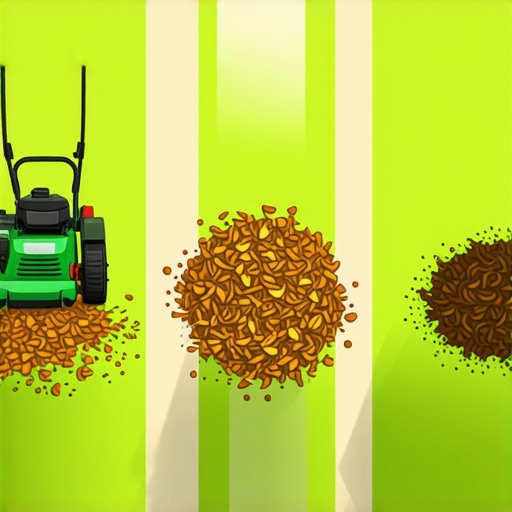
Why Bagging Leaves Is a Horticultural Failure in 2026
Leaf bagging removes critical organic matter that fuels the soil food web, forcing homeowners to rely on synthetic fertilizers and increasing landfill waste. By 2026, sustainable landscaping demands we retain this biomass to build soil structure, manage moisture levels, and maintain healthy nitrogen cycles in residential lawns and garden beds. I always drill into my new crew members: if you do not fix the soil grading and biology first, every plant you put in the ground is just expensive compost. Last season, I watched a rookie spend six hours bagging oak leaves while the neighbor’s yard was already finished and fertilized for free. He didn’t understand that those leaves aren’t ‘trash’—they are a biological goldmine of carbon and micronutrients. If you strip the lawn bare every November, you are starving the very microorganisms that prevent thatch buildup and soil compaction. We are in the business of managing ecosystems, not just cleaning up mess.
“A lawn’s nitrogen requirement can be met by up to 25% simply by returning clippings and mulched leaves to the turf during the autumn months.” – Penn State Extension
How much leaf litter can a lawn actually handle?
A standard cool-season turf can safely digest up to six inches of leaf matting if it is pulverized into pieces smaller than a dime using a high-lift mulching blade. This process increases the surface area for microbial colonization, allowing soil bacteria to break down lignin and cellulose before the ground freezes. It will rot if you leave it whole. If the pieces are too large, they create a light-blocking canopy that triggers snow mold and kills the crown of the grass. Speed is key. Your mower blade should have a tip speed of at least 18,000 feet per minute to ensure the leaves are hit multiple times before they exit the deck. Don’t skip the second pass.
Tactic 1: The High-Velocity Bio-Pulverization Method
The Bio-Pulverization Method involves using a commercial-grade mower with a closed-deck mulching kit to reduce leaf volume by a 10:1 ratio directly into the turf canopy. This technique bypasses the need for sod install repairs in the spring by protecting the soil from extreme freeze-thaw cycles. You need to set your mower height to at least 3.5 inches. If you scalp the grass while trying to mulch, you expose the soil to winter annual weeds. The goal is to hide the leaf bits within the grass blades, not on top of them.
| Leaf Type | C:N Ratio | Decomposition Rate | Nutrient Value |
|---|---|---|---|
| Oak Leaves | 60:1 | Slow (High Lignin) | High Tannins |
| Maple Leaves | 35:1 | Moderate | High Sugars |
| Grass Clippings | 15:1 | Fast | High Nitrogen |
Can you mulch leaves instead of raking them?
Yes, you can mulch leaves instead of raking as long as you use a mulching mower that grinds the organic matter into particles small enough to settle between grass blades. This eliminates the labor of bagging while providing a slow-release source of nitrogen and phosphorus to the root zone throughout the winter. It is an engineering solution to a biological problem.
“Decomposition is a biological combustion process where carbon is the fuel and nitrogen is the catalyst for microbial activity.” – Agronomy Manual
Tactic 2: Sheet Mulching for Dormant Garden Beds
Sheet mulching utilizes whole or coarsely shredded leaves as a thick, protective layer over irrigation lines and perennial root zones to suppress weeds and retain hydrostatic pressure in the soil. For 2026 cleanups, stop blowing leaves out of the beds and start tucking them in. I see contractors blow every leaf into the street, only to return two weeks later to install $500 worth of shredded hardwood mulch. That is idiocy. Use the leaves. A 3-inch layer of oak or maple leaves acts as an insulator. It prevents the frost heave that pushes new perennials out of the ground. It also protects your drip-line irrigation from UV degradation and extreme cold. Just keep the leaves away from the root flare of trees. Thick piles against the bark invite voles and fungal rot. Leave a 2-inch gap. It’s non-negotiable.
How many leaves are too many for a mulching mower?
If you can no longer see the grass tips after a single pass, the leaf density is too high for simple mulching and requires a secondary shredding strategy or relocation to landscape beds. Generally, three inches of dry leaf cover is the limit for a standard residential mower before it starts to clog the discharge chute or stall the engine. If it looks like a carpet, you need to mow it twice. Once at the highest setting to break the bulk, and a second time at your standard height to finish the job. This isn’t a suggestion; it’s physics. If the engine bogs down, you’re losing blade speed, and the cut will be ragged.
Tactic 3: Vertical Integration and Nitrogen Priming
Nitrogen Priming is the application of a high-nitrogen organic fertilizer immediately after mulching leaves to accelerate the Carbon-to-Nitrogen (C:N) ratio balance and prevent soil nitrogen tie-up. When you dump a massive amount of carbon (leaves) onto the soil, the microbes need nitrogen to process it. If there isn’t enough nitrogen available, they will steal it from your grass roots. This is why some lawns look yellow in the spring after mulching. I tell my clients: feed the bugs so they can feed the lawn. Use a slow-release nitrogen source. Check your irrigation schedule too. The microbes need moisture to work. If the soil is bone dry, those leaves will just sit there until April. One deep watering—exactly 1 inch—after the final cleanup is usually enough to kickstart the process.
- Equipment Check: Sharpen blades to a razor edge to ensure clean cell-wall shearing.
- Timing: Mulch when leaves are crisp; wet leaves create a slurry that suffocates the root zone.
- PH Monitoring: Large amounts of oak leaves can slightly lower pH over years; test soil every 24 months.
- Irrigation: Clear lines of debris before the first hard freeze to prevent burst pipes.
The Engineering of the Perfect Mulch Pass
The physics of the mower deck determines your success. You need a vortex effect. As the blade spins, it creates a vacuum that pulls the leaf up, cuts it, and then the mulching baffle recirculates it back into the blades. If your deck is packed with old dried grass, the vacuum fails. Clean your deck. A clean deck allows for maximum airflow and particle suspension. This is why I hate cheap stamped-steel decks; they don’t have the volume to handle 2026-level leaf fall. Invest in a fabricated deck with high-lift capabilities. It is the difference between a clean finish and a clumped-up disaster. If you see clumps, you failed. Go back and do it again. The soil won’t forgive your laziness. Every clump is a potential dead spot in your sod next year. Manage the biomass correctly, and you’ll have the best yard on the block without ever touching a plastic bag.