The Foundation of Site Prep: Why Brush Management Matters
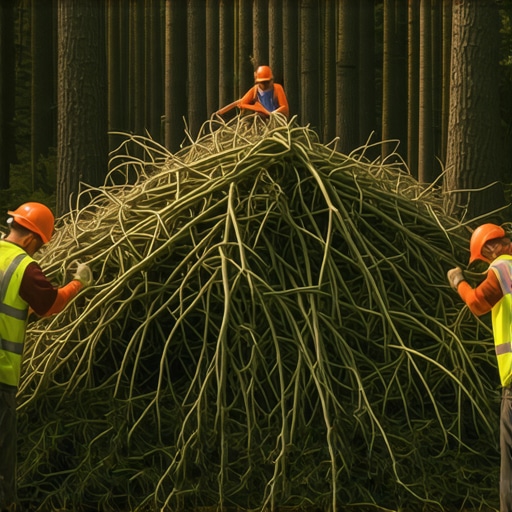
Clearing 2026 brush piles without a chipper involves leveraging biological decomposition, mechanical compaction, or subsurface burial techniques like Hügelkultur. These methods focus on managing the Carbon-to-Nitrogen (C:N) ratio and soil microbiology to recycle organic matter into the landscape without industrial machinery. Proper management prevents nitrogen drawdown, which can otherwise starve your future sod install or garden beds. I always drill into my new crew members: if you don’t fix the soil grading first, every plant you put in the ground is just expensive compost. This is especially true when dealing with woody debris. You can’t just toss some dirt over a pile of branches and call it a day. Those branches will create air pockets. Those air pockets lead to anaerobic rot. Eventually, the ground collapses. I’ve seen $15,000 irrigation systems snapped like toothpicks because the homeowner buried a brush pile right where the main line was later trenched. The soil settled, the pipe didn’t, and the resulting leak turned the yard into a swamp. Dealing with brush is the first step in civil engineering for your backyard. Don’t skip the physics of soil density. Don’t ignore the biology of decay. Get it right from the bottom up.
“A brush pile left unmanaged becomes a primary vector for wood-boring insects and localized nitrogen immobilization in the surrounding topsoil.” – Agriculture Extension Manual
How long does a brush pile take to decompose?
Natural decomposition for a standard mixed-wood brush pile typically takes 5 to 10 years depending on moisture and lignin content. However, using nitrogen-rich accelerants or mechanical reduction can shorten this window to less than 18 months by increasing the surface area for microbial colonization. You have to understand that wood is mostly cellulose and lignin. These are tough polymers. Fungi are the primary decomposers here. If the pile is dry, nothing happens. If it is too wet and packed too tight, it goes anaerobic and reeks. The goal is the sweet spot of moisture and airflow. Speed is a function of surface area. Smaller pieces rot faster. This is why we focus on crushing or cutting before burial.
Hack 1: The Hügelkultur Method (The Biological Sink)
Hügelkultur is the practice of burying large amounts of woody debris under soil to create a self-fertilizing raised bed that retains moisture and supports soil microbiology. This method is the gold standard for high-end landscaping because it turns a waste product into a long-term nutrient battery. When you build a Hügelkultur mound, you are essentially creating a slow-release sponge. The logs at the bottom soak up winter rains and release that moisture to plant roots during the August heat. This can significantly reduce the load on your irrigation system. You start by digging a trench about 12 inches deep. Lay your heaviest logs in first. Pack the 2026 brush piles on top of those logs. Here is the secret: you must fill the gaps. Use grass clippings, manure, or compost to fill every void between the branches. If you leave air gaps, you invite rodents and cause uneven settling. Top the whole thing with 6 inches of quality topsoil. Within two seasons, that brush is a fungal powerhouse. It works. It lasts. It saves money.
Hack 2: The Nitrogen-Drench Acceleration
Nitrogen-drenching involves applying a high-concentration liquid urea or ammonium sulfate solution to a compacted brush pile to chemically jumpstart the decomposition of carbon-heavy wood fibers. Woody brush has a C:N ratio of about 400:1, while the microbes doing the work need a ratio closer to 30:1. They will rob nitrogen from the surrounding soil to break down that wood. This is why plants next to fresh mulch often turn yellow. To fix this, you treat the brush pile like a compost heap on steroids. Mix 5 pounds of high-nitrogen fertilizer in 50 gallons of water and soak the pile. Cover it with a heavy black silage tarp. This traps heat and moisture. The internal temperature will spike. You are essentially cooking the wood. In a humid climate, you can reduce a massive pile of 2026 brush to brittle, crushable humus in a single season. Check the moisture regularly. It should feel like a wrung-out sponge. Never let it go bone dry.
Hack 3: The Trench and Compact Technique
The Trench and Compact technique is a mechanical reduction strategy where brush is laid in deep lifts within a soil vault and crushed using heavy equipment to eliminate air pockets before a sod install. If you have access to a mini-excavator, this is the most efficient way to clear a lot. Don’t just dig a hole and dump. You lay the brush in 12-inch layers. Use the bucket to crush it flat. Add a layer of soil. Crush again. This is called ‘knitting’ the material into the earth. If you are planning on a sod install over this area, you must be surgical. I recommend a minimum of 18 inches of compacted clean fill over the top of any buried brush. This ensures that the grass roots have a stable medium and aren’t affected by the fluctuating pH levels of the decomposing wood below. If you skip the compaction, your new lawn will look like a topographical map of the Andes within a year. It’s about PSI and soil physics. Tamp it until the machine bounces.
Can I bury fresh brush before installing sod?
Burying fresh brush directly under a sod install is generally discouraged unless the debris is buried at least 2 feet deep and mechanically compacted to prevent soil subsidence. Fresh wood consumes available nitrogen during its initial breakdown phase, which can lead to chlorosis and stunted growth in new turfgrass. If you must bury it, use a nitrogen buffer. Apply a slow-release nitrogen fertilizer over the burial site before laying the sod. This provides a ‘bank’ of nutrients for the grass while the microbes focus on the wood below. This keeps the turf green while the heavy lifting happens underground.
Hack 4: Bio-Engineering with Brush Faggots
Brush faggots are bundles of woody debris lashed together and staked into eroded slopes or drainage swales to slow water velocity and capture sediment. This is civil engineering 101. Instead of hauling the brush away, you use it to solve yard cleanup issues like erosion. Tightly bind your branches into cylinders about 8 feet long and 12 inches in diameter using biodegradable twine. Stake these into the contour of a hill. They act as micro-dams. They catch silt. They slow down runoff. Over time, they rot in place, and the trapped sediment becomes a perfect planting bed for native grasses. It is a closed-loop system. You solve the waste problem and the erosion problem simultaneously. No chipper needed. No diesel burned. Just smart physics.
| Method | Decomposition Speed | Effort Level | Future Use |
|---|---|---|---|
| Hügelkultur | 3-5 Years | High | Garden Beds |
| Nitrogen Drench | 1-2 Years | Medium | Mulch/Soil Amendment |
| Trench & Compact | 5+ Years | High | Lawn Foundation |
| Brush Faggots | 4-6 Years | Low | Erosion Control |
“A retaining wall doesn’t fail because of the stone; it fails because of the water trapped behind it. The same logic applies to buried brush; the failure isn’t the wood, it’s the air and water pockets you left behind.” – Hardscape Engineering Axiom
Pre-Clearance Safety and Structural Checklist
- Identify and remove invasive species like Buckthorn or Multiflora Rose before burial to prevent regrowth.
- Call 811 for utility marking before any trenching or deep burial activity.
- Ensure a minimum 10-foot setback from any structural foundations or irrigation main lines.
- Verify local municipal codes regarding ‘clean fill’ and debris burial to avoid fines.
- Check soil pH; decomposing wood tends to increase acidity in the immediate vicinity.
Proper yard cleanup is about more than just aesthetics. It is about preparing the site for the next decade of growth. Whether you are prepping for a sod install or just reclaiming a corner of the lot, these hacks keep your costs down and your soil health up. Don’t be the guy who rents a chipper and blows $500 on diesel and blade sharpening. Be the guy who understands the biology. Work with the land, not against it. It’s slower, but it’s better. Your plants will thank you in five years. Your wallet will thank you today. Keep your tools sharp and your soil living.