
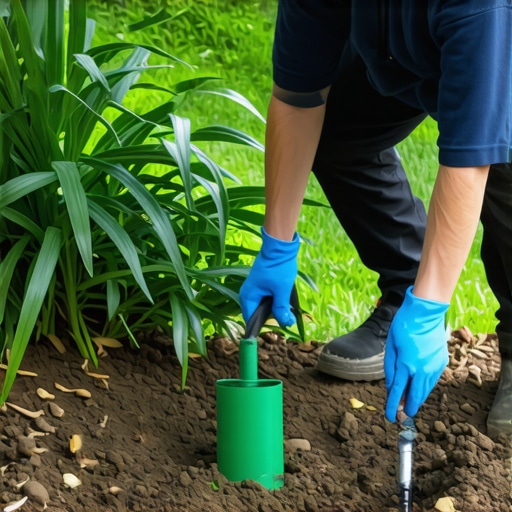
Finding Your Buried Irrigation Valve Box Like a Pro
The ground is unforgiving. You know there is a master manifold somewhere under that turf, but the previous contractor buried it during a rush sod install or it disappeared under years of migrating mulch and yard cleanup debris. A lost valve box is not just a nuisance; it is a ticking time bomb for your landscaping. When a solenoid fails or a lateral line bursts, every second you spend hunting for the lid is a second the hydrostatic pressure is eroding your topsoil. Most homeowners start digging random holes, turning their lawn into a minefield. That is what amateurs do. Professionals use the physics of the system to locate the hardware without destroying the irrigation infrastructure.
Why Irrigation Valve Boxes Disappear Under Your Yard
Locating a lost irrigation valve box involves using electronic wire tracing or inducing a physical vibration known as ‘chatter’ within the solenoid to pinpoint its location. These boxes are frequently lost during sod install projects where the grade is raised or during aggressive yard cleanup when organic matter covers the plastic lids. I always drill into my new crew members: if you do not fix the soil grading first, every plant you put in the ground is just expensive compost. I have seen countless $50,000 projects ruined because a foreman forgot to map the valves before the sod arrived. In my twenty years, the most common culprit is ‘creep’—the slow movement of soil and thatch that eventually swallows the green plastic lid. If you didn’t install it with a six-inch gravel base for drainage, it will settle. It will vanish. Don’t skip the mapping phase.
“A retaining wall doesn’t fail because of the stone; it fails because of the water trapped behind it.” – Hardscape Engineering Axiom
How do I find a buried irrigation valve?
To find a buried irrigation valve, you must first check the wiring at the controller for continuity and then use a 521 wire locator or the 9-volt battery ‘chatter’ trick. This method relies on the electromagnetic solenoid plunger clicking rapidly, creating a localized sound you can track with a stethoscope or a simple screwdriver pressed against your ear. We often see these boxes buried 4 to 8 inches deep in heavy clay soils where the weight of the turf has pressed the box into the earth. If you are dealing with sandy loam, the box might have shifted laterally. You are looking for a structural anomaly in the soil density. The ground above a valve box will often feel more ‘hollow’ when struck with a heavy rubber mallet.
| Method | Success Rate | Required Equipment | Best For |
|---|---|---|---|
| Visual Probing | 40% | Steel Probe Bar | Shallow boxes in soft soil |
| 9V Battery Chatter | 75% | 9V Battery, Jumper Wires | Locating functional solenoids |
| Wire Tracking | 95% | Inductive Transmitter & Receiver | Deeply buried or failed valves |
| Metal Detecting | 20% | Metal Detector | Valves with metal components only |
The Forensic Autopsy of a Failed Search
I recently stood on a lawn in the suburbs where the homeowner had spent three days digging. They had ruined thirty square feet of Kentucky Bluegrass looking for a ‘ghost’ valve. The symptom was a dead zone—zero pressure to the backyard. They assumed the valve was right next to the house. It wasn’t. It was thirty feet away under a decorative boulder. This is why we use the ‘9V Trick’. By disconnecting the zone wire and the common wire at the controller and rapidly tapping them across the terminals of a 9V battery, you can force the solenoid to cycle. This creates a distinct ‘click-click-click’ sound. It is the heartbeat of the system. If you listen closely, or use a mechanic’s stethoscope, the soil will literally tell you where the box is hiding. It is not magic. It is engineering. You are hunting for a 24V AC component that is now being pulsed with DC current to create mechanical noise.
“Proper irrigation management requires knowing the precise location of every mechanical junction to ensure pressure regulation and prevent root-zone saturation.” – Agronomy Field Manual
Why is my irrigation valve box full of water?
An irrigation valve box full of water usually indicates a failed O-ring, a cracked valve body, or a loose union nut, all of which cause local saturation. This saturation softens the soil and causes the box to sink deeper, making it even harder to find during your next yard cleanup. If you find the box and it is a swamp, you have a mechanical failure. Check the bleed screw first. If that is tight, the internal diaphragm is likely torn by debris. We see this often after a fresh sod install when sand and grit enter the lines during the connection process. High-end landscaping requires clean lines. Any grit in the solenoid will prevent it from seating, leading to a slow, constant leak that will eventually rot the roots of your turf. It will rot. Don’t ignore it.
The Technical Checklist for Irrigation Recovery
- Disconnect the controller power before handling any zone wires to prevent shorting the transformer.
- Check the resistance (Ohms) of the zone; a healthy solenoid should read between 20 and 60 Ohms.
- Use a 48-inch steel probe to feel for the plastic lid—plastic has a distinct ‘thud’ compared to the ‘clack’ of a rock.
- Once found, excavate the box and install a 3-inch layer of pea gravel at the bottom to prevent future settling.
- Spray-paint the inside of the lid a bright color for future visibility.
Maintaining Your Infrastructure After the Find
Once you have located the box, your work is only half done. You need to ensure it never disappears again. The soil biology is constantly moving. Worm castings, decaying thatch, and root growth will attempt to reclaim that space. During every seasonal yard cleanup, you should be clearing the edges of your valve boxes. Use a manual edger to cut back the grass. This prevents the turf from matted over the green lid. If you are planning a new sod install, tell the crew to ‘flag’ every box. Do not let them lay the rolls directly over your access points. A professional landscaping firm will always cut the sod around the box, ensuring the lid is flush with the new soil grade. If the lid is too low, buy a box extension. They are cheap. Digging up your yard again is not. [IMAGE_PLACEHOLDER] Follow these protocols, and you will stop being a victim of your own yard’s growth. Deep, infrequent watering of 1 inch per week will force your turf’s roots to chase water downward, reducing the thickness of the thatch layer that hides your infrastructure. Do the work once. Do it right.
{“@context”:”https://schema.org”,”@type”:”HowTo”,”name”:”How to Find a Lost Irrigation Valve Box Using the Chatter Method”,”step”:[{“@type”:”HowToStep”,”text”:”Identify the correct zone wire and the common wire at the irrigation controller.”},{“@type”:”HowToStep”,”text”:”Disconnect these two wires from the terminal strip.”},{“@type”:”HowToStep”,”text”:”Briefly and repeatedly touch the two wires to the terminals of a 9-volt battery.”},{“@type”:”HowToStep”,”text”:”Walk the yard and listen for a faint clicking sound coming from the ground; this is the solenoid ‘chattering’.”}],”totalTime”:”PT15M”}