
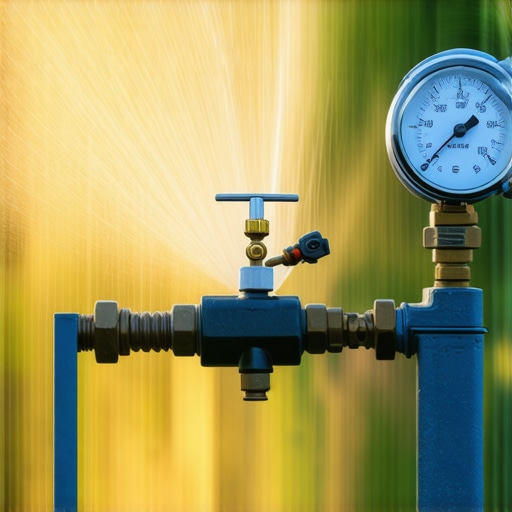
Blowing Out 2026 Sprinklers: Professional Air Pressure Settings & Guide
I always drill into my new crew members: if you don’t fix the soil grading first, every plant you put in the ground is just expensive compost. The same engineering discipline applies to irrigation. If you don’t respect the air pressure limits during a blowout, you aren’t winterizing; you’re demolishing. I once saw a guy use a 150 PSI industrial compressor without a regulator. He didn’t just clear the lines; he sent a sprinkler head through his client’s second-story window. Physics doesn’t care about your schedule. Professional irrigation winterization is about moving a high volume of air at a low pressure to evacuate water without melting your investment.
The Physics of Irrigation Blowouts
Proper irrigation winterization requires a precise volume of air to displace water safely. High-volume CFM (Cubic Feet per Minute) is more critical than high PSI (Pounds per Square Inch) because it maintains a steady wall of air that pushes water out without creating dangerous heat friction or pressure spikes.
How much air pressure is too much for a sprinkler system?
Anything over 80 PSI is a gamble that you will eventually lose. Most residential systems are built with Schedule 40 PVC or flexible polyethylene tubing. While these materials have high static pressure ratings, they are not designed to handle the vibratory stress and dry heat generated by high-velocity air. For polyethylene pipe, stick to 50 PSI. For PVC, never exceed 80 PSI. Exceeding these limits can shatter fittings or warp valve diaphragms. It will break. Do not risk it.
“Excessive air pressure can cause internal components to fail or pipes to burst due to heat friction.” – Irrigation Association Technical Manual
Equipment Selection: Why Your Small Garage Compressor Will Fail
To successfully perform yard cleanup and irrigation prep, you need a compressor that delivers at least 20 to 50 CFM. A standard home garage compressor usually tops out at 4 or 5 CFM. This is insufficient to create the necessary “slug” of air to push water uphill or through long lateral lines. Using a small compressor results in “slugging,” where air simply bubbles through the water rather than pushing it out. This leaves water in low spots, which will freeze, expand, and crack your pipes by mid-winter. Rent a tow-behind unit. It is cheaper than a shovel and ten hours of labor next spring.
| Pipe Material | Recommended PSI | Min CFM Requirement |
|---|---|---|
| Polyethylene (Black Pipe) | 40 to 50 PSI | 20+ CFM |
| Schedule 40 PVC (White) | 70 to 80 PSI | 50 to 100 CFM |
| Class 200 PVC (Thin Wall) | 50 to 60 PSI | 50+ CFM |
Can I use a small pancake compressor to blow out my sprinklers?
No. A pancake compressor lacks the tank capacity and CFM output to maintain constant pressure across a full zone. You might clear the heads closest to the manifold, but the low points in the yard will remain full of water. This leads to “freeze-thaw” damage where the pipe walls fatigue over time. You won’t know it’s broken until you see the swamp in your yard during the 2026 sod install phase. Do it right the first time.
The Step-by-Step Winterization Protocol
Before you start, perform a final yard cleanup. Clear debris from around the valve boxes and ensure the backflow preventer is accessible. If you have recently completed a sod install, be extra careful with heavy equipment near the new grass. Follow this sequence:
- Turn off the main water supply and drain the backflow preventer.
- Connect the air compressor to the blowout port, never through the backflow preventer itself.
- Set the compressor regulator to the appropriate PSI based on your pipe material.
- Open the zone furthest from the compressor first.
- Run the air until the heads spray a fine mist, then move to the next zone.
- Limit each zone to 2 minutes of air to prevent heat buildup.
- Repeat the cycle once more to ensure all “trapped” water is purged.
“The goal of winterization is not to dry the pipes, but to remove enough water so that remaining droplets have room to expand during freezing without fracturing the pipe wall.” – Texas A&M AgriLife Extension
The Engineering Zoom: Heat Friction and Valve Failure
When air moves through a 1-inch pipe at high velocity, it generates kinetic energy that converts to heat. Plastic components have a relatively low melting point. If you run air through a dry zone for too long, the friction can literally weld the internal components of your solenoid valves together. This is why we use a high-volume, low-pressure approach. You want a massive wall of air, not a high-pressure jet. Watch the heads. If they start vibrating violently, your pressure is too high. Dial it back. Protect the equipment.
Year-Round Landscaping Integration
Winterization is not an isolated event. It is the bridge between your fall yard cleanup and your 2026 landscaping goals. If you plan on adding new beds or changing your layout next year, map those changes now while the system is being blown out. Use the air to identify weak heads or leaking seals that need replacement before the ground freezes. A professional knows that the best time to fix a 2026 problem is in October 2025. Don’t skip the details. Soil moisture levels also matter. If the ground is bone-dry, the pipes have less external support. If it is saturated, they are more prone to shifting under the vibration of the blowout.
Final Inspection Protocol
Once the blowout is complete, leave the manual bleed screws on the valves slightly open. This allows any residual moisture to expand without pressure buildup. Turn off the controller. Document any zones that took longer to clear; this usually indicates a low spot or a grading issue that needs to be addressed during your next landscaping renovation. Your 2026 lawn depends on the discipline you show today.