
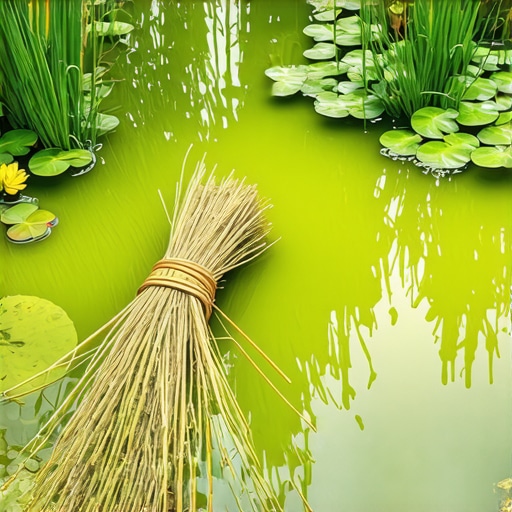
The Anatomy of a Stagnant Nightmare
Pond algae control requires an understanding of the nitrogen cycle and dissolved oxygen levels to prevent the rapid proliferation of cyanobacteria and filamentous algae. When your pond looks like pea soup, it is a biological failure of the ecosystem caused by an imbalance of phosphates and nitrates, often exacerbated by landscape runoff or poor irrigation management. This is not a cosmetic issue; it is a chemical war. I recently got called out to tear up a $30,000 patio that was sinking because the previous contractor ignored the hydrostatic pressure from an uphill retention pond. The water had nowhere to go, so it sat under the pavers, liquifying the modified gravel base. That same stagnant water became an algal bloom factory because the drainage was effectively zero. If you don’t fix the soil grading and water movement first, you are just throwing money into a hole. It will rot. Do not skip the fundamentals. You need to look at the micro-climate of your yard and understand how yard cleanup impacts the nutrient load in your water features.
“A retaining wall doesn’t fail because of the stone; it fails because of the water trapped behind it.” – Hardscape Engineering Axiom
How Barley Straw Inhibits Algae Growth
Barley straw functions as a biological algistat by releasing lignins and humic acids that, when exposed to sunlight and oxygen, decompose into low concentrations of hydrogen peroxide (H2O2). This chemical reaction does not kill existing algae but prevents the reproduction of new algae cells by disrupting their cell wall development. It is a slow-release mechanism. You cannot dump a bale in a pond and expect results by Friday. The straw must be aerated. If the straw goes anaerobic, it produces methane and hydrogen sulfide, which will kill your fish and make the pond smell like a sewer. Use a mesh bag. Suspend it near an aerator or waterfall. The biology demands oxygen. Without it, the straw is just expensive compost.
How long does it take for barley straw to work in a pond?
Barley straw typically requires four to six weeks to begin releasing effective levels of hydrogen peroxide, depending on water temperature and dissolved oxygen. In 2026, as water temperatures rise, the microbial activity increases, accelerating the decomposition of the lignin within the straw fibers. Check it often.
| Barley Product Type | Application Rate | Best Use Case |
|---|---|---|
| Raw Straw Bales | 0.5 oz per 10 sq. ft. | Large farm ponds |
| Barley Straw Pellets | 1 lb per 1000 gallons | Ornamental backyard ponds |
| Liquid Barley Extract | 2 oz per 500 gallons | Immediate chemical intervention |
Is barley straw safe for fish and aquatic plants?
Yes, barley straw is completely safe for koi, goldfish, and aquatic vegetation because the concentration of hydrogen peroxide produced is too low to damage complex organisms. It specifically targets single-celled algae and planktonic blooms without disrupting the beneficial bacteria colonies essential for nitrogen fixation in the pond liner or substrate.
“Managing pond nutrients is a matter of limiting phosphorus availability, as 1 pound of phosphorus can support up to 500 pounds of algae growth.” – Penn State Agricultural Extension
The Blueprint for Remediation
The forensic autopsy of a failed pond usually reveals three things: over-fertilized turf, poor irrigation timing, and organic debris accumulation. To fix this, you must engage a multi-step protocol. Start by checking your irrigation system. If your spray heads are hitting the water, they are injecting high-nitrogen fertilizer directly into the ecosystem. Stop it. Next, perform a yard cleanup that focuses on removing leaf litter and grass clippings from the pond perimeter. These organics break down into muck, providing the phosphates that algae crave. Finally, ensure your sod install around the pond includes a buffer zone of native grasses to filter nitrate runoff. Use screed pipes to ensure the land slopes away from the water. Compact your base. Precision matters.
- Test Soil pH: Ensure the runoff isn’t turning the pond acidic.
- Install Aeration: Oxygen is the enemy of algae.
- Calculate Volume: Do not guess your pond’s gallonage. Length x Width x Depth x 7.48.
- Monitor Temperature: Algae thrives above 60°F.
Maintenance and Year-One Expectations
During the first year of using barley straw, you will see a gradual shift in water clarity. You must replace the straw every four to six months. Once the straw turns black, it is done. It is now a pollutant. Pull it out. Replace it with fresh, golden straw. This is a preventative measure, not a curative one. If you have heavy algae mats, you must physically remove them with a rake before the straw can do its job. The lignin cycle is a marathon, not a sprint. Proper landscaping around the water feature, including drip-line irrigation and root flare management for nearby trees, will minimize the nutrient load. Keep the thatch layers in your lawn thin to prevent hydrostatic runoff. Science doesn’t care about your feelings; it cares about parts per million. Focus on the chemistry and the engineering. The clarity will follow.