
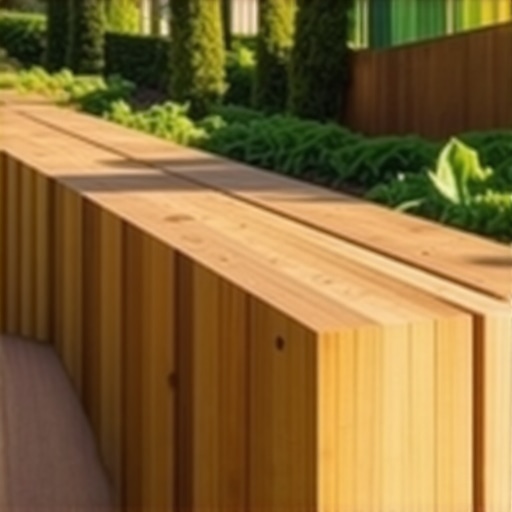
Why Wood Retaining Walls Fail and How to Stop the Rot
Building a wood retaining wall that survives beyond a decade requires managing hydrostatic pressure, selecting 0.60 PCF retention timbers, and ensuring absolute soil-to-wood isolation through geotextile membranes and clean stone backfill. Most failures occur because installers treat wood as an inert object rather than a biological material subject to fungal decay and moisture-induced stress. To stop rot, you must eliminate the anaerobic environment where wood-destroying organisms thrive.
I recently got called out to tear up a $30,000 project that was sinking and bowing because the previous contractor thought he could save a few hundred bucks by using ‘ground contact’ lumber from a big-box store and backfilling it with native clay soil. It was a disaster. Within three years, the timber was soft enough to push a screwdriver through. The clay held water against the wood like a sponge, and the lack of a perforated pipe meant the hydrostatic pressure was literally shoving the wall into the driveway. We had to excavate the whole mess, haul away tons of water-logged debris, and start from the dirt up. This is what happens when you treat hardscaping like a weekend DIY craft instead of civil engineering.
“A retaining wall doesn’t fail because of the stone or timber; it fails because of the water trapped behind it.” – Hardscape Engineering Axiom
The Engineering of Timber Selection: Beyond the Surface
Not all pressure-treated wood is created equal. For a wall that lasts 20 years, you need timber rated for ‘Permanent Wood Foundations’ or ‘Severe Environmental Stress.’ We look at the pound-per-cubic-foot (PCF) retention level of the preservative. Standard ‘ground contact’ is often 0.40 PCF, which is insufficient for the constant saturation seen in retaining structures. You want 0.60 PCF or higher, typically treated with Chromated Copper Arsenate (CCA) or Micronized Copper Azole (MCA). This chemical loading ensures the wood fibers are toxic to the fungi that cause brown rot. If you see ‘UC4A’ on the tag, put it back. You need ‘UC4B’ or ‘UC4C’ for structural critical applications. Don’t compromise here. A cheaper beam is just expensive compost in five years.
The Vital Role of Drainage and Hydrostatic Pressure
Water is the heaviest thing you will ever deal with in landscaping. One cubic foot of saturated soil can weigh over 100 pounds. Without a way for that water to escape, it pushes against your wall with thousands of pounds of force. This is why yard cleanup and site grading are the first steps. You must install a 4-inch perforated SDR-35 pipe at the base of the wall, sloped at a 1% minimum grade to a daylight exit. This pipe must be encased in 3/4-inch clean, angular crushed stone. Never use ‘river rock’ for drainage; it’s too round and doesn’t lock together. You need the edges of crushed stone to create a stable, porous chimney that lets water drop straight to the pipe.
| Material Property | Standard Specification | High-Performance (2026) Goal |
|---|---|---|
| Timber Grade | UC4A (Ground Contact) | UC4B (Heavy Duty Ground Contact) |
| Preservative Retention | 0.40 PCF | 0.60 PCF to 0.80 PCF |
| Backfill Medium | Native Soil/Dirt | 3/4″ Clean Crushed Stone |
| Filter Fabric | None or Burlap | Non-woven Geotextile (4oz+) |
| Deadman Anchors | Every 8 feet | Every 4-6 feet (Staggered) |
How much modified gravel do I need for a retaining wall base?
For a standard wood wall, you need a 6-inch deep base of compacted 21A or 57 stone that is at least twice as wide as the timber thickness. This footing distributes the vertical load and prevents the wall from settling unevenly into the subgrade. Use a plate compactor. The base should be so hard that the compactor literally bounces off the surface. If you can leave a footprint, it is not compacted enough. This foundation is the only thing standing between your wall and a catastrophic lean. Don’t skip the tamper.
What is the best wood for a retaining wall against soil?
The best wood for structural soil contact is Douglas Fir or Southern Yellow Pine pressure-treated to 0.60 PCF retention, though Western Red Cedar heartwood is a natural alternative for low-height, non-structural decorative borders. For walls over 2 feet, the structural integrity of treated pine is required to handle the shear forces of the earth behind it. If you are in a high-moisture biome, use timbers specifically incised—small slits cut into the wood—to allow the preservative to penetrate deeper into the heartwood. It looks industrial, but it lasts.
“Effective drainage systems must be designed to prevent the buildup of hydrostatic pressure, which is the primary cause of wall displacement in residential landscapes.” – USDA Forest Service Research Note
The Ground-Up Build: Step-by-Step Resilience
- Excavate and Level: Dig a trench 12 inches deep. The first course of timber must be partially buried. This ‘toe-in’ prevents the bottom of the wall from kicking out.
- The First Course: This is the most important 5% of the job. Use a 4-foot level and a transit. If the first timber is off by an eighth of an inch, the top of the wall will be off by inches.
- Filter Fabric Isolation: Line the back of the wall with non-woven geotextile fabric. This prevents fine soil particles from clogging your drainage stone. If the stone gets clogged with mud, the drainage fails. Period.
- Deadmen and Spikes: Every two courses, install ‘deadmen’—timbers running perpendicular into the hillside with a T-bar on the end. Use 10-inch or 12-inch galvanized spikes or TimberLOK screws. Do not use bright nails; they will rust and snap.
- Backfill Strategy: Add stone in 6-inch lifts. Compact each lift. Do not dump all the stone at once. You need density.
Once the wall is structural, you can focus on the aesthetics like a new sod install or integrating irrigation lines. If you are running irrigation, never put the lines directly behind the wall where a leak could wash out your backfill. Offset them by at least 3 feet. This keeps the wall dry and the lawn hydrated. Proper yard cleanup after the build involves ensuring the final grade slopes away from the wall’s face to prevent surface water from undermining the footer. It’s about layers. It’s about physics. Do it right, or don’t do it at all.