
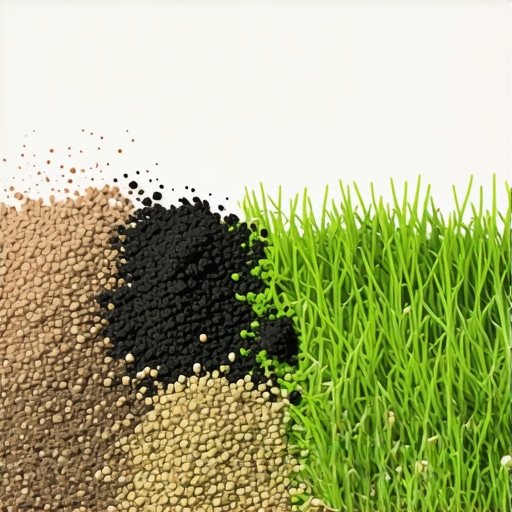
The Anatomy of a Scorched Lawn: Identifying Chemical Desiccation
Fertilizer burn occurs when high concentrations of nitrogen salts pull moisture out of the grass blades through osmosis, leading to physiological drought. In 2026, many high-efficiency synthetic fertilizers have a high salt index that triggers immediate leaf desiccation if soil moisture is insufficient or application rates are botched. You see it first as a yellowing streak, then a brittle, straw-brown mat. It is not a disease. It is a chemical overdose. I saw this exact scenario last Tuesday. A homeowner called me in a panic after they completely torched their front lawn by applying a high-nitrogen ‘turf booster’ during a 90-degree heatwave with the spreader wide open. The yard looked like it had been hit with a blowtorch. This was not a lack of water; it was the presence of too much salt. When you dump concentrated urea or ammonium nitrate on a plant, you are effectively creating a saline environment that forces water to flow out of the roots and leaves rather than into them. It is a brutal way for a lawn to die. Most people think more is better. In the soil chemistry world, more is often a death sentence. To fix this, you have to understand the nitrogen cycle and the osmotic pressure at the root zone.
“Excessive nitrogen applications can lead to salt accumulation in the root zone, which increases the osmotic pressure of the soil solution, making it difficult for the plant to take up water even when moisture is present.” – Penn State Center for Turfgrass Science
What Causes the Fertilizer Burn Phenomenon?
The root cause of lawn burn is the Nitrogen-Potassium-Phosphorus (NPK) ratio and the delivery mechanism of the granules. Most 2026 commercial fertilizers use quick-release synthetic nitrogen because consumers want an instant green-up. However, if the irrigation system is not calibrated to wash those salts off the leaf blade and into the soil profile immediately, the salt sits on the plant tissue. This creates a high-pressure gradient. The water inside the grass cells is drawn toward the salt crystals. The cell walls collapse. This is why you see the burn patterns in the shape of the spreader’s path. If you see stripes of dead grass, your spreader was leaking or overlapping too much. If the whole yard is yellow, your rate was too high for the current soil pH and temperature. We see this often during a botched sod install where the homeowner tries to ‘feed’ the new grass before the roots have even established a hydraulic connection with the subsoil. It is a recipe for disaster.
How long does it take for fertilizer burn to go away?
Recovery from fertilizer burn typically takes 3 to 6 weeks depending on the severity of the root damage and the grass species. If the crown of the plant is still green and hydrated, the grass will push out new growth once the excess salts are flushed from the soil through heavy irrigation. If the crown is tan and shriveled, the plant is dead, and you will need to perform a yard cleanup followed by reseeding or new sod. Do not expect an overnight fix. You are dealing with a chemical injury that requires the soil microbiology to reset.
The Remediation Process: Flushing the Salt Profile
Once the damage is done, your first instinct is to mow it. Don’t. You need to focus on hydro-flushing. You must saturate the soil to a depth of 6 inches to move the nitrogen salts below the root zone. This is where irrigation management becomes critical. You aren’t just watering; you are leaching. Use a soil probe to check the moisture depth. If you have heavy clay soil, this is harder because the water won’t move. In sandy soils, the salt flushes quickly but can contaminate groundwater, so you have to be precise.
| Fertilizer Type | Burn Risk Level | Recommended Flush Volume |
|---|---|---|
| Synthetic Quick-Release | Extreme | 1.5 Inches of Water Immediately |
| Organic / Milorganite | Low | 0.5 Inches of Water |
| Sulphur-Coated Urea | Moderate | 1.0 Inch of Water |
| Liquid Foliar Nitrogen | High | 0.75 Inches of Water |
Rebuilding the Soil Microbiome Post-Burn
Chemical burns don’t just kill the grass; they sterilize the top layer of the soil biology. Beneficial microbes and mycorrhizal fungi are sensitive to high salt concentrations. After you have flushed the area, you need to reintroduce life. I recommend a top-dressing of high-quality compost. This adds organic matter that can buffer future nitrogen spikes. If the area is completely dead, a sod install is your best bet for a 2026 recovery. But don’t just slap sod over the dead spots. You have to remove the old, salt-laden thatch first. A proper yard cleanup involves power-raking the dead material out so the new roots can touch actual dirt. If you skip this, the new sod will just sit on a bed of toxic hay and die within a month. I tell my crew: if the soil isn’t right, the plant doesn’t stand a chance. It is about the foundation, not the decoration.
“The salt index of a fertilizer is a measure of the increase in osmotic pressure of the soil solution produced by the fertilizer. High salt index materials require more careful placement and timing.” – International Plant Nutrition Institute
Can I neutralize fertilizer with lime?
No, you cannot neutralize fertilizer burn with lime. Adding lime increases the soil pH, which can actually make certain nitrogen forms, like ammonium, more volatile and toxic to the roots in some conditions. Lime is for acidity, not for salt. The only solution for salt is dilution. Use water. Lots of it. Stop looking for a magic powder to fix a liquid chemistry problem. Get the hose out and start leaching the soil profile immediately. Speed is the only factor you can control once the spreader has done its damage.
The Preventive Checklist for Future Applications
- Calibrate the Spreader: Use a catch-pan to ensure you are actually dropping the pounds-per-thousand-square-feet listed on the bag.
- Check the Weather: Never apply synthetic fertilizer if the ambient temperature is over 85 degrees Fahrenheit.
- Water-In Immediately: Your irrigation should run for at least 20 minutes immediately after the spreader touches the grass.
- Avoid Overlaps: Use a marker dye or a steady walking pace to prevent double-dosing the turns.
- Soil Testing: Know your current nitrogen levels before adding more. Most yards are already over-saturated.
Professional Restoration vs. DIY Recovery
Sometimes the burn is too deep. If you have charred more than 50% of the lawn, a yard cleanup and total renovation are necessary. This is where a professional landscaping firm earns its keep. We don’t just throw seed; we core-aerate to break up the salt crust, we apply gypsum to help displace sodium in clay soils, and we ensure the irrigation coverage is 100% uniform. A patchy recovery looks worse than a dead lawn. If you are in a region with heavy clay, the salts will linger. You might need to physically excavate the top two inches of soil if the burn was severe enough to turn the soil surface white. It sounds extreme, but so is a $5,000 dead lawn. Pay attention to the labels. Use slow-release products. And for heaven’s sake, stop over-applying. The grass will tell you what it needs if you bother to look at it. Chemistry doesn’t lie, and it doesn’t offer second chances once the cell walls have burst.