
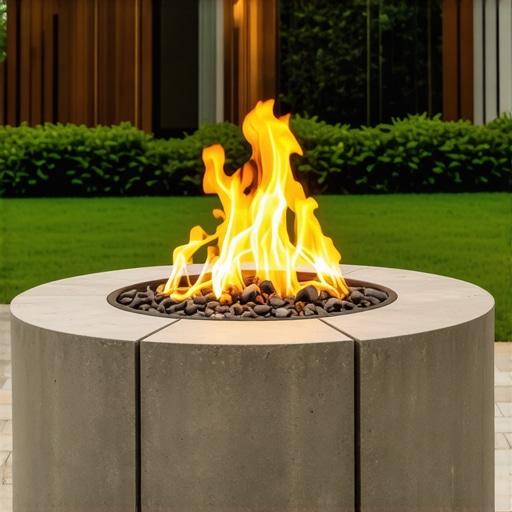
Success in any hardscape project is determined months before the first match is struck. Building a modern fire pit with simple cinder blocks sounds like a weekend DIY task, but without a grasp of structural engineering and thermal dynamics, you are just stacking debris that will crack by next winter. Professionals look at the ground as a living, shifting enemy. You must respect the hydrostatic pressure and soil compaction requirements or your investment will heave and fail. Don’t be the homeowner who ignores the base layer.
The Critical Foundation: Why 80% of Work Happens Underground
A stable cinder block fire pit requires a compacted sub-base of at least 4 to 6 inches of modified gravel to prevent settling and ensure proper drainage. You cannot simply place blocks on top of sod install or loose dirt. If you do, the weight of the CMUs (Concrete Masonry Units) combined with the freeze-thaw cycle will cause the structure to tilt. I recently got called out to tear up a $30,000 patio that was sinking because the previous contractor skipped the mechanical compaction of the subgrade. They laid expensive pavers over a soft 2-inch sand bed with no structural base. Within two years, the entire outdoor kitchen was leaching into the neighbor’s yard. It was a total loss. I had to excavate the entire site, haul away the contaminated soil, and restart with a vibratory plate compactor. It was a mess. Don’t skip the base. It is the only thing keeping your project from becoming a pile of rubble.
“A retaining wall doesn’t fail because of the stone; it fails because of the water trapped behind it.” – Hardscape Engineering Axiom
The Physics of Site Preparation
Before digging, you must perform a yard cleanup to remove all organic matter. Grass and roots will decay, leaving air pockets that lead to subsidence. You need to reach the sub-soil, which is the stable layer beneath the topsoil. Once you reach that depth, you must address irrigation. If you have an existing sprinkler system, those lines must be capped or rerouted at least 3 feet away from the heat source. Heat travels through the soil. It will melt PVC pipes. I have seen it happen. Use a transit level to ensure your excavation is flat. A 1% slope is acceptable for drainage, but for a fire pit, you want the base to be perfectly level to prevent the blocks from walking over time.
| Material Type | Purpose | Compaction Rating |
|---|---|---|
| #2A Modified Stone | Structural Base | 95% Proctor |
| ASTM C90 CMU | Fire Pit Frame | 1900 PSI |
| Firebrick (Alumina) | Thermal Protection | 2000°F+ |
| Polymeric Sand | Joint Stabilization | Wash-out resistant |
Thermal Protection: The Firebrick Mandate
Standard cinder blocks are not designed for direct fire contact. They contain moisture trapped in the concrete pores. When that moisture hits 212 degrees Fahrenheit, it turns to steam. If that steam can’t escape, the block will undergo spalling or, in extreme cases, a small explosion. You must line the interior of your cinder block pit with firebrick and refractory mortar. This creates a thermal barrier that protects the structural integrity of the outer blocks. The outer shell is for aesthetics; the inner lining is for safety. Don’t skip this. [image_placeholder_1]
The Engineering Checklist for a Modern Pit
- Utility Marking: Always call 811 before you dig. Gas and electric lines are often shallower than you think.
- Excavation Depth: Minimum 8 inches (6 inches for base, 2 inches for block embedment).
- Compaction: Use a hand tamper or plate compactor every 2 inches of gravel lift.
- Drainage: Include a 2-inch weep hole at the base layer to allow rainwater to exit the pit interior.
- Heat Shielding: Use a steel ring or firebrick lining with a 1-inch air gap between the brick and the cinder block.
How much modified gravel do I need for a fire pit base?
Calculating gravel volume requires measuring the square footage of your excavation and multiplying it by the depth, typically 6 inches, then adding a 20% compaction factor. For a standard 4×4 foot pit area, you will need approximately 0.5 cubic yards of CR-6 stone or modified gravel. Tamping this stone until it is “rock hard” is mandatory. The tamper should literally bounce off the surface when you hit it. If it feels soft, keep tamping. Water is also key here. Lightly mist the gravel to achieve the optimum moisture content for maximum density. If it is too dry, the stones won’t lock together. If it is too wet, you’re just making mud.
Can I use regular mortar for cinder block fire pits?
Standard Type S or Type N mortar will fail under the thermal expansion cycles of a wood-burning fire; you must use refractory cement for the inner lining. High-heat mortar contains calcium aluminate, which handles the expansion and contraction without cracking. On the exterior cinder blocks, you can use a high-strength masonry adhesive if you are dry-stacking or standard mortar if you plan to apply a stone veneer later. But for the core, heat-rated materials are the only option. The fire pit is a machine. Treat it like one.
“Thermal shock in non-refractory materials leads to catastrophic structural failure during rapid cooling phases.” – Ceramic Engineering Manual
The Settlement Period and Maintenance
During the first year, expect the structure to settle slightly. This is why using a flexible joint like polymeric sand or a thin-set mortar is superior to rigid concrete slabs. If you see cracks forming in the first 30 days, your compaction was insufficient. You must also monitor the landscaping around the pit. Do not place mulch or flammable sod install right up to the edge. Use a 12-inch border of decorative river rock or pea gravel. This acts as a fire break and prevents the heat from drying out your lawn’s root system. Check your irrigation heads to ensure they aren’t spraying directly onto the hot blocks, which can cause thermal shock and cracking. Build it right the first time. It is cheaper than doing it twice.