
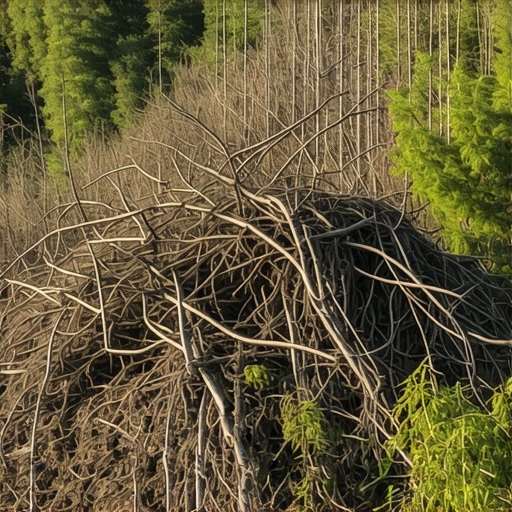
The Strategic Blueprint for Managing 2026 Brush Piles
Managing a massive accumulation of woody debris requires more than just brute force; it requires an understanding of biomass engineering. When you are looking at clearing overgrown piles from years of neglect, the immediate instinct is to rent a chipper. However, chippers are loud, dangerous, and often unnecessary if you understand how to manipulate the carbon cycle. I always drill into my new crew members: if you don’t fix the soil grading first, every plant you put in the ground is just expensive compost. This applies to brush management as well. If you leave a pile to rot on a high point of your yard without managing the runoff, you are creating a nutrient-leaching site that will sour the soil pH for any future sod install. We look at the dirt first, then the debris.
The Bio-Chemical Breakdown of Brush Piles
To clear 2026 brush piles without a chipper, you must utilize strategic decomposition, mechanical brush mowing, and trench burying to manage biomass effectively. This approach focuses on the carbon-to-nitrogen ratio and soil microbial activity to recycle nutrients back into the landscape without expensive hauling fees or mechanical processing. Woody debris is primarily lignin and cellulose. These compounds do not disappear; they are dismantled by fungal networks. If you stack brush haphazardly, you create a dry environment where decomposition stalls. If you stack it with intent, you create a biological reactor.
“Managing woody debris on-site requires a balance of moisture and nitrogen to facilitate the breakdown of lignin by basidiomycete fungi.” – Penn State Extension: Managing Woody Biomass
How long does a brush pile take to rot naturally?
A standard brush pile of hardwood branches (2-4 inches in diameter) will take approximately five to seven years to decompose fully if left untouched. However, by increasing soil contact and maintaining moisture levels, you can accelerate this process to under 24 months. Compaction is key. We often use a mini-skid steer to crush the pile into the earth. This increases the surface area for microbes. It speeds things up. Don’t leave air pockets.
Tactical Execution: The Trench and Fill Method
If you have the space and the equipment, burying brush—often called Hugelkultur or trenching—is the most efficient way to clear a lot for a future landscaping project or yard cleanup. You dig a trench at least 3 feet deep. You lay the largest logs at the bottom. You layer smaller brush on top. You finish with the fines and the soil you excavated. This creates a long-term moisture reservoir. It’s civil engineering with sticks.
| Method | Mechanical Load | Nitrogen Draw | Timeframe |
|---|---|---|---|
| Trench Burying | High (Excavator) | Low (Sub-surface) | 5-10 Years |
| Brush Mowing | Medium (Track Loader) | High (Surface) | 6-12 Months |
| Layered Composting | Manual | Moderate | 2-4 Years |
Preparing the Site for Sod Install and Irrigation
Once the bulk of the brush is managed, the soil is often a mess of roots and uneven grade. You cannot just throw down sod. You have to address the soil structure. If you have buried brush, you must account for settling. Over the next three years, that ground will sink as the wood rots. This is where most hacks fail. They grade it flat, lay the sod, and a year later, the yard looks like a mogul field. You must over-fill the trench areas by at least 15% to account for biomass loss. Before the sod goes down, we test the pH. Woody debris tends to make the soil slightly acidic. We may apply pelletized lime to bring the pH back to the 6.5 range that Kentucky Bluegrass or Tall Fescue prefers.
What is the best way to clear brush without a chipper?
The best method is using a forestry mulcher or a heavy-duty brush mower which returns the organic matter directly to the topsoil layer. This avoids the need for hauling while immediately suppressing weed growth through a heavy mulch mat that regulates soil temperature and moisture. Don’t skip the grading. It will rot eventually, but you need a plan for the transition. Use a 100-lb water-filled roller to check for soft spots before the sod arrives.
Irrigation Logic After Brush Removal
Clearing heavy brush often reveals old, abandoned irrigation lines. These are usually 3/4 inch PVC that has become brittle from root intrusion. Before you finalize your yard cleanup, run a pressure test. We check for a minimum of 40 PSI at the furthest head. If the brush clearing involved heavy machinery, you likely crushed a few lines. Dig them up. Replace them with Schedule 40 PVC, not the thin-walled stuff. When you install new sod, your irrigation must be dialed in. We follow the one-inch rule: one inch of water per week, delivered in two deep sessions to force roots downward. Shallow watering is a death sentence. It creates weak turf.
“Irrigation systems must be designed to accommodate the hydraulic needs of the specific plant material, ensuring that water penetration reaches the root zone without causing anaerobic soil conditions.” – ICPI Tech Spec 12: Site Drainage and Grading
- Identify invasive species like Buckthorn or Multiflora Rose before burying; they can sprout from root fragments.
- Mark all utility lines via 811 before digging trenches for brush disposal.
- Test soil pH and NPK levels before any sod installation to ensure nutrient availability.
- Grade the area to a 2% slope away from any permanent structures to prevent hydrostatic pressure buildup.
- Verify irrigation coverage with a ‘tuna can test’ to ensure even water distribution.
Engineering the Post-Cleanup Landscape
A yard cleanup isn’t finished when the brush is gone. It’s finished when the site is stabilized. If you leave bare dirt after clearing 2026 brush piles, you are inviting erosion and invasive species. You need a cover crop or immediate landscaping. If you are doing a sod install, ensure the soil-to-root contact is absolute. Air is the enemy of new roots. We use a starter fertilizer with a high middle number (Phosphorus) to jumpstart root development. Avoid high-nitrogen fertilizers for the first 14 days. It will burn the tender new growth. Stick to the science. Landscaping is biology. Treat it like that.