
The Forensic Autopsy of a Suffocated Lawn
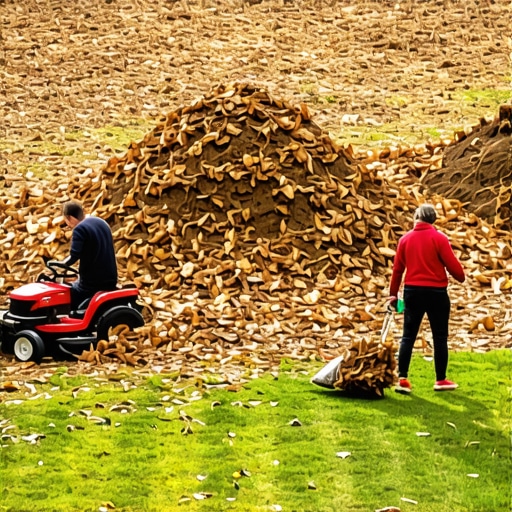
The sight of a heavy 2026 leaf pile is not just a cosmetic nuisance: it is a biological hazard that creates an anaerobic environment where pathogens like Pythium and Rhizoctonia thrive. Within 48 hours of saturation, these dense mats of biomass trap hydrostatic moisture against the turf crown, effectively drowning the plant by preventing vital gas exchange and blocking 100% of photosynthetic light. You see it every spring: that matted, slimy grey patch where the grass didn’t just go dormant; it rotted. It will rot. Do not ignore the physics of decomposition. I always drill into my new crew members: if you don’t fix the soil grading and clear the debris first, every plant you put in the ground is just expensive compost. This applies double to sod install projects. If you let 4 inches of oak leaves sit on fresh sod, you are throwing your investment into a woodchipper. I have seen $10,000 installations wiped out in a single wet November because the homeowner thought the leaves looked ‘natural.’ Nature is trying to turn your lawn into a forest floor. If you want turf, you have to fight that process with engineering and biology.
Why Massive Leaf Piles Kill Your Turf in 48 Hours
Heavy leaf piles create an anaerobic environment that traps moisture and heat, leading to crown rot and fungal pathogens like Pythium. Without gas exchange and photosynthesis, your grass enters a rapid decline that no amount of spring fertilizer can fix. The chemistry is simple: leaves are high in carbon. When they sit on nitrogen-hungry turf in a wet environment, they create a microbial feeding frenzy that depletes the soil surface of oxygen.
“When leaf litter exceeds 20% of the turf surface, the resulting reduction in photosynthetic activity leads to rapid carbohydrate depletion in the root system.” – Michigan State University Extension
This is not a suggestion; it is a biological limit. Once the root system is depleted, the turf cannot survive the first hard freeze of the winter.
Mowing and Mulching: When the Micro-Nutrients Win
Mulching is effective when leaf cover is sparse, typically less than 2 inches. Using a high-lift mulching blade shreds carbon into the soil, providing natural organic matter that feeds the microbiome and reduces the need for supplemental nitrogen applications. The secret is the C:N ratio (Carbon to Nitrogen). If you chop the leaves into particles smaller than a dime, they filter down to the soil surface where earthworms and microbes can process them. This is the ultimate landscaping hack. However, you must sharpen your blades every 10 hours of operation. Dull blades tear the leaf tissue and the grass blade, leaving jagged edges that are entry points for Snow Mold. If you see clumping, you have failed. Clumps are just mini-piles that cause the same rot as the big ones. Stop. Adjust the deck height to 3.5 inches and make a second pass.
The Case for Bagging: When Bio-Mass Overwhelms the Soil
Bagging or manual yard cleanup is mandatory when leaves exceed 3-4 inches. Excess debris prevents irrigation from reaching the root zone and creates a matting effect that suffocates the turf, making it impossible for a mower to process the material without leaving clumping debris. This is where most homeowners fail. They try to mulch a 6-inch pile and end up with a layer of ‘leaf mulch’ that is 1 inch thick. That is still too thick. It creates a thatch layer that prevents water infiltration.
“Excessive organic debris serves as a primary inoculum source for fungal pathogens during cool, damp fall cycles.” – Cornell Agronomy Manual
If you can’t see the grass blades through the shredded leaves, you must bag. Use a high-vacuum collection system or a heavy-duty rake. My crews use 10-horsepower blowers to move the bulk to the curb, then a final vacuum pass to clear the fines. This ensures the irrigation system can still penetrate the soil during those late autumn dry spells.
How much leaf debris can a lawn mower actually mulch?
A commercial-grade mower with Gator blades can handle up to 3 inches of dry leaves if you move slowly. However, if the leaves are wet, that capacity drops to 1 inch. Wet leaves stick to the underside of the mower deck, destroying the static pressure required to lift and shred the material. If you hear the engine bogging down, you are compacting the soil and destroying your turf density.
Will leaving leaves on the grass kill my new sod install?
Yes, it is lethal. New sod install lacks a deep root system. It relies on the crown and top 0.5 inch of soil for respiration. A heavy leaf mat creates a thermal blanket that can raise soil temperatures enough to trigger fungal growth even in 40-degree weather. Clear it immediately. Don’t wait for the weekend.
The 2026 Cleanup Efficiency Matrix
The following table breaks down the operational decision-making for professional-grade results based on material depth and moisture content.| Metric | Mulching (Mowing) | Bagging (Removal) | | :— | :— | :— | | Leaf Depth | < 2 inches | > 3 inches | | Soil Impact | Increases Organic Matter | Prevents Pathogens | | Nitrogen Requirement | Decreases | Increases | | Labor | Low (Weekly) | High (Seasonal) | | Equipment | Mulch Kit / High-Lift Blades | Vacuum / Power Blower | | Moisture Tolerance | Dry Only | Dry or Wet |
The Professional Yard Cleanup Checklist
Before you start the engine, follow these steps to ensure you aren’t doing more harm than good:
- Check Soil Moisture: If the ground is ‘squishy,’ do not take a heavy mower over it. You will cause soil compaction that lasts for years.
- Inspect Irrigation: Ensure all irrigation heads are retracted. Heavy leaf piles hide popped-up heads that are easily sheared off by a mower deck.
- Blade Sharpness: A dull blade is a turf killer. If the tips of your grass look white after cutting, your blades are dull.
- pH Check: Large amounts of decomposing oak leaves can slightly lower surface pH. Plan for a lime application in the spring to balance the acidity.
The Long-Term Remediation Plan
Once the leaves are cleared, your job isn’t done. The soil is likely stressed. I recommend a late-season core aeration if the ground isn’t frozen. This opens up macropores in the soil, allowing the root zone to breathe after being smothered. If you chose the bagging route, you have removed nutrients from the system. You must replace them. Use a slow-release, high-potassium winterizer fertilizer. Potassium strengthens the cell walls of the grass, helping it resist the hydrostatic pressure of snow and ice. This is the difference between a lawn that wakes up green in April and one that looks like a brown wasteland. Don’t skip the science. Your yard is a living organism; treat it with the engineering respect it deserves.