
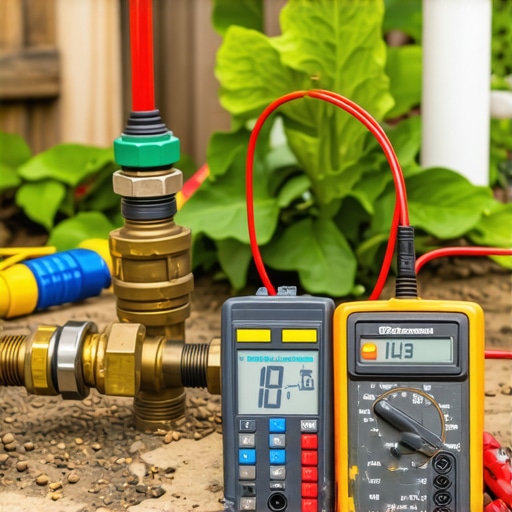
Diagnostic Mastery: Why the $15 Multi-Meter is Your Most Important Tool
To fix a 2026 irrigation solenoid, use a digital multi-meter to test electrical resistance (ohms) at the controller or valve: a healthy solenoid typically reads between 20 and 60 ohms, while a reading of zero indicates a short and infinity indicates a broken wire. I always drill into my new crew members: if you don’t fix the soil grading and electrical diagnostics first, every plant you put in the ground is just expensive compost. You can spend $10,000 on a high-end sod install, but if a $20 solenoid fails and you can’t diagnose it, that sod becomes hay in 72 hours of summer heat. Most hacks just start digging up the yard when a zone doesn’t pop. We don’t do that. We use physics. Electrical resistance tells the story of what is happening under the dirt without ever picking up a shovel. If you are doing a yard cleanup, testing the irrigation system should be the first item on your checklist, not an afterthought. One bad wire nut or a corroded coil can ruin a landscaping project before the first mulch bag is even opened.
The Anatomy of a Failing Solenoid
An irrigation solenoid is an electromagnetic switch. When the controller sends 24 volts AC down the line, it creates a magnetic field that lifts a metal plunger. This allows water to bypass the diaphragm and open the valve. Over time, the copper windings inside that plastic housing break down. Heat, moisture, and ground surges cause the insulation on those wires to fail. When that happens, the coil either shorts out or the circuit breaks entirely. Most homeowners think they need a whole new valve. They don’t. They usually just need a new solenoid and a better pair of waterproof wire connectors. A $15 multi-meter from a hardware store will tell you exactly where the break is. Don’t guess. Measure. Testing at the controller first saves you from digging in the mud to find a valve box that hasn’t been opened in a decade.
“The resistance of a solenoid coil is a reliable indicator of its electrical health: readings significantly outside the manufacturer’s specified range (typically 20 to 60 ohms) suggest a short circuit or an open winding.” – Irrigation Association Technical Manual
Step-by-Step Diagnostic Table
Use the following reference values to determine if your solenoid is functional or ready for the scrap heap. Always test with the power off and the common wire disconnected to ensure an accurate reading.
| Reading on Multi-Meter | Diagnosis | Required Action |
|---|---|---|
| 0 – 10 Ohms | Short Circuit in Coil | Replace Solenoid Immediately |
| 20 – 60 Ohms | Healthy Circuit | Check Mechanical Blockages |
| 100+ Ohms | Corroded Wiring or Faulty Coil | Replace Connectors and Re-test |
| Infinity / O.L. | Open Circuit (Broken Wire) | Locate Wire Break or Replace Solenoid |
How to Perform the Resistance Test
First, locate your irrigation controller. Open the panel and identify the ‘Common’ wire and the specific zone wire that isn’t firing. Set your multi-meter to the ‘Ohms’ setting (the Ω symbol), usually at the 200 range. Place one probe on the common terminal and the other on the zone wire terminal. If the reading is between 20 and 60, your solenoid is electrically sound. If the meter reads 1 (infinity) or O.L., the circuit is broken. This could be a cut wire in the yard or a dead solenoid. If the reading is very low, the solenoid has melted internally. This often happens after a nearby lightning strike or a power surge. Check the connections. Use DBR/Y-6 waterproof connectors. Do not use standard wire nuts. They will corrode. It is a certainty.
“Proper irrigation scheduling must account for soil infiltration rates to prevent anaerobic conditions that lead to root rot in newly installed sod.” – Texas A&M AgriLife Extension
How many ohms should a Rain Bird solenoid have?
A standard Rain Bird solenoid should ideally measure between 35 and 50 ohms when tested at room temperature. Variations are common depending on the length of the wire run from the controller to the valve. If you are testing a system with 200 feet of 18-gauge wire, expect the resistance to be slightly higher. If your reading exceeds 60 ohms, you likely have a poor connection at the valve box where the wires are spliced. Clean the copper and use fresh grease-filled wire nuts.
Can a bad solenoid cause a high water bill?
Yes, a solenoid that is partially failing can cause a valve to stay ‘weeping’ or stuck open. If the plunger does not fully seat because of a weak magnetic pull or mechanical grit, water will constantly flow through the zone. This is common during landscaping renovations where dirt enters the main lines. This slow leak is often silent and won’t be noticed until you see a swampy spot in your yard or receive a massive utility bill. Always listen to your valves. They should click firmly. A humming valve is a sign of electrical distress.
- Inspect valve boxes for standing water or mud.
- Verify that wire nuts are grease-filled and waterproof.
- Ensure the controller output is a steady 24V-28V AC.
- Check the plunger for mineral buildup or grit.
- Tighten the solenoid hand-tight: never use a wrench.
The Forensic Recovery: Fixing the Infrastructure
If the electrical test passes but the zone still won’t water, you have a mechanical failure. This is where the forensic autopsy begins. Unscrew the solenoid and check the plunger. Is it stuck? Does the spring have tension? Often, a small pebble or a grain of sand from a recent sod install gets lodged in the port. This prevents the pressure from equalizing. Clean the internal ports with a thin wire. Don’t use lubricants or WD-40. These attract grit and will gum up the diaphragm. If the diaphragm is torn, the valve will never close. Replace it. It is a $10 part that saves you from a $200 repair bill later. High-quality irrigation management is about precision, not guesswork. Most people wait until the grass is brown to check their valves. Be the professional who checks them during the yard cleanup phase. Your soil health depends on consistent, metered hydration. Anything less is just neglect disguised as gardening.