
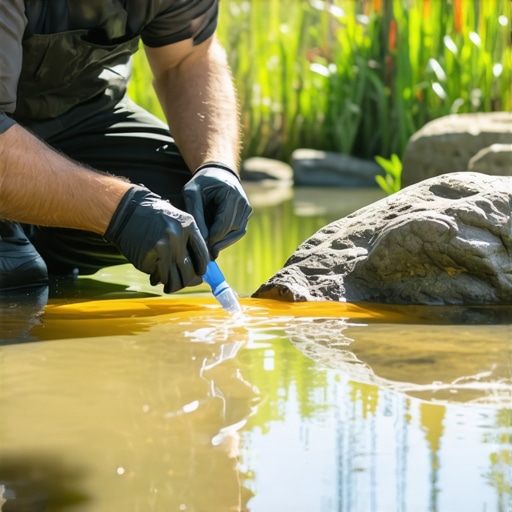
The Hydraulic Crisis: Why Your Pond Level is Dropping
A pond losing water is not a mystery; it is a failure of hydraulic containment usually caused by liner punctures, seam degradation, or hydrostatic pressure shifts. To fix a 2026 pond liner puncture, you must identify the leak site and apply a UV-cured resin that creates a molecular bond with the EPDM or PVC material. This process ensures a 100% waterproof seal that resists hydrostatic force better than traditional adhesives. Most homeowners mistake evaporation for a leak. If you are losing more than a quarter-inch of water in 24 hours without extreme heat, your liner is compromised. It is that simple. Don’t waste time with ‘miracle’ sprays or cheap silicone. These materials cannot handle the constant 62.4 pounds per cubic foot of pressure exerted by water. I have spent two decades digging out failed DIY ‘fixes’ that turned into expensive muck pits because the installer didn’t understand polymer science.
The Hardscape Autopsy: Why Traditional Liner Patches Fail
I recently got called out to tear up a $30,000 waterfall and patio system that was sinking because the previous contractor tried to patch a major liner tear with standard roofing tape. Within six months, the plasticizers in the liner migrated, the adhesive turned into a gummy mess, and the water began saturating the structural subgrade. This saturation led to soil liquefaction under the primary retaining wall. The entire hardscape shifted three inches. It was a total loss. This is why I demand my crews use UV-cured resins. Unlike solvent-based glues that require 24 hours of dry time and perfect weather, UV resins use photo-initiators to trigger a cross-linking reaction in seconds. It does not matter if the air is humid or if the temperature is 40 degrees Fahrenheit. The resin forms a hard, flexible plastic shield that is essentially part of the liner itself.
“A retaining wall doesn’t fail because of the stone; it fails because of the water trapped behind it.” – Hardscape Engineering Axiom
This axiom applies to ponds as well. If your liner leaks, the water enters the soil, destroys your compaction rates, and eventually causes your paver patio or rock work to collapse into the void. Proper yard cleanup starts with ensuring your water features are airtight. We are building systems, not ornaments.
The Science of UV-Cured Resin in Aquatic Environments
UV-cured resin for pond liner repair utilizes photo-initiated polymerization to create a hermetic seal on EPDM, PVC, and HDPE surfaces. This technology allows for underwater curing and immediate hydrostatic load bearing, making it the most efficient method for 2026 pond maintenance protocols. The resin reacts to specific wavelengths (usually 365nm to 395nm) provided by a high-intensity UV lamp. When the light hits the resin, it triggers a chain reaction where monomers and oligomers link up to form a solid polymer matrix. This is the same tech used in aerospace and dentistry, and it is finally the standard for high-end landscaping. You aren’t just covering a hole; you are performing a chemical weld. The tensile strength of these resins often exceeds 3,000 PSI, which is far beyond what any backyard pond will ever exert. We calculate the required resin volume based on the puncture diameter plus a 2-inch overlap margin to ensure the shear strength is maximized across the patch area.
How much UV-cured resin do I need for a patio pond repair?
For a standard puncture repair, you need approximately 15ml of high-viscosity UV resin per square inch of damage. This allows for a 2mm build layer that provides sufficient impact resistance against future mechanical damage from pond gravel or cleaning tools. Always measure the total linear footage of any cracks. If a crack exceeds 6 inches, you must reinforce the resin with a fiberglass mesh to distribute the lateral tension. Failure to use reinforcement on large tears is a rookie mistake. The resin is strong, but the liner will still stretch and contract. You need that mesh to act as the rebar of your patch.
Does UV resin work on EPDM rubber liners?
Yes, UV-cured resin is highly effective on EPDM (Ethylene Propylene Diene Terpolymer) liners provided the surface is prepped with a mechanical abrader and a solvent primer. EPDM is chemically inert, so you must create a rough surface profile for the resin to grab onto. I tell my apprentices that if the liner doesn’t look like 80-grit sandpaper before the resin goes on, the patch is a temporary bandage. We use a tack-cloth to remove any carbon black residue before application. If you skip the prep, the resin will peel off like a scab. Proper irrigation and drainage planning around the pond also prevents the freeze-thaw cycle from stressing these repair points in the winter.
The Forensic Remediation of a Puncture: Step-by-Step
The first step in any pond repair is a thorough yard cleanup around the site to prevent debris from contaminating the bonding zone. You cannot work in the mud. Drain the water level to 6 inches below the suspected leak. Clean the area with a stiff brush. Use a de-greaser if you have been using heavy algaecides or oils in the water. Once the liner is dry, use a flap disc or sandpaper to scuff a 4-inch radius around the hole. Apply the UV-cured resin starting from the center and spiraling outward. This prevents air bubbles from being trapped. Turn on your 395nm UV torch and hold it 2 inches from the surface for 60 seconds. The resin will go from liquid to a rock-hard solid instantly. Check for tackiness. If it is sticky, hit it with the light again. Once cured, you can immediately refill the pond. No waiting for 24 hours. No worrying about rain. This is civil engineering applied to the backyard.
| Repair Material | Cure Time | Psi Strength | UV Resistance | Durability |
|---|---|---|---|---|
| UV-Cured Resin | 60 Seconds | 3,500+ | Excellent | 15+ Years |
| EPDM Patch Tape | Instant (Pressure) | 400 | Moderate | 3-5 Years |
| Liquid PVC Glue | 24 Hours | 1,200 | Low | 5-7 Years |
| Silicone Sealant | 12-24 Hours | 200 | Poor | <1 Year |
Integrating Repair with Yard Cleanup and Irrigation Logic
Fixing the leak is only half the battle. If your pond is leaking, your irrigation sensors are likely working overtime to compensate for the water loss, which can lead to root rot in nearby sod installs. When we do a sod install near a water feature, we check the soil moisture levels daily. A leaking pond saturates the subsoil, creating an anaerobic environment where grass roots die.
“Agricultural drainage is the removal of excess water from the soil surface and/or the soil profile of cropland, as well as the management of the water table.” – USDA NRCS Technical Manual
If you don’t fix that liner puncture, you aren’t just losing water; you are killing your landscape investment. Every yard cleanup should include a dye test of the pond seams. We drop a small amount of fluorescein dye near suspected areas and watch for the pull. It is the only way to be sure. Stop guessing. Start measuring. Your irrigation system should be on a separate meter so you can track usage spikes that indicate a failure in the hydraulic integrity of your pond or sprinkler lines. Professional landscaping is about controlling water, not just looking at it.
- Step 1: Identify leak via dye test or water level monitoring.
- Step 2: Excavate rock cover and perform a deep yard cleanup.
- Step 3: Scrub the liner with a 10% muriatic acid solution if calcium scaling is present.
- Step 4: Sand the EPDM/PVC to create a mechanical key.
- Step 5: Apply UV-cured resin in 1mm increments for thick repairs.
- Step 6: Cure with a 10W+ UV LED lamp.
- Step 7: Pressure test by refilling and monitoring for 24 hours.
Precision matters. If you buy a cheap UV light from a toy store, the photons won’t penetrate the resin deep enough to create a full cure. You will have a hard shell with a liquid center. That is a recipe for a blowout. Spend the money on a professional-grade UV curing kit. If you treat your yard maintenance like an engineering project, it will last a lifetime. If you treat it like a hobby, you will be digging it up again next spring. It is your choice. The math doesn’t lie. A 1/16th inch hole can leak 100 gallons a day. That is thousands of gallons of wasted water and a wrecked water table under your lawn. Fix it right the first time with UV resin and get back to enjoying your property.