
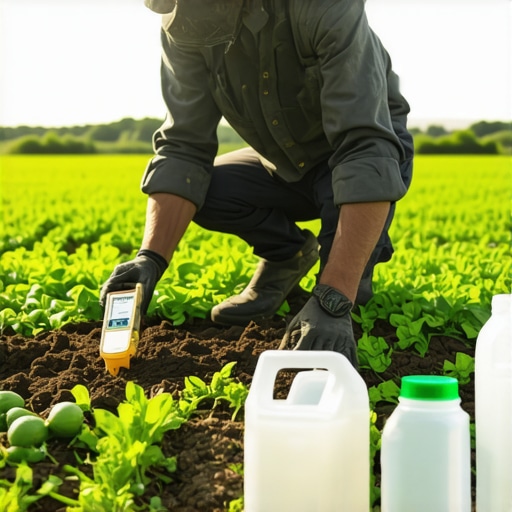
The Chemical Nightmare: Why Your Turf is Failing
A homeowner called me in a panic last spring after they completely torched their front lawn by applying three bags of ‘fast-acting’ lime without a single soil test. They thought the yellowing blades meant the soil was ‘sour.’ In reality, they had high-alkaline clay, and that extra lime spiked the pH so high it triggered an immediate iron chlorosis. The grass didn’t just turn yellow; it literally starved to death because the nutrients were chemically locked in the dirt. This is the reality of DIY chemistry: without understanding the cation exchange capacity (CEC) and current soil pH levels, you are just guessing with expensive chemicals. Fixing 2026 soil pH requires a forensic approach to nitrogen availability and microbial activity. Most hacks will tell you to just throw down some pellets and hope for the best. I’m here to tell you that hope isn’t a horticultural strategy. If your yard cleanup doesn’t include a lab-grade soil probe, you’re just moving debris around.
When to Apply Lime to Your Lawn
To raise soil pH in 2026, you must apply pelletized lime or dolomitic limestone when your soil test results show a pH below 6.0. This process neutralizes active acidity by replacing hydrogen and aluminum ions on soil particles with calcium and magnesium, directly improving nutrient uptake for new sod install projects. This isn’t about the grass; it’s about the chemistry of the dirt. When pH drops below 5.5, phosphorus becomes tied up in aluminum compounds, and your fertilizer might as well be salt for all the good it does.
“Soil pH is a master variable that affects the chemical, biological, and physical properties of soil. Liming is often necessary to reduce the toxicity of aluminum and manganese in acidic soils.” – Penn State Extension Agronomy Manual
How long does it take for lime to change soil pH?
Soil pH adjustment is a slow-motion chemical reaction, not an overnight fix. It typically takes six to twelve months for lime to fully react with the soil profile, depending on moisture levels and irrigation frequency. If you are planning a landscaping overhaul for next year, you need to be testing and liming right now. Don’t wait for the grass to die. Micro-fine lime reacts faster but leaches quickly; standard pelletized lime provides a more stable, long-term shift. You need water to move the calcium carbonate into the root zone. No water, no reaction. It’s that simple.
When to Apply Sulfur for Alkaline Soils
To lower soil pH, apply elemental sulfur when tests indicate a pH above 7.5, which is common in regions with limestone-heavy bedrock or high-alkaline irrigation water. Sulfur requires Thiobacillus bacteria to convert it into sulfuric acid, a biological process that effectively unlocks micronutrients like iron and manganese for the turf. This is a much harder battle than raising pH. You can’t just dump sulfur and walk away. If you over-apply, you’ll create localized ‘hot spots’ that kill the very soil microbes you’re trying to help.
“The oxidation of elemental sulfur to sulfate by soil microorganisms is the primary mechanism for lowering soil pH, a process that is highly dependent on soil temperature and moisture.” – Texas A&M AgriLife Extension
Can I apply sulfur and fertilizer at the same time?
Generally, you should avoid heavy applications of elemental sulfur and high-nitrogen fertilizer simultaneously. The salt index of combined applications can cause osmotic stress, pulling moisture out of the grass roots and causing ‘burn.’ I always recommend waiting at least three weeks between a sulfur treatment and a standard sod install fertilization. Your landscaping professional should be checking the electrical conductivity (EC) of the soil before doubling up on inputs. One mistake here ruins the season.
Comparison: Lime vs. Sulfur Application
Choosing the wrong amendment is a fast track to a dead yard. Use this table to differentiate your 2026 strategy.
| Feature | Lime (Calcium Carbonate) | Elemental Sulfur |
|---|---|---|
| Goal | Raise pH (Decrease Acidity) | Lower pH (Decrease Alkalinity) |
| Primary Ingredient | Calcium/Magnesium Carbonate | 90% Elemental Sulfur |
| Reaction Speed | 6-12 Months | 3-6 Months (Temperature Dependent) |
| Ideal pH Range | Apply if below 6.0 | Apply if above 7.5 |
| Best Time to Apply | Fall or Early Spring | Spring or Early Fall (Active Microbes) |
The 2026 Soil Remediation Checklist
Before you touch a spreader, follow this protocol to ensure you aren’t wasting money.
- Core Aeration: Never apply lime or sulfur to compacted soil. Use a core aerator to pull 3-inch plugs, allowing the amendments to reach the sub-surface.
- Moisture Check: Ensure your irrigation system is functional. These chemicals need water to activate but shouldn’t be washed away by a flood.
- Temperature Window: Sulfur requires soil temperatures above 55°F for microbial conversion. If the ground is cold, the sulfur just sits there.
- Utility Marking: If you’re doing deep yard cleanup or trenching for irrigation, call 811. Don’t hit a gas line trying to fix your dirt.
- Nursery Stock Protection: Be careful around acid-loving plants like azaleas when spreading lime. A stray handful can stunt their growth for years.
The Forensic Process of Soil Correction
Most people treat their lawn like a rug; I treat it like a living organism. When you do a yard cleanup, you’re removing the organic matter that naturally buffers pH. If you’re doing a new sod install, the soil underneath is often ‘fill dirt’—essentially dead, crushed rock from a construction site with zero microbial life. This is why pH swings are so violent in newer developments. You have to build the cation exchange capacity. Use organic compost alongside your lime or sulfur to provide the carbon source microbes need to process these minerals. Stop looking for a quick fix. Soil chemistry is a marathon. If you don’t have the patience to wait for a soil test, you don’t have the right to complain when your grass turns into a brown, crunchy mess. Do the work. Test the dirt. Fix the pH. Only then can you call yourself a landscaper.”,