
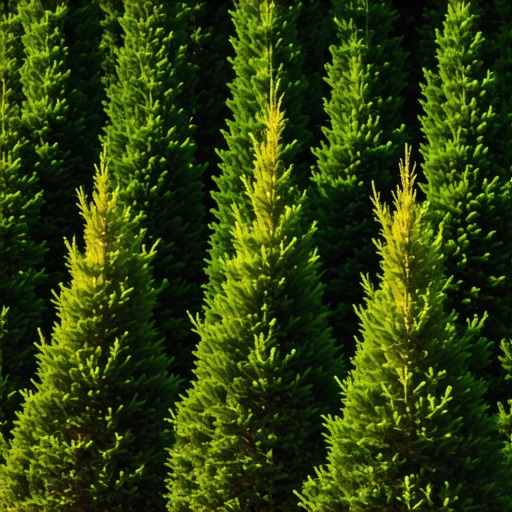
How to Build a Natural Privacy Screen Using Only Evergreens
I always drill into my new crew members: if you don’t fix the soil grading first, every plant you put in the ground is just expensive compost. I have spent two decades remediating failed screens where homeowners spent five figures on ‘Green Giant’ Arborvitae only to watch them turn into brown matchsticks within eighteen months. Usually, the culprit is a combination of poor drainage and root flare burial. When you are building a living wall, you are performing biological engineering. You are not just digging holes; you are creating a localized ecosystem that must manage hydrostatic pressure, nutrient cycles, and wind shear. A privacy screen is only as strong as the root system beneath it. It requires calloused hands and a scientific mind to get it right. Don’t skip the site prep. It will fail.
Site Analysis: Soil Physics, Sunlight, and Drainage Logistics
To build a natural privacy screen with evergreens, you must prioritize soil drainage, USDA hardiness zones, and root flare exposure. Selecting species like Thuja occidentalis or Picea abies requires understanding your local soil pH and ensuring at least six hours of full sun exposure daily for optimal density.
Before you touch a shovel, you need a perc test. If your soil is heavy clay, you cannot plant an evergreen in a deep, narrow hole. That hole becomes a bathtub. The water sits, the oxygen is displaced, and the roots succumb to Phytophthora root rot. You need to understand the capillary action of your specific soil type. Sandy loams drain at roughly two inches per hour, while compacted clay might take twenty-four hours to move a single inch of water. If you are dealing with the latter, you must install a French drain or build a berm. Building a berm involves mounding high-quality topsoil to elevate the root ball above the standing water line. This ensures the primary root mass can breathe while the taproots seek deeper moisture.
“A retaining wall doesn’t fail because of the stone; it fails because of the water trapped behind it.” – Hardscape Engineering Axiom
The same logic applies to your planting bed. If you don’t manage the runoff from your irrigation or neighbor’s yard, your screen will heave or rot. I have seen entire rows of 12-foot Spruces tip over in a high-wind event because the soil was saturated and the roots were shallow. Surface-level watering creates lazy trees. You want deep, infrequent cycles that force the roots to chase the water down into the subsoil profile. This anchors the tree against the elements.
Species Selection: Engineering Density and Growth Rates
Selecting the right evergreen for a landscaping project requires more than looking at a tag at a big-box store. You need to consider the mature width. Most DIYers plant trees three feet apart because they want instant privacy. Within five years, those trees are fighting for the same nutrients and sunlight. The lower branches die off due to shade, leaving you with a screen that is thin at the bottom where you actually need the privacy. You must account for the ultimate spread of the species. Proper yard cleanup during the planning phase involves clearing out any invasive vines or competing shrubs that will rob your new evergreens of nitrogen and phosphorus.
| Species Name | Growth Rate (Annual) | Mature Width | Soil Preference | Sun Requirement |
|---|---|---|---|---|
| Thuja ‘Green Giant’ | 3-5 Feet | 12-15 Feet | Well-drained Loam | Full Sun to Part Shade |
| Picea abies (Norway Spruce) | 2-3 Feet | 25-30 Feet | Acidic, Moist Clay | Full Sun |
| Juniperus virginiana | 1-2 Feet | 8-15 Feet | Poor/Rocky Soil | Full Sun |
| Leyland Cypress | 3-4 Feet | 15-20 Feet | Variable/Loamy | Full Sun |
Notice the mature widths. If you are planting Norway Spruces, they need at least 15 to 20 feet of spacing between trunks if you are staggering them in a double row. A double-row, staggered pattern (often called a ‘quincunx’ pattern) provides the best windbreak and visual occlusion without overcrowding. It allows for airflow. Airflow is your primary defense against fungal pathogens like Bagworms or Needle Cast.
How much space is needed for an evergreen privacy screen?
To calculate the spacing for evergreens, you must identify the mature canopy width and divide by two for a staggered row. For a single row, plant trees at roughly 75% of their expected mature width to ensure foliage overlap without causing significant root competition or nutrient deficiencies.
Which evergreen grows the fastest for privacy?
The Thuja Green Giant is the industry standard for fast-growing privacy, capable of adding three to five feet of height per year under optimal irrigation and soil fertilization. However, in regions with heavy snow, the Norway Spruce provides superior structural integrity and windbreak capabilities despite a slightly slower growth rate.
The Installation: Grading, Digging, and Soil Amendment
When my crew starts a sod install or a planting project, we focus on the root flare. The root flare is the area where the trunk expands at the base before entering the soil. This must be visible. If you bury the flare, the bark stays moist, gas exchange is inhibited, and the tree slowly suffocates. I see ‘mulch volcanoes’ everywhere. These are death sentences for trees. You want a flat layer of mulch, two to three inches deep, kept several inches away from the trunk itself. This suppresses weeds and retains moisture without rotting the cambium layer.
“Container-grown trees often develop circling roots that lead to girdling; these must be mechanically severed during installation to ensure long-term vascular health.” – American Standard for Nursery Stock (ANSI Z60.1)
Before the first tree goes in, we check the grade. If the yard slopes toward the planting site, we need to intercept that water. We often install a 4-inch perforated pipe wrapped in silt sock, buried in #57 stone. This irrigation management ensures the root zone doesn’t stay anaerobic. For the actual planting hole, dig it twice as wide as the root ball but no deeper. The bottom of the hole should be undisturbed soil to prevent settling. If the tree settles, the flare gets buried. Use a digging bar to scarify the sides of the hole. Smooth walls in a planting hole act like a clay pot, trapping the roots. You want them to penetrate the native soil immediately.
Evergreen Privacy Screen Checklist
- Verify USDA Hardiness Zone compatibility (e.g., Zone 5-7).
- Call 811 to mark underground utilities before excavation.
- Test soil pH; target 5.5 to 7.0 for most conifers.
- Remove all twine, burlap, and wire baskets from the top third of the root ball.
- Expose the root flare and ensure it is 1-2 inches above the finished grade.
- Install a dedicated drip irrigation line with 2 GPH emitters.
- Apply a pre-emergent to prevent weed competition in the mulch bed.
Post-installation care is where most people fail. You cannot rely on your lawn sprinklers to water a new tree. A sod install requires surface water, but a tree requires deep saturation. We install dedicated drip zones for every screen. We set the timers for long durations, usually 60 to 90 minutes, twice a week. This delivers water directly to the root mass with zero evaporation loss. It is efficient. It works. In the first year, your goal isn’t top growth; it’s root establishment. If the tree puts on six inches of growth but doubles its root mass, you’ve won. The height will come in year two and three. Don’t push them with high-nitrogen fertilizers in the first season. Let them find their feet in the native soil first. Use a mycorrhizal inoculant instead. It’s biology, not just chemistry.
Comments are closed.