
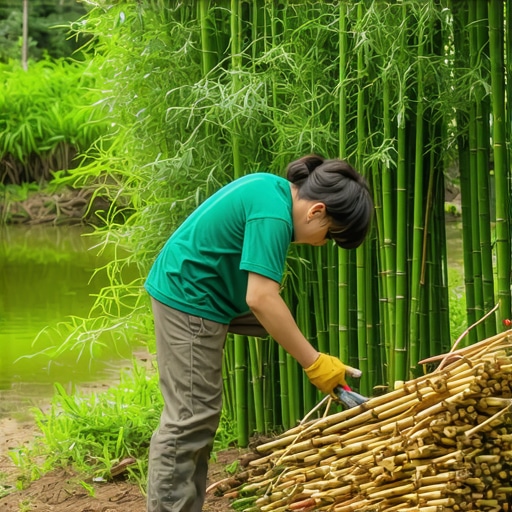
Bamboo is not a plant; it is a biological structural failure waiting to happen. In the landscaping industry, we treat invasive running bamboo—specifically the Phyllostachys genus—with the same tactical seriousness as a foundation crack or a failing retaining wall. If you think you can just ‘cut it down’ and be done, you have already lost the war. You are simply pruning it. I always drill into my new crew members: if you do not understand the subterranean architecture of the rhizome, every plant you put in the ground is just expensive compost. I have seen guys spend six figures on a yard cleanup and a high-end sod install, only to have bamboo spears pierce through the new turf within three months because they didn’t address the soil grade and the root network. It is an expensive lesson in hubris.
The Anatomy of an Invasive Nightmare: Why Bamboo Refuses to Die
To kill invasive bamboo, you must destroy the rhizome network, which stores massive carbohydrate reserves. Cutting the stalks (culms) only triggers a survival response. Eradication requires a combination of mechanical removal, starvation, and chemical translocation to penetrate the underground woody stems. The plant lives in the soil, not in the air. The green stalks you see are merely the solar panels feeding the real engine below.
Running bamboo utilizes a leptomorph rhizome system. These are horizontal underground stems that can travel 20 feet or more from the parent plant. They are as hard as oak and sharp enough to puncture heavy-duty pond liners. When you chop the culm, the rhizome remains fully charged with energy. It simply waits. Within days, it will push up new shoots with terrifying speed. To stop this, you have to attack the plant’s ability to store energy. You are not just gardening; you are performing a horticultural autopsy on a living system. It takes grit. It takes a sledgehammer and a sharp spade.
“A retaining wall doesn’t fail because of the stone; it fails because of the water trapped behind it. Similarly, bamboo control fails because of the energy trapped beneath it.” – Hardscape Engineering Axiom
The Forensic Autopsy of a Failed Bamboo Removal
I recently walked a property where a ‘mow-and-blow’ hack told the homeowner he could kill the bamboo by running it over with a brush hog once a month. Total nonsense. All he did was stimulate the lateral buds on the rhizomes. By the time I arrived, the bamboo had moved under the neighbor’s driveway and was lifting 4-inch thick concrete. The hydrostatic pressure of a growing bamboo shoot is immense. We had to bring in a 5-ton excavator just to peel back the top 12 inches of soil. We found a mat of rhizomes so thick it looked like a literal wood floor. We had to excavate the entire area, sift the soil, and install a 60-mil HDPE (High-Density Polyethylene) barrier. It was a $15,000 mistake because they didn’t do it right the first time.
How long does it take to kill bamboo roots?
Eradicating bamboo is a multi-year commitment, typically requiring 2 to 3 years of active management. While you can remove the bulk of the biomass in a weekend, the latent energy in the soil requires persistent monitoring and targeted chemical or mechanical intervention to ensure zero regrowth.
| Method | Success Rate | Labor Intensity | Primary Weakness |
|---|---|---|---|
| Manual Excavation | 95% | Extreme | Missing a 1-inch fragment triggers regrowth. |
| Chemical Translocation | 80% | Moderate | Requires precise timing during the fall flow. |
| Mowing/Starvation | 40% | High (Long-term) | Takes 5+ years to exhaust the energy. |
| Containment Barrier | 99% | Very High | Requires 60-mil HDPE and annual edge-checking. |
The Step-by-Step Eradication Protocol
First, you must cut the bamboo to the ground. Use a chainsaw or a high-torque brush cutter. Do not leave stumps; cut them flush with the soil. This is the ‘yard cleanup’ phase. Once the stalks are removed, you have two choices: dig or poison. If you choose the chemical route, you must wait for the bamboo to push up new, soft growth. This is when the plant is most vulnerable. Use a 41% glyphosate concentrate or an imazapyr-based herbicide. Apply it directly to the foliage of the new shoots. The plant will take that chemical and move it down into the rhizome.
If you are avoiding chemicals, you must dig. You need to find the ‘runner’ rhizomes. They usually sit 2 to 10 inches below the surface. Trace them back to the source. If you leave even a small section of a node, it will regenerate. This is why most DIY attempts fail. They aren’t thorough. After excavation, you must check the area every single week. If a shoot pops up, kick it over immediately. You are trying to starve the root system of sunlight. No leaves, no photosynthesis. No photosynthesis, no energy storage. Eventually, the root rots.
Can I just mow over bamboo to kill it?
Mowing is a suppression tactic, not an eradication method. While frequent mowing (at least once a week) will eventually exhaust the rhizomes, it can take years. Furthermore, it does nothing to stop the lateral spread of rhizomes into areas where you cannot mow, such as flower beds or under fences. It is a lazy man’s fix that rarely works.
“Control of running bamboo requires the physical removal of rhizomes or the installation of a vertical barrier at least 24 inches deep.” – Agricultural Extension Service Bulletin
Once the bamboo is dead, the soil is often a mess. It will be depleted of nutrients and physically disrupted. This is when you look at a professional sod install. Do not just throw seed down. You need to amend the soil with organic matter, level it to ensure proper drainage away from the house, and lay high-quality turf. Ensure your irrigation system is tuned. Many bamboo infestations thrive because of leaky irrigation pipes that provide a constant water source to the deep roots. Fix the leaks. Compact the soil. Reclaim your land. Don’t be the person who lets a grass species dictate the value of their property. It is a plant. You are the engineer. Act like it.
- Identify the species: Running vs. Clumping.
- Cut all culms to ground level immediately.
- Excavate the perimeter and install a 60-mil HDPE root barrier.
- Apply systemic herbicide to new growth during the active growing season.
- Monitor the site for 24 months for any ‘ghost’ shoots.
- Restore soil health with aeration and compost before any new landscaping.