
The Forensic Autopsy of a Smothered Lawn
The quickest way to bag wet leaves involves utilizing a rigid leaf chute inside a 3-mil thick contractor bag to maintain structural integrity under the weight of saturated cellulose. By using wide-mouth poly-clamshell scoops instead of standard rakes, you maximize the volume-to-effort ratio while minimizing back strain from hydrostatic drag. Dealing with wet debris is not a cleanup task; it is a battle against the physics of water weight and the biology of fungal pathogens. I have walked onto properties where the turf was literally suffocating because the homeowner waited for a sunny day that never came. The result is always the same: a slimy, anaerobic mess that smells like a swamp and kills the grass underneath in a matter of days.
The Chemical Nightmare: When Leaves Turn Into Toxic Sludge
A homeowner called me in a panic after they completely torched their front lawn by applying a high-nitrogen ‘starter’ fertilizer over a layer of wet, matted leaves. They thought the nitrogen would speed up the decomposition. Instead, they created a chemical nightmare. The fertilizer reacted with the moisture trapped in the leaf mat, creating an ammonia-rich slurry that chemically burned the crown of every blade of grass. By the time I arrived, three thousand square feet of expensive fescue looked like it had been hit with a blowtorch. This is what happens when you treat your yard like a laboratory without understanding the chemistry of decomposition. Wet leaves are not just an eyesore; they are a physical barrier to the gas exchange your soil requires to survive.
“Fallen leaves that are allowed to mat and stay wet can harbor pathogens such as Typhula species (Gray Snow Mold) which can devastate newly established sod if not cleared before the first hard freeze.” – University of Minnesota Extension
Why Wet Leaves Are a Landscape Engineering Challenge
When leaves are dry, they are mostly air. When they are wet, they are a structural liability. A single cubic foot of dry leaves might weigh a few ounces, but once saturated, that same volume can weigh twenty pounds. This is due to the capillary action of the leaf veins and the surface area of the broadleaf species like Maples or Oaks. In professional landscaping, we don’t look at leaves as trash; we look at them as a biomass load. If you have a recent sod install, wet leaves are an existential threat. The young roots of the sod need oxygen, and a wet leaf mat acts like a plastic wrap, sealing the soil and trapping carbon dioxide while blocking oxygen. This triggers a rapid decline in turf vigor. You must also consider your irrigation system. If you leave your sprinklers on while the leaves are down, you are just compounding the problem, creating a perfect petri dish for fungal growth.
The Quickest Mechanical Solution: The Three-Step Heavy Load Protocol
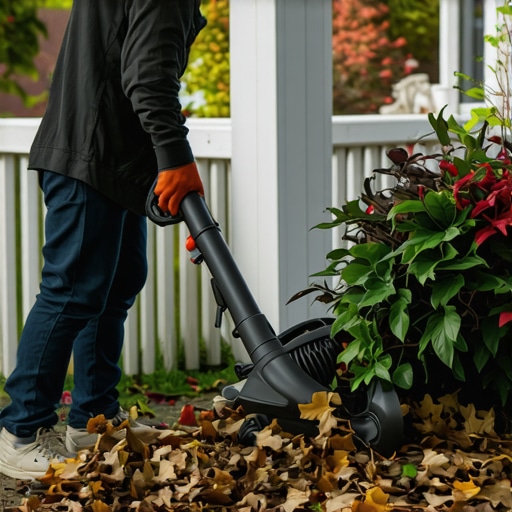
To move these heavy, saturated mats without tearing up your lawn or your back, follow this professional workflow. First, use a high-powered leaf blower to push the leaves into ‘islands’ rather than one giant pile. This keeps the weight manageable. Second, use a heavy-duty poly-tarp. Dragging a tarp is 100% more efficient than bagging by hand if you have a place to dump. Third, if you must bag, use a ‘Leaf Chute’ or a plastic trash can liner that keeps the bag open and rigid. Without it, the wet leaves will cause the bag to collapse, leading to frustration and a massive mess. The tamper should literally bounce off the compacted base of a dry walkway, but on a lawn, you want zero compaction. Avoid using heavy machinery on wet lawns to move leaves, or you will be dealing with soil compaction and ruts that require core aeration to fix.
| Tool Type | Wet Leaf Efficiency | Physical Strain Level | Best Use Case |
|---|---|---|---|
| Standard Leaf Rake | 15% | High (Back/Shoulders) | Small, localized patches only. |
| Leaf Vacuum / Mulcher | 45% | Medium (Heavy to carry) | When leaves are damp but not soaking. |
| Poly-Tarp & Drag | 85% | Low to Medium | Large properties with a compost site. |
| Rigid Chute & 3-Mil Bags | 75% | Medium | Urban areas requiring curb-side pickup. |
How do you pick up heavy wet leaves fast?
Picking up heavy wet leaves fast requires reducing the distance you carry the weight. Use a wide-mouth scoop or two pieces of plywood as giant hands to move the piles onto a low-friction tarp. Saturated leaves have a high frictional coefficient against grass, so dragging them on a tarp reduces the physical force required by over 60%. Do not attempt to use a standard residential leaf vacuum on soaking wet debris; the impeller will likely clog or shatter under the hydraulic pressure of the water-logged cellulose. Instead, focus on the ‘scoop and drag’ method which bypasses mechanical limitations.
Is it better to rake or blow wet leaves?
It is significantly better to blow wet leaves into manageable windrows using a commercial-grade backpack blower with at least 700 CFM (Cubic Feet per Minute) of airflow. Raking wet leaves is a ‘mow-and-blow’ hack move that usually results in pulling up the roots of your grass, especially on a new sod install. A high-velocity air stream can break the surface tension between the wet leaf and the grass blade, allowing you to move the mass without mechanical damage to the turf. If the leaves are too heavy for the blower, use a specialized ‘wet-leaf rake’ with stiff, tined poly-heads that won’t clog like traditional metal rakes.
“A retaining wall doesn’t fail because of the stone; it fails because of the water trapped behind it, just as a lawn fails because of the moisture trapped under a leaf mat.” – Hardscape Engineering Axiom
The Micro-Biology of the Leaf Mat
When you leave wet leaves on the ground, you are essentially starting a slow-motion fire. The microbial activity in the damp environment generates heat. While this is good in a compost pile, it is lethal for your lawn. The heat and lack of light cause the chlorophyll in the grass to break down, leading to ‘yellowing’ or chlorosis. Furthermore, the tannic acid leaching from Oak and Maple leaves can temporarily drop the soil pH to acidic levels that most turfgrasses cannot tolerate. This creates an environment where only moss and weeds thrive. If you have a professional irrigation system, ensure it is winterized and turned off before the heavy leaf fall. Added water from a sprinkler system during the leaf-drop phase is a recipe for a total lawn renovation come spring. Don’t skip this. If you leave the water on, you are just feeding the fungus.
Final Operational Summary: Maintaining the Aesthetic and Biological Balance
Successful yard cleanup is about timing and tools. If you wait until the leaves are a soggy, unrecognizable mass, you have already lost the battle for your soil health. You need to be proactive. Bagging wet leaves is a necessity when the weather doesn’t cooperate, but using the right engineering approach—rigid containers, high-mil bags, and mechanical advantage—makes the job possible. Every hour you spend clearing wet debris saves you ten hours of repair work in the spring. Landscaping is a game of prevention. Fix the environment, and the plants will take care of themselves. Ignore the debris, and you are just growing expensive compost.