
The Horticultural Crime Known as Crepe Murder
Pruning a crepe myrtle requires a focus on structural integrity, air circulation, and the preservation of the tree’s natural canopy. To avoid ‘crepe murder,’ you must identify the main trunks and only remove suckers, crossing branches, and dead wood rather than topping the tree at a uniform height.
I always drill into my new crew members: if you don’t fix the soil grading first, every plant you put in the ground is just expensive compost. The same logic applies to pruning. If you don’t understand the apical dominance of the branch you are about to cut, you are just a guy with a saw, not a landscaper. Last season, I walked onto a property for a routine yard cleanup and found a row of twenty-year-old Natchez Crepe Myrtles that had been ‘topped’ so aggressively they looked like gnarled, amputated fists. The homeowner thought they were doing the right thing for ‘more blooms.’ In reality, they were forcing the tree to dump its entire starch reserve into weak, ‘water sprout’ growth that would snap in the first summer thunderstorm. This isn’t just about aesthetics; it’s about civil engineering for living organisms. When you hack a tree back to a stump, you create entry points for cercospora leaf spot and powdery mildew. You aren’t helping it. You are killing it slowly.
“Topping is the most harmful pruning practice known. It creates massive wounds that the tree cannot easily compartmentalize, leading to internal decay and structural instability.” – International Society of Arboriculture (ISA) Standards
The Anatomy of a Lagerstroemia
Before you touch a pair of bypass loppers, you have to look at the tree’s skeleton. Crepe myrtles are prized for their exfoliating bark and multi-trunk elegance. You want to see the muscle of the wood. Most ‘mow-and-blow’ hacks want to get in and out in ten minutes. They take a hedge trimmer to the top. That’s a death sentence for the tree’s natural form. A professional approach starts at the ground. Look for basal suckers. These are the thin, whip-like shoots growing from the root flare. They steal nitrogen and water from the main canopy. Snip them flush. Then, move your eyes up the trunk. Any branch rubbing against another is a friction point. Friction creates wounds. Wounds invite pests. Remove the weaker of the two rubbing branches. It is a simple binary choice. Stop overcomplicating it.
How much should I cut back my crepe myrtle?
You should never remove more than 25 percent of the total canopy in a single season to ensure the tree retains enough photosynthetic surface area to support its root system. Aim for a V-shape or vase-like structure that allows sunlight to reach the inner lateral branches.
| Pruning Action | Professional Result | The ‘Murder’ Result |
|---|---|---|
| Removing Suckers | Nutrients directed to main canopy | Dense, bushy mess at the base |
| Thinning Interior | Improved airflow, less fungus | Powdery mildew and scale insects |
| Heading Back | Strong, upright blooming tips | Weak, drooping ‘water sprouts’ |
| Topping (Knuckling) | Structural failure and decay | Knobby, ugly scars and short life |
The Relationship Between Pruning and Your Lawn
Your trees do not exist in a vacuum. During a sod install, I often see people plant crepe myrtles too deep in heavy clay. This suffocates the root flare. When you prune, you are actually helping the grass below. A thinned-out canopy allows dappled sunlight to reach your Turfgrass, preventing the thinning and fungal pressure common in heavy shade. Furthermore, if you have an irrigation system, make sure the spray heads aren’t hitting the tree trunks. Constant moisture on the bark leads to root rot and bark scale. Adjust your irrigation zones to water the drip line, not the trunk. This is basic landscaping 101, but you’d be surprised how many ‘pros’ get it wrong.
“Research indicates that the best time to prune Lagerstroemia is late winter, while the plant is dormant, to encourage vigorous new growth on which flowers are produced.” – Texas A&M AgriLife Extension
The Step-by-Step Recovery Checklist
- Sanitize Your Tools: Wipe blades with 70% isopropyl alcohol. It prevents the spread of disease.
- Identify the 3-5 Main Trunks: These are your pillars. Never cut these.
- Remove Dead Wood First: If it’s brown and brittle, it’s gone.
- Target the ‘3 Ds’: Dead, Damaged, or Diseased.
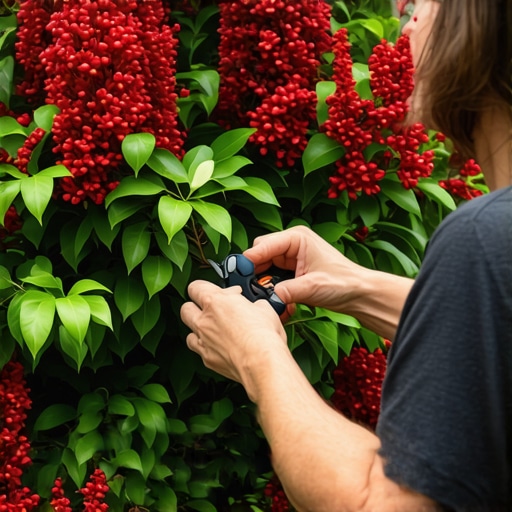
- Cut at the Branch Collar: Do not leave ‘stubs.’ Cut just outside the swollen area where the branch meets the trunk.
- Angle Your Cuts: 45-degree angles shed water. Flat cuts hold water and rot.
How do I fix a crepe myrtle that was already topped?
Fixing a ‘murdered’ tree takes years of patience. You have to select the strongest leader from the cluster of sprouts that emerged from the cut site. Remove the others. Over three to five seasons, you can train these new leaders to become the new main branches. It’s a slow process of re-establishing dominance. Don’t expect a quick fix. You are essentially performing orthopedic surgery on a plant. If the damage is too severe, sometimes the best yard cleanup involves removing the tree entirely and starting over with a native species that fits the space without needing constant hacking.
Final Structural Considerations
Landscaping is about the long game. When we do a sod install around these trees, we use hardwood mulch—not that dyed red garbage from the big-box store—and we never pile it against the trunk. No mulch volcanoes. It creates a hydrostatic trap for moisture that rots the bark. Your irrigation should be calibrated to the evapotranspiration rate of your specific USDA zone. Most people over-water, which leads to shallow roots. Force those roots deep. Make them work for it. A healthy tree with a deep root system can handle a proper pruning far better than a pampered, over-watered one. Stop treating your yard like a picturesque painting and start treating it like a biological system. Get the science right, and the beauty follows automatically. Skip the shortcuts. Use the right tools. Keep the saw away from the main trunks. It’s that simple. Don’t be the guy the neighbors call ‘the murderer.’ Be the one with the healthiest landscape on the block. “,”image”:{“imagePrompt”:”A close-up high-quality photo of a professional landscaper’s hands using bypass pruners to make a clean 45-degree angle cut at the branch collar of a Crepe Myrtle tree, showing the distinct textures of the exfoliating bark and the sharp, clean wood of the cut.”,”imageTitle”:”Proper Pruning Technique for Crepe Myrtles”,”imageAlt”:”Professional landscaper making a correct pruning cut on a crepe myrtle branch collar”},”categoryId”:1,”postTime”:”2023-10-27T10:00:00Z”}