
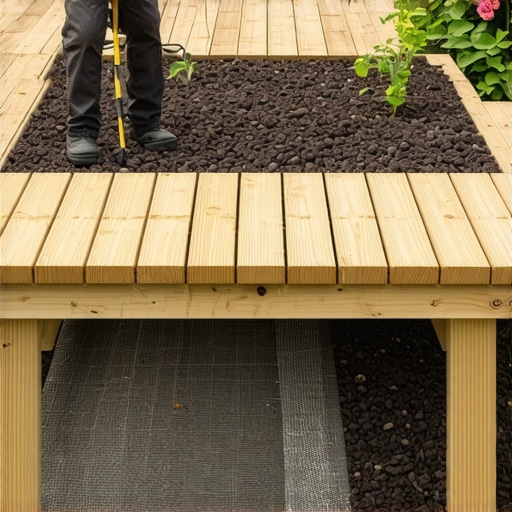
How to Stop Weed Growth Under Your New Wood Deck
Building a high-end wood deck is an exercise in structural engineering, but most contractors fail the moment they look down. To stop weed growth under a new wood deck, you must implement a multi-layered suppression strategy involving soil sterilization, professional-grade geotextile fabrics, and mechanical drainage layers that eliminate the light and moisture weeds need to thrive. If you ignore the ground beneath those joists, you aren’t just building a deck; you are building a protected greenhouse for invasive species and wood-rotting moisture.
The Apprentice Lesson: Why Prep Always Outlives the Finish
I always drill into my new crew members: if you don’t fix the soil grading first, every plant you put in the ground is just expensive compost. The same logic applies to the space under your deck. I remember a job in ’08 where a homeowner spent $45,000 on Ipe decking but refused the $1,200 site prep package. Two years later, the client called complaining about ‘jungle vines’ pushing up through the gaps in their premium boards. When we ripped up a section, we found a swamp. The lack of grading had turned the area into a catch-basin, and the weeds were thriving on the constant humidity. We had to dismantle the deck to fix a problem that would have taken four hours during the initial build. Don’t be that guy. Prep is everything.
The Physics of the Under-Deck Microclimate
The area under a deck is a high-humidity, low-airflow environment that traps moisture through capillary action and poor evaporation. To prevent weeds and wood rot, you must manage the hydrostatic pressure and soil moisture levels before the first post is set.
“A retaining wall doesn’t fail because of the stone; it fails because of the water trapped behind it.” – Hardscape Engineering Axiom
This axiom applies to decks too. Water trapped under a deck isn’t just a weed trigger; it’s a structural threat. Without a 2% slope away from the foundation, you are inviting subterranean termites and fungal pathogens into your home’s rim joist.
How do I stop weeds from growing through my deck boards?
The most effective method to stop weeds under a deck is to excavate 3-4 inches of topsoil, install a non-woven geotextile fabric, and cap it with 2 inches of clean crushed stone or river rock. This creates a dark, dry, and sterile environment where seeds cannot germinate. Most people think black plastic is the answer. It’s not. Plastic traps water, creating stagnant pools that breed mosquitoes and rot your deck’s support posts. You need permeability.
Material Comparison for Weed Suppression
| Material | Permeability | Longevity | Effectiveness |
|---|---|---|---|
| Non-Woven Geotextile | High | 20+ Years | Superior |
| Black Plastic (Poly) | Zero | 5-7 Years | Poor (Causes Rot) |
| Woven Landscape Fabric | Medium | 10 Years | Moderate |
| Crushed 57 Stone | Excellent | Lifetime | High (When paired with fabric) |
The Forensic Site Prep Checklist
- Excavate the Organic Layer: Remove all grass, sod, and weeds. Do not just cover them; they will decompose and create a nutrient-rich layer for future weeds.
- Grade for Drainage: Ensure a minimum 2% slope away from the structure. Water must move, or your deck will fail.
- Apply a Soil Sterilizer: Use a long-term pre-emergent herbicide if you are in a high-growth biome.
- Install 6oz Non-Woven Fabric: Overlap seams by at least 12 inches and secure with 6-inch galvanized staples.
- Capping: Apply 2-3 inches of 3/4″ clean stone. Avoid ‘fines’ or ‘crushed run’ as they hold moisture.
How much modified gravel do I need for a deck base?
To calculate the aggregate needed for a deck weed barrier, multiply the square footage by the desired depth (e.g., 0.25 feet for 3 inches) and divide by 27 to get cubic yards. A standard 12×12 deck requires approximately 1.5 to 2 cubic yards of clean stone.
“Soil compaction and moisture control are the two most critical factors in preventing unwanted vegetation and ensuring sub-grade stability.” – USDA Agricultural Extension Manual
The Fallacy of ‘Weed-Free’ Wood Decks
The internet tells you that a layer of mulch is fine under a deck. That’s a lie. Mulch is organic matter. As it breaks down, it literally becomes soil. You are essentially pre-composting the ground for weeds. Stick to inorganic caps like stone or gravel. Furthermore, your irrigation system should never spray under the deck. Adjust your sprinkler heads or perform a sod install that ends 12 inches from the deck perimeter. If you keep the area under the deck bone-dry, nothing can grow. It’s biological math. No light + No water = No weeds.
Maintenance and Year-One Expectations
Even with a perfect install, dust and organic debris will eventually blow through the cracks in your deck boards and settle on the stone. This ‘dirt’ can support opportunistic weeds like wind-blown thistle. Every spring, perform a yard cleanup and use a leaf blower to clear debris from the stone surface. A quick spray of a vinegar-based herbicide on any outliers will keep the system pristine. Don’t skip the maintenance. Your deck’s lifespan depends on the air quality and moisture levels of the void beneath it.