
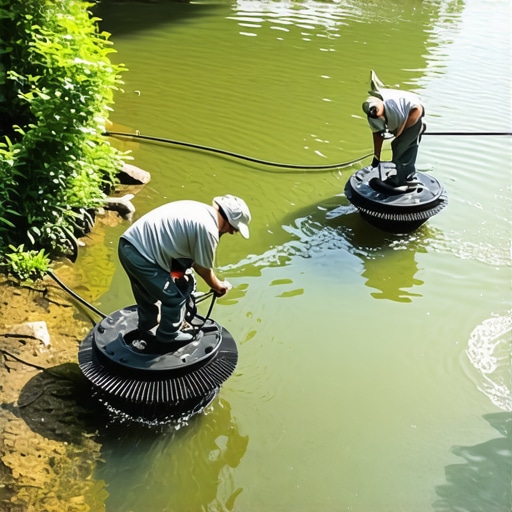
The Forensic Autopsy of a Dying Water Feature
Pond muck is the toxic byproduct of organic debris like leaves and fish waste that settles on the bottom, creating an anaerobic environment that produces hydrogen sulfide gas. To stop this, you must install a high-performance mechanical skimmer that captures debris at the surface before it sinks and begins the decomposition cycle. I recently got called out to tear up a $30,000 patio that was sinking because the previous contractor didn’t understand hydrostatic pressure or how to properly integrate a pond skimmer into the surrounding hardscape. The homeowner’s pond was a black, stinking mess of sludge. The water looked like motor oil. They had a cheap, undersized skimmer that couldn’t handle the leaf load from two mature oaks nearby. When I pulled the old unit, the soil around it was saturated because they didn’t use a proper liner flange, causing the gravel base of the adjacent patio to liquefy and settle. This wasn’t just a pond problem; it was a civil engineering failure. If your skimmer fails, your entire yard cleanup strategy fails. High-end landscaping requires a holistic view of how water moves through the system. If you aren’t managing the organic load, you’re just maintaining a liquid compost pile.
“A retaining wall doesn’t fail because of the stone; it fails because of the water trapped behind it.” – Hardscape Engineering Axiom
The Chemical Reality of Muck and Sludge
When leaves hit the water, they remain buoyant for a short window. Once saturated, they sink to the benthic zone. Here, in the absence of high oxygen levels, anaerobic bacteria take over. This process is slow and produces toxic methane and hydrogen sulfide. If you have fish, this is a death sentence during the summer months when dissolved oxygen levels naturally dip. A 2026-spec skimmer is designed with a wider weir door to increase the pull of surface tension, ensuring that even heavy debris is sucked into the basket before it can waterlog. We measure this efficiency in Gallons Per Hour (GPH) relative to the surface area. A standard 10×12 pond needs a turnover rate of at least 2,500 GPH to maintain adequate surface tension. If your pump is too weak, the debris just circles the middle. It will rot. Don’t skip the engineering math here.
Why Material Selection Matters for 2026 Filtration
Mechanical filtration is your first line of defense, but the housing must be durable enough to withstand soil expansion and contraction. Many big-box store units are made of thin-walled plastics that warp under the pressure of frozen ground. We use heavy-duty, high-density polyethylene (HDPE) units with reinforced ribs. This prevents the weir door from binding. When we do a sod install around a pond, we ensure the grade slopes away from the skimmer. You do not want fertilizer runoff from your landscaping entering the water. That is a recipe for an algae bloom that no skimmer can fix.
“Effective pond management requires mechanical removal of at least 80 percent of floating organic matter before it undergoes microbial decomposition.” – Aquatic Systems Management Handbook
Technical Comparison: 2026 Skimmer Standards
| Feature | Standard Skimmer | 2026 High-Flow Skimmer | Impact on Water Quality |
|---|---|---|---|
| Weir Width | 6 inches | 10 to 12 inches | Increased debris capture radius |
| Basket Volume | 0.5 Gallons | 2.5 Gallons | Reduces maintenance frequency |
| Seal Type | Silicone Only | Mechanical Flange + EPDM Seal | Prevents structural soil saturation |
| Filtration Mat | Low-density Foam | Rigid Matala Media | Better colonization for Nitrosomonas |
How much flow rate does a 2000-gallon pond need?
For a 2000-gallon pond, you should aim for a total system turnover of at least 1.5 times per hour, meaning a pump rated for 3,000 GPH at your specific head height. This ensures the irrigation of the biological filter is constant and the skimmer has enough draw to pull in floating debris from the furthest corners. If you have a long, narrow pond, you may need a satellite skimmer or an aerator to push debris toward the main intake. Total Dynamic Head (TDH) must be calculated to account for friction loss in the pipes. Don’t guess. Use a flow meter.
What is the best way to prevent leaf buildup in a backyard pond?
The best way to prevent leaf buildup is the combination of a high-capacity mechanical skimmer and strategic yard cleanup. During peak leaf drop, a skimmer with a 12-inch weir door can handle thousands of leaves per day. However, you must also maintain the surrounding landscaping by pruning overhanging limbs. This reduces the initial load. A 2026-style skimmer uses a deep-well basket that allows water to flow over the top of the debris even when full, protecting your pump from running dry. This is a critical fail-safe. If the pump runs dry, it burns out. That is an expensive mistake.
The Step-by-Step 2026 Skimmer Retrofit
- Excavation: Dig the hole 6 inches wider and deeper than the skimmer box. Level the base with 4 inches of compacted modified stone.
- Leveling: Use a transit level to ensure the skimmer is perfectly level side-to-side and has a slight 1-degree pitch toward the pond.
- Liner Attachment: Clean the liner with denatured alcohol. Apply professional-grade EPDM sealant. Bolt the faceplate using a torque wrench to ensure even pressure.
- Backfilling: Use pea gravel or sand around the box, not native clay. Clay expands and will crush the unit over time.
- Integration: Lay your sod install up to the edge of the skimmer lid, but ensure the lid remains accessible for daily maintenance.
Soil Grading and Hydrostatic Pressure Management
Most contractors ignore the soil. When we install these systems, we look at the soil pH and compaction. In heavy clay, water stays trapped. This creates hydrostatic pressure that can pop a skimmer right out of the ground. We install a French drain system behind large pond installations to divert groundwater. If you ignore the drainage, your pond will eventually shift. This ruins the seal on the skimmer faceplate. Once that seal breaks, you are losing 100 gallons of water a day. You’ll think you have a leak in your irrigation lines, but it’s just a failed pond flange. Fix the soil first. Everything else follows. 2026 engineering is about longevity, not just looking good for the first week.
Advanced Maintenance Protocol
Weekly maintenance is non-negotiable. Empty the basket. Rinse the Matala mats. Check the pump intake for small pebbles. If you let the muck build up in the basket, it begins to leach nutrients back into the water. This fuels string algae. Use a high-quality beneficial bacteria jump-start every spring. This helps digest any microscopic sludge that the skimmer missed. Real pros know that a pond is a living, breathing organism. Treat it like one. If you treat it like a swimming pool, you will fail. The nitrogen cycle doesn’t care about your schedule. It only cares about the biology. Keep the oxygen high and the organic load low. That is the secret to a clear pond.