
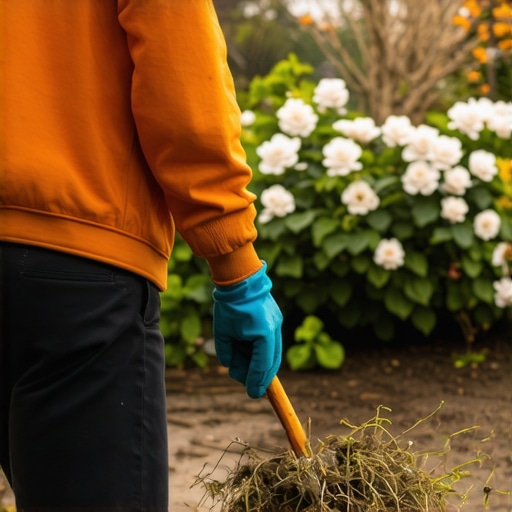
The Forensic Autopsy of a Post-Storm Landscape
The visual evidence of a landscape hit by the 2026 winter storm is more than just a mess; it is a structural failure of biological systems. You walk out and see the slimy, translucent leaves of Hostas, the shattered stems of ornamental grasses, and a thick, anaerobic mat of sodden debris. It smells of sulfur and decay. This is not just ‘yard work.’ It is a salvage operation for your soil’s gas exchange capacity. I always drill into my new crew members: if you don’t fix the soil grading first, every plant you put in the ground is just expensive compost. After a heavy ice event, the weight of the debris doesn’t just sit there; it compresses the macro-pores in your soil, effectively drowning the root systems of your perennials before the spring thaw even begins. If you ignore the hydrostatic pressure built up under those leaf mats, you’re looking at a 100% loss on your more sensitive cultivars.
Diagnosing Storm Damage in Perennial Beds
Clearing 2026 winter storm debris requires identifying mechanical breakage, ice-load compaction, and frost heaving in perennial beds. Simply removing surface litter isn’t enough; you must assess root crown health and soil structure to prevent secondary fungal infections like Botrytis or Sclerotinia that thrive in cold, damp environments. Check for the ‘squish factor’—if you step near a perennial and water wells up, the soil is saturated and oxygen-depleted. Don’t walk on it. Use plywood sheets to distribute your weight. Every step on wet, post-storm soil destroys the micropore structure that took years to develop. It will rot. Don’t skip this diagnostic step.
“A retaining wall doesn’t fail because of the stone; it fails because of the water trapped behind it. Similarly, a perennial bed fails because of the ice-trapped moisture at the crown.” – Hardscape Engineering Axiom
How much modified gravel do I need for a patio base?
While we are discussing drainage, many homeowners realize during yard cleanup that their patios have shifted due to the 2026 freeze-thaw cycle. For a standard hardscape installation, you need a minimum of 6 inches of modified gravel (2A or 411), compacted in 2-inch lifts. If your perennial beds are adjacent to these structures, the drainage from the patio must be directed away from the bed to prevent crown rot. The 2026 storm likely shifted your soil grading; use a transit level to ensure you still have a 2% slope away from the house and bed centers.
The Science of Soil Compaction and Drainage
Yard cleanup after heavy snow involves managing anaerobic soil conditions caused by standing water and ice dams. Dense debris layers block oxygen gas exchange, suffocating rhizospheric microbes and leading to root rot in species like Echinacea or Heuchera. When the 2026 storm dumped heavy, wet snow, it acted as a physical press. This mechanical compaction reduces the soil’s hydraulic conductivity. You aren’t just raking; you are re-oxygenating the earth. Look at the capillary action in the soil. If the water isn’t moving down, your irrigation system will only exacerbate the problem come April. Do not turn on the water until you’ve verified the percolation rate.
| Debris Type | Compaction Risk | Removal Priority | Potential Pathogen |
|---|---|---|---|
| Wet Oak/Maple Mats | High | Immediate | Botrytis Blight |
| Broken Woody Stems | Low | Secondary | Wood Rot Fungi |
| Ice-Saturated Mulch | Medium | Post-Thaw | Crown Rot |
| Fine Silt/Runoff | Critical | Immediate | Root Suffocation |
Technical Protocol for Professional Yard Cleanup
Effective landscaping recovery uses a multi-stage cleanup protocol focusing on stratified removal. Start with coarse woody debris, move to sludge-like leaf mats, and finish with structural pruning of damaged woody perennials to ensure lateral bud development and healthy cambium growth. Don’t use a leaf blower on wet mats. It won’t work. Use a tine rake with light pressure. Your goal is to peel back the layers without scarring the emerging terminal buds of your perennials. If you see white, fuzzy growth on the soil surface, that is snow mold. Gently agitate the soil surface to dry it out. Air is your best fungicide.
- Stage 1: Remove large branches using bypass pruners—never anvil pruners which crush the tissue.
- Stage 2: Hand-pull wet leaf mats from the crowns of evergreen perennials (e.g., Hellebores).
- Stage 3: Inspect for frost heaving. If a plant has been pushed out of the ground, gently firm it back in, but do not bury the root flare.
- Stage 4: Apply a thin layer of horticultural grit or fresh, double-shredded hardwood mulch—no more than 2 inches. Avoid mulch volcanoes.
When is it safe to prune winter-damaged perennials?
Wait for the foraging bud to show signs of life. If you prune too early, a late frost—common after a 2026-style event—will kill the newly exposed tissue. Check the phloem by doing a scratch test. If it is green, the limb is alive. If it is brown and brittle, it is dead. For ornamental grasses, cut them down to 3 inches above the crown before the new green shoots reach 2 inches. If you wait too long, you’ll clip the new growth, causing ‘flat-top’ syndrome for the rest of the season. It looks like a hack job. Don’t be that guy.
“Perennial crown survival depends on the maintenance of a stable soil temperature, which is often compromised when ice-heavy debris strips the natural insulating mulch layer.” – USDA Agronomy Manual
Remediating Post-Storm Soil Chemistry
The 2026 storm didn’t just bring water; it likely brought road salt and pollutants in the runoff. This alters the soil pH and increases electrical conductivity (EC), which causes osmotic stress in plants. Your landscaping isn’t just about aesthetics; it’s about chemistry. After the debris is cleared, perform a soil test. You are looking for high sodium levels. If found, an application of gypsum (calcium sulfate) can help displace the sodium and improve soil structure. Do not apply a high-nitrogen fertilizer immediately. You want root growth, not a flush of tender top growth that will be decimated by the next cold snap. Aim for a low NPK ratio, focusing on phosphorus for adenosine triphosphate (ATP) production in the roots.
Sod Installation and Edge Recovery
Often, the weight of snow and the use of shovels or plows destroys the edges of the sod adjacent to perennial beds. Sod install in these areas requires a clean vertical cut to the existing turf. Do not just throw seed on top of compacted, dead grass. You must excavate 2 inches of the dead material, replace it with a sandy loam topsoil, and then lay your Kentucky Bluegrass or Tall Fescue sod. Ensure the seams are tight. Use a water-filled roller to ensure root-to-soil contact. If you skip the rolling, the air pockets will kill the new sod within 48 hours. This is basic civil engineering for your lawn.