
The Science of Dissolved Oxygen in Pond Management
Aerating 2026 pond water with a venturi nozzle requires passive air induction driven by the Bernoulli principle, creating a vacuum that pulls atmospheric air into the water stream. This method provides high dissolved oxygen (DO) levels without the mechanical failure points of traditional air compressors or surface agitators by utilizing differential pressure within a constricted flow path. It is the most efficient way to manage BOD (Biochemical Oxygen Demand) in closed ecosystems.
I always drill into my new crew members: if you don’t fix the soil grading first, every plant you put in the ground is just expensive compost. The same logic applies to pond management. You can buy the most expensive pump on the market, but if your yard cleanup was sloppy and your pond is filled with decaying organic matter, or if your sod install on the bank allows fertilizer runoff to seep into the basin, your water chemistry is a ticking time bomb. I have seen guys spend thousands on landscaping and irrigation systems only to watch their pond turn into a pea-soup-colored anaerobic nightmare because they ignored the fundamental physics of oxygen transfer. You have to understand that pond water is a living, breathing organism. When you use a venturi nozzle, you are essentially performing a lung transplant on the ecosystem. If the underlying structure—the grading, the sediment control, the nutrient load—is garbage, the transplant will fail. Don’t skip the dirty work of clearing the muck before you worry about the bubbles.
The Physics of the Venturi Effect and Fluid Dynamics
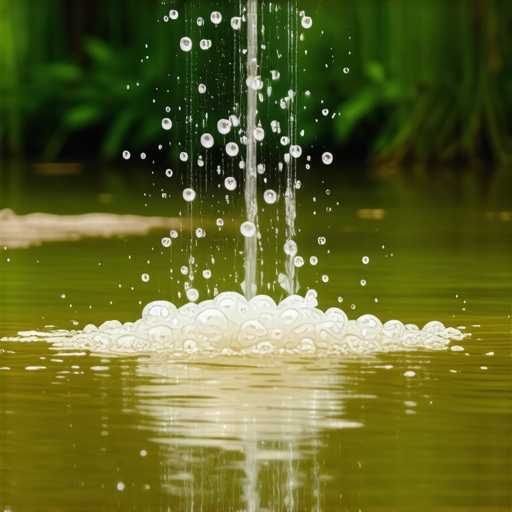
The venturi effect occurs when a pressurized fluid flow is forced through a narrowed section of pipe. This constriction causes the fluid velocity to increase while its static pressure decreases. In a pond aeration context, a small air intake tube is positioned at this point of lowest pressure. The resulting vacuum draws in atmospheric air, which is then sheared into millions of micro-bubbles as it exits the nozzle and slams back into the main body of water. This is not just about moving water; it is about gas-to-liquid mass transfer. The smaller the bubble, the higher the surface area-to-volume ratio, which directly dictates how much oxygen actually dissolves into the water column before the bubble reaches the surface and pops.
“The efficiency of gas transfer in water bodies is directly proportional to the surface-to-volume ratio of the injected air bubbles, where smaller diameters maximize the saturation potential of the liquid phase.” – Agricultural Water Management Manual
When we talk about irrigation pumps being used for ponds, we have to look at the PSI (pounds per square inch) at the nozzle throat. If your pump cannot maintain at least 15 to 20 PSI at the point of injection, the vacuum will be too weak to pull sufficient air. You will get some water movement, but zero actual aeration. This is where most DIYers fail. They use a high-flow, low-pressure pump that works great for a waterfall but sucks at venturi induction. You need a pump that can handle the back-pressure created by the nozzle constriction without cavitating or overheating the motor housing.
How do I calculate flow rate for a pond venturi nozzle?
To calculate the required flow rate, you must first determine the total pond volume and the desired turnover rate. For 2026 standards, we aim for a complete water turnover every 2 to 4 hours. You then match your pump’s GPH (Gallons Per Hour) at the specific head pressure of your venturi nozzle, accounting for friction loss in the irrigation lines and the depth of the nozzle placement.
Will a venturi nozzle work with a low-head pump?
Generally, no. Low-head pumps, often used in simple landscaping water features, lack the necessary velocity head to create a significant pressure drop in the venturi throat. Using one will result in a weak stream of water with no air suction. You must use a centrifugal pump or a specialized high-head submersible designed to overcome the resistance of the narrowed venturi chamber.
Venturi Nozzles vs. Surface Aeration: A Comparative Analysis
Most people think a splashing fountain is the peak of pond care. They are wrong. Surface aerators only oxygenate the top few inches of water. Meanwhile, the bottom of the pond, where the sludge and organic detritus accumulate, remains an anoxic zone. This is where hydrogen sulfide gas builds up. A venturi nozzle, when placed at a depth of 2 to 3 feet and angled correctly, creates laminar flow that pushes oxygen-rich water deep into the pond, breaking up the thermocline and forcing circulation in the benthic zone.
| Feature | Venturi Nozzle | Surface Fountain | Bottom Diffuser |
|---|---|---|---|
| Oxygen Transfer Depth | High (Sub-surface) | Low (Surface only) | Very High (Floor) |
| Mechanical Complexity | Low (No moving parts) | Medium (Motor in water) | High (Compressor) |
| Noise Level | Silent | Moderate to High | Low (Humming) |
| Maintenance | Minimal | High (Clogs easily) | Moderate (Membrane cleaning) |
| Cost Efficiency | Excellent | Low | Medium |
Integrating Pond Health with Landscaping and Sod Installation
Your pond does not exist in a vacuum. It is the literal drain for every square inch of your property. If you just finished a sod install, you have effectively laid down a massive sponge that is likely loaded with nitrogen and phosphorus. If you didn’t grade the land to divert runoff into a rain garden or a bioswale, that fertilizer is heading straight for your pond. This is why yard cleanup is a technical requirement, not an aesthetic one. Removing leaf litter and grass clippings prevents the BOD from spiking, which would otherwise strip the oxygen out of the water faster than any nozzle could replace it.
“Hypoxic conditions at the pond floor trigger the release of legacy phosphorus, fueling runaway cyanobacteria blooms that can collapse the entire aquatic food web in a matter of days.” – Limnology Research Standards
When I design a landscaping plan for a pond owner, I insist on a buffer zone. This is a strip of native, deep-rooted vegetation at the water’s edge that acts as a biological filter. Without it, your pond is just a collection basin for the local ecosystem’s waste. The venturi nozzle is your last line of defense, but the grading and landscaping are your first. If you ignore the irrigation runoff patterns, you are just throwing money into a hole in the ground.
The Ground-Up Build: Step-by-Step Venturi Installation
Installing a venturi system starts with the pump vault. You cannot just drop a pump in the mud. It will clog, the impeller will burn out, and you will be out $600 before the weekend is over. You need a pre-filter vault that sits on a level base of compacted modified gravel. This ensures the pump stays clear of the benthic muck.
- Excavation: Dig a shelf at a depth of 30 inches for the nozzle placement. This provides enough hydrostatic pressure for effective mixing without taxing the pump excessively.
- Pump Selection: Choose a pump with a Total Dynamic Head (TDH) rating that exceeds the venturi’s resistance by at least 20 percent.
- Pipe Fitting: Use Schedule 40 PVC for all connections. Flex-pipe is for amateurs; it restricts flow and eventually collapses under soil pressure.
- Air Intake: Extend the air induction tube at least 12 inches above the high-water mark. Install a silencer or a small filter to prevent spiders and debris from clogging the narrow air passage.
- Testing: Once powered on, the tamper should literally bounce off any compacted areas around the vault. Check the output; you should see a milky plume of micro-bubbles extending several feet into the pond.
The information gain here is simple: stop worrying about the size of the bubbles and start worrying about the Redox Potential (ORP) of your water. If you can keep your ORP above 250mV, your pond will remain clear because the aerobic bacteria will have enough energy to digest the organic waste. A venturi nozzle is the most reliable tool for achieving this because it has no membranes to rip and no moving parts to seize up. It is pure physics working in your favor. While the internet tells you to water every day, turf grass actually needs deep, infrequent watering, exactly 1 inch per week, to force roots to chase the water down. This same principle of deep-tier management applies to your pond. Don’t just tickle the surface; drive that oxygen down where the real work happens. Keep your yard cleanup tight, your sod install professional, and your irrigation smart. That is how you manage a pond like a pro in 2026.