
The Engineering of a 2026 Backyard Stream
Building a functional, durable backyard stream in 2026 requires more than just digging a trench and laying down plastic. The 3-Tier Rock Rule is a fundamental engineering principle for backyard stream construction that utilizes three specific sizes of stone to ensure liner stability, prevent erosion, and maximize biological filtration through increased surface area.
I always drill into my new crew members: if you don’t fix the soil grading first, every plant you put in the ground is just expensive compost. The same applies to water features. I have seen hundreds of DIY streams where the owner simply draped a liner over raw earth, filled it with river rock, and wondered why their yard turned into a swamp two weeks later. It is usually because they ignored the hydrostatic pressure building up behind the liner or failed to account for the soil compaction levels of the shelf walls. When we approach a landscaping project involving water, we treat it like a civil engineering task. We are managing thousands of pounds of water weight and stone, and if the sub-base is not right, the whole system will fail. You cannot skip the math. You cannot skip the prep. If you do, you are just building a very expensive leak.
“A retaining wall doesn’t fail because of the stone; it fails because of the water trapped behind it.” – Hardscape Engineering Axiom
The 3-Tier Rock Rule: Structural Logic
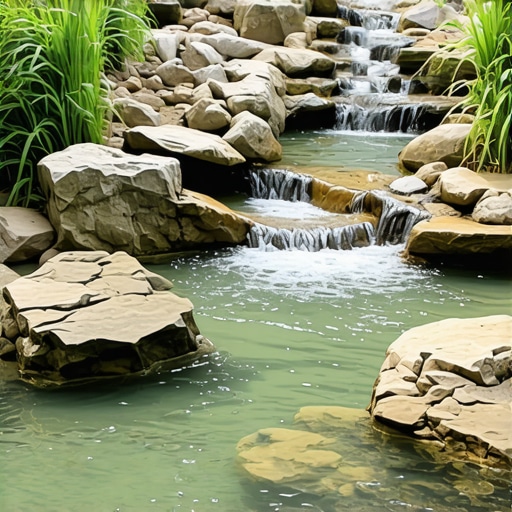
The 3-Tier Rock Rule dictates that you must use three distinct sizes of stone to create a stable, natural-looking stream bed that resists the force of flowing water and heavy rains. This rule is the gold standard for high-end landscaping because it addresses both physics and aesthetics. The first tier consists of structural boulders (12 to 24 inches or larger), which act as the ‘bones’ of the stream, holding the liner against the excavation walls. The second tier is cobble (4 to 8 inches), which fills the gaps between the large boulders. The third tier is river gravel (1 to 2 inches), which covers the remaining liner and provides the microscopic surface area for beneficial bacteria to thrive. This bacteria is what actually keeps your water clear, not just the pump.
What is the best stone for a backyard stream bed?
For a stream bed, granite cobble and river rock are superior to limestone or sandstone because they have a lower calcium carbonate content, which prevents the water pH from spiking and triggering massive algae blooms. You need stones that are chemically inert and physically dense enough to stay put during a heavy storm surge. Avoid sharp-edged crushed stone, which can puncture the 45-mil EPDM liner even through the thickest underlayment.
| Material Type | Function | Recommended Spec |
|---|---|---|
| EPDM Liner | Water Containment | 45-mil Fish-Safe |
| Underlayment | Liner Protection | 8 oz Non-Woven Geotextile |
| Tier 1 Rock | Structural Support | 12-24 inch Fieldstone |
| Tier 2 Rock | Gap Filling | 4-8 inch River Cobble |
| Tier 3 Rock | Biological Filter | 1-2 inch River Gravel |
Liner Integrity and Sub-Base Preparation
The foundation of any stream is the sub-base. After excavation, you must remove every sharp root and stone. We then install a heavy-duty 8 oz non-woven geotextile underlayment. This fabric acts as a cushion between the earth and the 45-mil EPDM liner. If you are building in an area with high groundwater, you might even need a hydrostatic relief valve or a French drain under the stream to prevent the liner from ‘floating’ when the water table rises. This is a common failure point that ‘mow-and-blow’ contractors never consider. They just see a hole; I see a pressure vessel. We ensure the soil is compacted to at least 95 percent on all shelves to prevent settling that would create low spots in the liner, leading to water loss.
“Riparian buffers function as the critical interface between terrestrial and aquatic ecosystems, regulating nutrient flux.” – Penn State Agricultural Extension
How much modified gravel do I need for a patio base?
While not directly in the stream, any surrounding hardscape requires a modified gravel base (typically 21A or CR-6) compacted in 2-inch lifts to a total depth of 4 to 6 inches for pedestrian traffic. This ensures the landscaping around your stream doesn’t shift and dump sediment into your new water feature. Proper compaction is measured in PSI, and if your plate tamper is not bouncing off the surface, you aren’t done yet.
Integration of Irrigation and New Sod Install
Once the stream is set, the transition to the rest of the yard is critical. This is where sod install and irrigation adjustments come into play. You cannot have your sprinklers dumping water directly into the stream, as this introduces phosphates and nitrates from fertilizers, which feed string algae. We recalibrate the irrigation system to use drip lines near the stream edge and ensure the sod install involves a slight ‘lip’ or berm to prevent runoff from the lawn from entering the water. For the sod itself, we recommend a Tall Fescue or Kentucky Bluegrass blend depending on your USDA zone, ensuring the roots are established with deep, infrequent watering. Turf grass needs exactly 1 inch of water per week to force the root system to grow deep, which provides better stability for the stream’s edge.
- Excavate the stream path with a minimum 2 percent slope.
- Install 8 oz geotextile underlayment over the entire footprint.
- Lay 45-mil EPDM liner, leaving at least 12 inches of overlap on the banks.
- Place Tier 1 boulders to create the waterfall weirs and side walls.
- Infill with Tier 2 cobble to lock the larger stones in place.
- Spread Tier 3 gravel to cover the remaining liner and create the bio-filter bed.
- Test the pump and check for ‘draw-down’ in the reservoir.
The Maintenance Cycle: Yard Cleanup and Bio-Filters
A backyard stream is a living ecosystem. Yard cleanup is not just about aesthetics; it is about managing the nitrogen cycle. Falling leaves and organic debris that land in the stream will rot, increasing ammonia levels. This is why we install high-volume skimmer boxes that catch debris before it sinks to the bottom. During your seasonal yard cleanup, it is vital to clear the intake of the pump and check the biological filter pads. If the gravel bed becomes choked with silt, the water will find a new path—usually out of the stream and into your sod. Proper maintenance ensures the irrigation levels remain consistent and the water stays crystal clear without the use of harsh chemicals that kill the soil microbiology.