
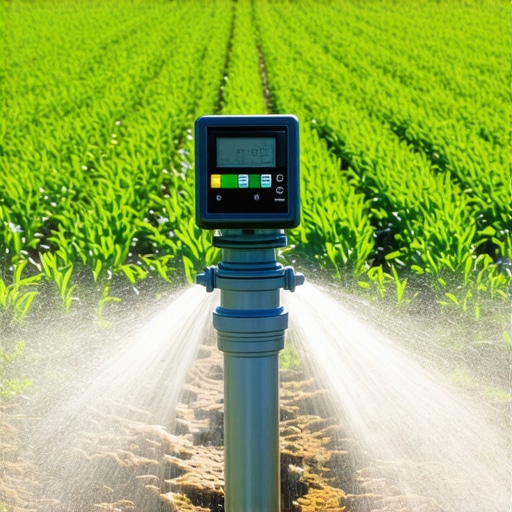
The Hard Truth About Smart Irrigation Systems
Programming a 2026 irrigation timer for maximum efficiency requires an understanding of evapotranspiration rates, soil field capacity, and distribution uniformity to prevent hydraulic waste. Most homeowners waste 50% of their water through runoff or deep percolation because they treat their timer like a kitchen appliance rather than a precision engineering tool. I always drill into my new crew members: if you don’t fix the soil grading first, every plant you put in the ground is just expensive compost. It is the same with irrigation. You can have the most expensive Hunter or Rain Bird controller on the market, but if your yard cleanup was sloppy and your sod install was done on compacted clay, that timer is just a countdown to a fungal nightmare. Deep roots require deep, infrequent cycles. Watering for ten minutes every day is for amateurs. It keeps the roots at the surface where the sun cooks them. We program for resilience, not just green color. Do not skip the site audit. Every nozzle, every pipe, and every valve must be accounted for before you touch the dial.
The Physics of Water Infiltration and Root Depth
Maximum irrigation efficiency is achieved when the application rate of the sprinkler heads matches the infiltration rate of the soil, ensuring water reaches the root zone without creating surface runoff. If you see water hitting the sidewalk, you have failed the first law of hydraulics. Soil texture dictates everything. Clay particles are microscopic and tightly packed, meaning they hold water like a sponge but take forever to absorb it. Sandy soils are the opposite. They drink fast but hold nothing. To program your 2026 controller, you must identify your soil type or you are just guessing. Use a soil probe. Pull a core. If you see a thick layer of thatch during your yard cleanup, your water isn’t even reaching the dirt. It is sitting in the organic debris, evaporating and feeding pathogens. This is why a thorough yard cleanup is a prerequisite for any irrigation adjustment. You have to clear the way for the water to work.
“Irrigation efficiency is not just about how much water you use, but how much of that water actually becomes available to the plant’s metabolic processes through the soil matrix.” – USDA NRCS Agronomy Handbook
How much water does my lawn actually need?
Most established turfgrass species require exactly one inch of water per week, delivered in one or two deep sessions to encourage roots to chase moisture into the lower soil profiles. This forces the plant to build a robust root system. If you provide a light misting daily, the plant becomes lazy. It stays shallow. Then, the first heatwave of July hits and the lawn turns to straw. We use catch-can tests to measure output. Place six tuna cans across a zone, run it for 15 minutes, and measure the depth. If one can has half an inch and another has an eighth, your distribution uniformity is garbage. No timer setting can fix a broken layout. Fix the heads first. Then program the time.
| Soil Type | Infiltration Rate (Inches/Hour) | Max Run Time Before Runoff | Suggested Frequency |
|---|---|---|---|
| Heavy Clay | 0.05 to 0.15 | 8-12 Minutes | 1-2 Days/Week |
| Silt Loam | 0.30 to 0.50 | 20-25 Minutes | 2 Days/Week |
| Sandy Loam | 0.50 to 1.00 | 40-50 Minutes | 3 Days/Week |
| Pure Sand | 1.00 to 5.00 | 60+ Minutes | 3-4 Days/Week |
The Cycle-and-Soak Method for 2026 Controllers
The Cycle-and-Soak programming method is the industry standard for preventing runoff on sloped terrain or heavy clay soils by breaking total run times into multiple shorter intervals. If your lawn needs 30 minutes of water but starts shedding it after 10, you program three 10-minute cycles with an hour of soak time in between. This allows the water to move through the soil pores via capillary action. Modern 2026 smart timers have this feature built-in. Use it. This is especially critical after a fresh sod install. New sod needs to stay moist, but you cannot drown the soil or the roots will rot before they can knit into the ground. During the first 14 days of a sod install, you are managing the interface between the nursery peat and your native soil. It is a delicate balance. If you overwater, you create an anaerobic environment. The roots suffocate. They die. It is that simple.
Yard Cleanup and Pre-Season System Audits
Effective irrigation begins with a comprehensive yard cleanup to remove debris that blocks spray patterns and prevents the soil from breathing. Before you even look at the timer, you need to be on your hands and knees checking every pop-up head. Grass grows over them. Mulch covers them. Dogs chew them. A single clogged nozzle can kill a 100-square-foot patch of grass in a week. During your cleanup, look for ‘weeping’ heads that leak water when the system is off. This indicates a failing valve diaphragm. A leaking valve can waste thousands of gallons and turn your yard into a swamp. This isn’t just about aesthetics. It is about structural integrity. Water pooling near a foundation or a retaining wall can cause hydrostatic pressure to build up, eventually blowing out the wall. Landscaping is civil engineering. Treat it as such.
- Inspect Nozzles: Remove sand and grit from filters to ensure even flow.
- Check Head Height: Ensure heads have not sunk below the soil line, causing ‘puddling.’
- Clear Thatch: Power rake if thatch exceeds half an inch to improve water penetration.
- Adjust Arcs: Stop watering the driveway. Water is for plants, not asphalt.
- Test Sensors: Ensure rain sensors are clear of debris and functioning.
Why is my irrigation timer not saving money?
Your irrigation timer is likely failing to save money because the default seasonal adjustments are not calibrated to your micro-climate’s specific evapotranspiration (ET) data. Most smart timers use regional weather station data, which might be five miles away and 10 degrees cooler than your backyard. If your yard is a south-facing slope with no shade, it needs more water than the ‘average’ lawn in your zip code. You must manually override the ET slope or install an on-site soil moisture sensor. These sensors are the gold standard. They bypass the timer and tell the system: ‘The soil is at 20% moisture, do not turn on.’ That is how you save money. You stop watering based on the calendar and start watering based on biology.
“A retaining wall doesn’t fail because of the stone; it fails because of the water trapped behind it.” – Hardscape Engineering Axiom
Advanced Programming for 2026 Smart Systems
The 2026 generation of controllers utilizes AI-driven forecasting to predict rain events and adjust schedules before the clouds even arrive. However, the human element remains vital. You must input the specific plant types for each zone. A zone with native oaks has vastly different requirements than a zone with high-maintenance fescue. When we do a professional landscaping install, we group plants by ‘hydrozones.’ This means all high-water plants are on one valve and drought-tolerant plants are on another. If your contractor mixed lavender with hydrangeas, no amount of smart programming will save you. One will either drown or the other will wilt. This is why design is the foundation of efficiency. You cannot program your way out of a bad planting plan. You must be precise. You must be intentional. Check your GPM (Gallons Per Minute) against your meter. If the numbers don’t add up, you have a subterranean leak. Dig it up. Fix it now. Do not wait for the water bill to tell you what you already should know.