
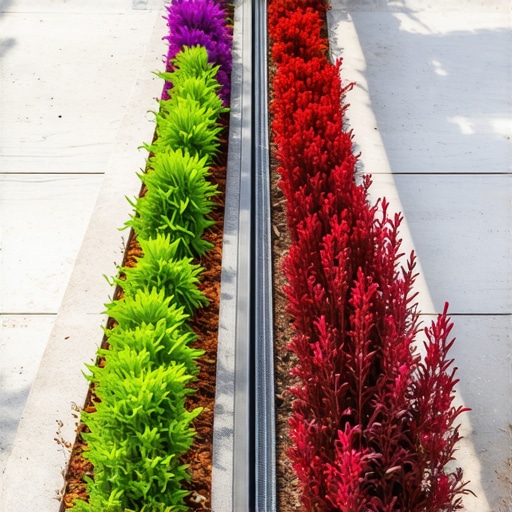
Engineering the Edge: Why Landscape Boundaries Fail
Garden edging serves as the primary mechanical barrier between competing biological zones: specifically your sod install and your mulch beds. In 2026, we are moving away from decorative fluff and toward structural engineering that prevents lateral root migration and soil erosion. Choosing between steel and plastic is not a matter of color; it is a matter of tensile strength, UV degradation resistance, and hydrostatic pressure management.
“Proper garden edging provides a permanent root barrier that limits the spread of invasive stolons into non-target areas.” – Agronomy Manual
I recently got called out to tear up a $30,000 patio that was sinking because the previous contractor used cheap plastic edging to hold the base. The plastic had buckled under the lateral pressure of the compacted gravel. Within two years, the polymeric sand washed out, the pavers shifted, and the homeowner was left with a dangerous, tripping-hazard mess. I had to excavate the entire perimeter, re-compact the modified gravel base, and install 14-gauge Cor-Ten steel. It was a brutal, expensive lesson for the homeowner in why material science matters more than the initial quote. If you do not respect the physics of soil expansion, the ground will win every single time. It is a mathematical certainty.
The Planning Phase: Material Physics and Soil Mechanics
Before you stick a spade in the dirt, you have to understand the coefficient of thermal expansion. Plastic expands and contracts at a significantly higher rate than steel. In a climate with freeze-thaw cycles, this differential movement causes “frost heave,” where the ground literally spits the edging out like a bad seed. We see this most often in heavy clay soils that retain moisture. Steel, specifically galvanized or A606 weathering steel, has the shear strength to stay put when the ground starts pushing. It does not just sit there: it anchors the entire landscaping profile. When we plan a yard cleanup for a high-end client, we look for these structural failures first. If the edge is soft, the whole design is failing. You cannot have a clean line with a material that bends when the sun gets hot.
| Material Attribute | 14-Gauge Steel | Heavy-Duty HDPE Plastic | Standard Vinyl (Big Box) |
| Expected Lifespan | 25 to 40 Years | 10 to 15 Years | 2 to 4 Years |
| UV Stability | Immune | High (with Carbon Black) | Low (Brittle) |
| Mower Impact Resistance | Structural Dent Only | Cracking/Tearing | Complete Failure |
| Root Barrier Depth | 4 to 6 Inches | 3 to 5 Inches | 2 to 3 Inches |
Steel Edging: The Industrial Standard for 2026
Steel edging is the gold standard for a reason. We are talking about hot-dipped galvanized or powder-coated carbon steel that can withstand the 1,500-pound weight of a commercial zero-turn mower. For a sod install, steel provides a crisp, vertical face that prevents the grass from creeping under the mulch. It acts as a root-stop. When you use steel, you are installing a low-maintenance system. It will not rot. It will not shatter. Most importantly, it creates a capillary break that prevents water from migrating from your irrigation zones into areas where you want to keep the soil dry. If you are serious about your landscaping, you use a material that matches the longevity of your home.
How do I install steel garden edging for professional results?
Professional installation of steel edging requires a deep trench cut exactly one inch shallower than the width of the metal. This ensures the top rail sits slightly above the soil line to prevent turfgrass overgrowth while remaining low enough to clear mower blades. You must use 12-inch tapered stakes driven at a 15-degree angle toward the bed side to counteract frost heave. Every joint should have a minimum 2-inch overlap to ensure structural continuity. Do not skip the compaction step. Once the steel is in place, backfill with a loam-sand mix and tamp it down until the metal does not vibrate when struck. This rigidity is what keeps your yard cleanup efficient; you can run a string trimmer right against the metal without fear.
Plastic Edging: When to Use and When to Avoid
I usually tell my crew that plastic edging is for temporary fixes or very specific drainage applications. If you must go with plastic, it has to be High-Density Polyethylene (HDPE). Avoid the thin, coiled stuff from big-box stores. It is garbage. True professional-grade plastic is rigid, usually 1/4 inch thick, and comes in straight 10-foot sections. We use it occasionally in acidic soil environments where untreated steel might corrode prematurely, or around complex irrigation manifolds where we need non-conductive materials. However, even the best plastic will eventually succumb to oxidative degradation. The sun’s UV rays break the polymer chains, making the material brittle. One accidental hit from a shovel during a yard cleanup and it will snap like a cracker. Steel does not do that.
“A retaining wall doesn’t fail because of the stone; it fails because of the water trapped behind it.” – Hardscape Engineering Axiom
Which is better for irrigation zones: steel or plastic edging?
For irrigation zones, steel edging is superior because it provides a physical shield for micro-irrigation lines. We often tuck 1/2-inch poly tubing right against the steel edge before mulching. This protects the lines from being sliced by edgers or string trimmers. Plastic edging is often too soft to provide this protection, and the stakes used for plastic can easily puncture buried lines. When we perform a sod install, we ensure the irrigation heads are set back 4 inches from the steel edge to allow for proper head-to-head coverage without the metal interfering with the spray pattern. This level of detail is what separates a professional landscaper from a guy with a truck and a mower.
- Verify Soil Type: Use steel for heavy clay; HDPE for high-salt or extremely acidic soils.
- Trench Depth: Ensure at least 4 inches of the edging is subterranean to block rhizomes.
- Stake Selection: Use 12-inch steel stakes; 4-inch plastic pins will pull out in the first rain.
- Overlap Joints: Never butt-joint edging; always overlap by at least 2 inches to prevent gaps.
- Mower Clearance: Set the top edge 1/2 inch above the sod install root flare.
Modern Maintenance and Longevity
In 2026, we do not want to see our clients every six months to fix their edging. A steel install is a one-and-done operation. During your annual yard cleanup, you simply need to check the stakes for any movement caused by hydrostatic pressure and clear any debris from the drainage weep holes if you have them. Steel develops a patina that actually protects the metal from further corrosion. It is a self-healing system in the case of A606 steel. Compare this to plastic, which requires constant re-staking and replacement of cracked sections. The total cost of ownership for steel is actually lower over a ten-year period when you factor in labor and replacement materials. Stop buying cheap plastic. Start building landscapes that last for decades. Your soil deserves the structural integrity of a real edge.