
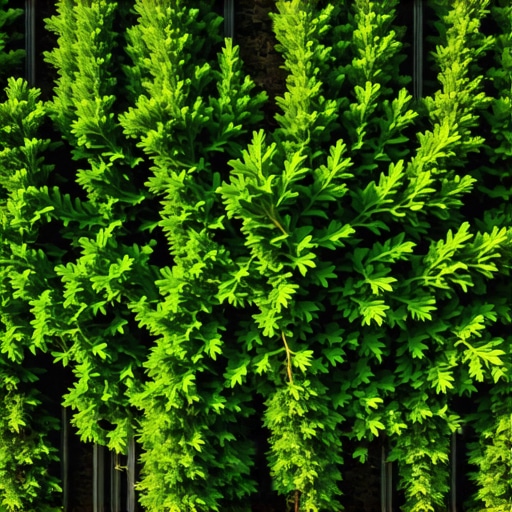
Privacy Plants for 2026: Fast-Growing Evergreen Hacks
I always drill into my new crew members: if you don’t fix the soil grading first, every plant you put in the ground is just expensive compost. I have spent two decades watching homeowners throw thousands of dollars at ‘instant privacy’ screens only to have them turn brown and brittle within 18 months because they ignored the hydrology of their yard. When we talk about privacy plants for 2026, we aren’t just talking about buying a tall tree. We are talking about engineering a biological barrier that can withstand the increasingly erratic freeze-thaw cycles and the summer droughts that are becoming the standard. A successful screen requires more than a shovel; it requires an understanding of soil compaction, capillary action, and root flare visibility.
The Foundation of Privacy: Engineering the Living Wall
To install a successful privacy screen in 2026, you must prioritize species like Thuja Plicata ‘Green Giant’ or Cryptomeria japonica, ensuring they are planted in well-draining soil with a focus on root flare exposure and secondary irrigation systems to prevent transplant shock and root rot.
The biggest mistake I see in the field is the ‘mulch volcano.’ People pile mulch up against the trunk, trapped moisture against the bark, and wonder why their $500 tree is dying. The root flare—the point where the roots begin to branch out from the stem—must be visible at the soil line. If you bury that flare, you are suffocating the tree. It’s that simple. In my firm, we don’t even let a crew lead touch a plant until they can identify the flare on five different species. We also look at the soil structure. If you’re dealing with heavy clay, you can’t just dig a hole and drop the plant in; you’ve created a bathtub that will drown the roots. You have to amend the entire planting strip or install a French drain to move that hydrostatic pressure away from the root zone.
“A privacy screen is only as resilient as its root system; poor drainage and improper planting depth account for over 80% of evergreen mortality in suburban landscapes.” – Penn State Department of Plant Science
How far apart should I plant Thuja Green Giant?
For a dense, staggered screen, you should plant Thuja Green Giant 5 to 6 feet apart in a zig-zag pattern. This spacing allows for adequate airflow—essential for preventing fungal pathogens—while ensuring the canopy closes within three growing seasons. If you plant them in a straight line, you need 8-foot centers to prevent overcrowding and limb dieback as they reach maturity. Crowding is the enemy of longevity. When branches touch too early, they compete for light, leading to ‘hollow’ trees that are bare in the middle. We use a transit to mark our lines because a two-inch deviation over a 100-foot run looks like a zig-zag mess by year five.
The 2026 Evergreen Catalog: Beyond the Big-Box Basics
Stop buying trees from big-box stores. Those plants have been sitting on hot asphalt, root-bound in plastic pots, and pumped full of high-nitrogen fertilizers that force top-growth at the expense of root development. You want nursery stock. Nursery trees are hardened off and have a root-to-shoot ratio that can actually survive a transplant. For 2026, we are looking at ‘Green Giant’ for speed, but I’m increasingly leaning toward Ilex x Nellie R. Stevens for areas where deer pressure is high. It’s a tough-as-nails holly that takes pruning like a champ and provides a literal wall of thorns for anyone trying to peek into your yard.
| Species | Annual Growth Rate | USDA Zone | Primary Benefit |
|---|---|---|---|
| Thuja ‘Green Giant’ | 3-5 Feet | 5-8 | Unmatched Speed |
| Cryptomeria ‘Radicans’ | 2-3 Feet | 5-9 | Feathery Texture/No Pests |
| Ilex ‘Nellie R. Stevens’ | 2 Feet | 6-9 | Deer Resistance/Berries |
| Juniperus ‘Spartan’ | 1-2 Feet | 4-9 | Salt Tolerance/Narrow Profile |
The Cryptomeria japonica ‘Radicans’ is my dark horse pick for 2026. It doesn’t suffer from the same bagworm issues that plague the common Arborvitae, and it keeps a deep, rich green even in the dead of winter. It’s a specialized plant for a homeowner who wants something that doesn’t look like a standard suburban fence. When we do a sod install alongside these plantings, we always ensure there is a clear 3-foot buffer of mulch between the turf and the tree. Turf grass is a nitrogen hog. If your grass is growing right up to the trunk, it’s stealing the nutrients your privacy screen needs to thrive.
What is the fastest growing evergreen for privacy?
The Thuja ‘Green Giant’ remains the fastest-growing evergreen, capable of gaining 3 to 5 feet of height annually under optimal conditions with consistent irrigation. However, this growth requires a strict nitrogen-rich fertilization schedule and a minimum of 6 hours of full sun to prevent the lower branches from thinning out. If you have shade, don’t even try it. You’ll end up with a spindly, transparent mess. In shaded areas, you have to pivot to something like Prunus laurocerasus (Skip Laurel), which can handle the low light but still gives you that evergreen density. It won’t grow 5 feet a year, but it will actually stay alive.
Installation Mechanics: The Ground-Up Build
Preparation is 90% of the job. If you haven’t done a yard cleanup that includes removing invasive vine roots and testing the soil pH, you aren’t ready to plant. Most evergreens prefer a slightly acidic pH (between 5.5 and 6.5). If your soil is alkaline, that ‘Green Giant’ will go chlorotic—turning a sickly yellow—because it can’t uptake iron. We use a sulfur-based amendment to drop the pH months before the plants even arrive. [IMAGE_PLACEHOLDER_1] The planting process is a mechanical operation. We dig the hole twice as wide as the root ball but no deeper. We want the bottom of the hole to be undisturbed soil so the tree doesn’t settle. Settling is a death sentence; it pulls the root flare underground.
“In hardscape and planting, hydrostatic pressure is the silent killer; without proper drainage, even the most robust evergreen will succumb to phytophthora root rot.” – Hardscape Engineering Axiom
- Soil Test: Determine pH and NPK levels before ordering stock.
- Utility Marking: Always call 811. I’ve seen a ‘simple’ screen project turn into a $10,000 gas line repair.
- Irrigation Check: Install a dedicated drip line with 2.0 GPH emitters. Overhead sprayers encourage needle blight.
- Staking: Only stake if you’re in a high-wind corridor, and use flexible ties to allow the trunk to build ‘stress wood.’
Irrigation is the most misunderstood part of landscaping. Most people think ‘a little bit every day’ is good. It’s the worst thing you can do. You want deep, infrequent watering. You want to soak that root ball so the water penetrates 12 inches down. This forces the roots to grow deep to find the moisture. If you just wet the surface, the roots stay at the surface. Then, when a 100-degree day hits in July, the surface soil bakes, and your roots fry. We recommend 1 inch of water per week, delivered via drip irrigation directly to the root zone. It’s more efficient and keeps the foliage dry, which is critical for preventing diseases like Seiridium canker.
Maintenance and the “Settling In” Period
Year one is about survival. Year two is about establishment. Year three is when you see the growth. Don’t expect 5 feet of growth in the first 12 months; the plant is busy rebuilding its root system. During your seasonal yard cleanup, inspect for bagworms and spider mites. These pests can defoliate a screen in weeks. If you see ‘bags’ hanging from the branches, pick them off by hand and burn them. Chemicals are a last resort. If you’ve followed the engineering—the right spacing, the right drainage, and the right depth—the plant’s natural immune system will handle most issues. Landscaping isn’t a ‘set it and forget it’ product; it’s a living investment that requires a foreman’s eye. Stick to the measurements. Trust the biology. Don’t take shortcuts on the dirt.