
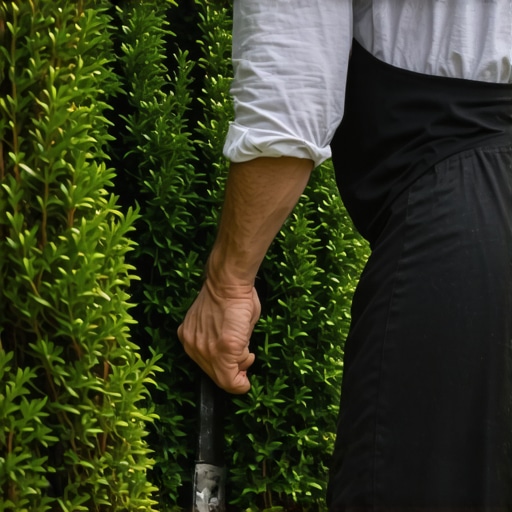
I always drill into my new crew members one simple truth: if you do not fix the soil grading and ensure internal air circulation, every plant you put in the ground is just expensive compost. Most landscapers walk onto a property, fire up the gas shears, and shave a boxwood into a tight, green ball. They think they are being efficient. In reality, they are signing the plant’s death warrant. By creating a dense, impenetrable outer shell of foliage, they are trapping humidity and heat inside the canopy. This is the exact environment where Calonectria pseudonaviculata, or boxwood blight, thrives. I have spent two decades digging up dead English Boxwoods that looked great for a month before the interior rotted out because some ‘mow-and-blow’ hack didn’t understand basic plant pathology.
The Critical Role of Internal Airflow in Preventing Boxwood Blight
Boxwood blight prevention relies almost entirely on managing the micro-climate within the shrub’s canopy to ensure that moisture does not sit on leaf surfaces for extended periods. Professional thinning cuts remove select branches to allow sunlight and wind to penetrate the interior, effectively reducing hydrostatic humidity and disrupting the fungal lifecycle.
Boxwoods are not static ornaments; they are living, breathing organisms that require gas exchange. When you shear the tips, you stimulate a flush of growth only at the surface. This creates a ‘thatch’ of green that blocks light from reaching the inner stems. Without light, the inner leaves drop, leaving a hollow, damp center. In my 20 years, I have seen thousand-dollar specimens turned into skeletal husks because the homeowner thought ‘neatness’ was more important than biology. We use bypass pruners, not shears. We cut at the nodes. We think about the 2026 growth cycle, not just how the yard looks this Friday.
“Boxwood blight is a devastating fungal disease that can spread rapidly through splashing water and contaminated tools. Maintaining a dry canopy through proper spacing and internal thinning is the primary cultural defense against infection.” – Penn State College of Agricultural Sciences
The Forensic Anatomy of a Fungal Outbreak
If you see black streaks on the green stems or circular brown spots with a dark border on the leaves, you are already in trouble. This is not a ‘wait and see’ situation. The spores are sticky. They cling to your boots, your dog’s fur, and your unwashed pruners. I’ve seen a single infected plant wipe out an entire 50-foot hedge in a matter of weeks during a wet spring. The physics of the disease are simple: water droplets hit an infected leaf, the force of the drop displaces the spores, and they travel up to three feet to the next host. If your plants are jammed together or the canopy is too thick, the infection is guaranteed. You must create ‘air highways’ through the plant.
How do I identify Boxwood Blight before it kills the plant?
Check the lower interior of the shrub for leaf drop and black cankers on the stems. Unlike seasonal shedding, blight causes rapid, localized defoliation that leaves the stems bare and dark. Early detection requires getting your hands inside the plant to inspect the wood, not just looking at the surface from your porch. Look for the ‘shadow’ of the disease—spots that look like they’ve been scorched by a torch.
The Thinning Protocol: Engineering a Resilient Hedge
Successful landscaping requires moving away from aesthetic shearing toward structural pruning. By removing roughly 10% to 15% of the outer branches annually, you create small windows that allow the plant to breathe and photosynthesize from the inside out.
This is where the ‘plucking’ method comes in. You reach into the outer shell and find a branch that is roughly 6 to 10 inches long. You follow it back to a main lateral branch and snip it. You do this repeatedly until you can see light dappling through the entire plant. It takes three times longer than shearing. It costs more. But it works. If you skip this, you’ll be calling me for a sod install and a full yard cleanup once the dead boxwoods have to be ripped out and the soil has to be sterilized. Don’t be cheap with your labor now, or you’ll pay for it in disposal fees later.
| Pruning Method | Airflow Impact | Blight Risk | Tool Required | Long-Term Health |
|---|---|---|---|---|
| Shearing (Gas/Electric) | Negative (Traps Moisture) | High | Hedge Shears | Poor (Interior Dieback) |
| Thinning (Manual) | Positive (Promotes Drying) | Low | Bypass Pruners | Excellent |
| Plucking (Structural) | Optimal (Light Penetration) | Minimal | Hand Pruners | Superior Resilience |
When is the best time of year to prune for maximum airflow?
The ideal window is late winter or early spring before the first flush of new growth begins. Pruning during this dormant phase allows the plant to seal the wounds before the high-humidity months of May and June arrive. Avoid pruning in late fall, as this stimulates tender growth that will be killed by the first hard frost, creating entry points for opportunistic pathogens like Volutella.
Hydration and Irrigation: The Silent Killers
Most homeowners have their irrigation systems set to ‘stupid.’ They water for 15 minutes every single night. This is a recipe for disaster. Boxwoods hate wet feet and they hate wet leaves. If your sprinklers are hitting the foliage of your boxwoods, you are basically hand-delivering the blight spores to their new home. You need drip irrigation or soaker hoses buried under two inches of mulch. This delivers 100% of the water to the root flare and 0% to the leaves.
“Overhead irrigation is the leading contributor to the spread of foliar pathogens in ornamental landscapes. Soil moisture should be managed through subsurface delivery to prevent leaf wetness duration from exceeding critical thresholds.” – Agronomy Extension Manual 402
Furthermore, check your soil pH. Boxwoods are pickier than a high-end client. They want a pH between 6.5 and 7.2. If your soil is too acidic, which is common in areas with heavy pine needle cover or high rainfall, the plant can’t take up nutrients. A stressed plant is a weak plant. A weak plant is a target for every pest from leafminers to boxwood mites. Get a soil test. Stop guessing. If you aren’t measuring, you aren’t managing.
- Sanitize Tools: Use 70% isopropyl alcohol between every single plant. No exceptions.
- Remove Debris: Rake out old leaves from the center of the shrub. That leaf litter is a fungal hotel.
- Mulch Depth: Maintain 2 inches of hardwood mulch. Never let it touch the stem. No ‘mulch volcanoes.’
- Inspection: Walk the property after a heavy rain. If the interior of the plants is still wet after 4 hours, you haven’t thinned enough.
Finally, let’s talk about yard cleanup. If you have infected plants, do not throw them in your compost pile. You are just creating a blight factory. The material must be bagged and hauled to a landfill or burned if local ordinances allow. The spores can live in the soil for years. This isn’t just gardening; it’s bio-security. Treat your property like a lab. Keep it clean. Keep it dry. Keep it alive.