
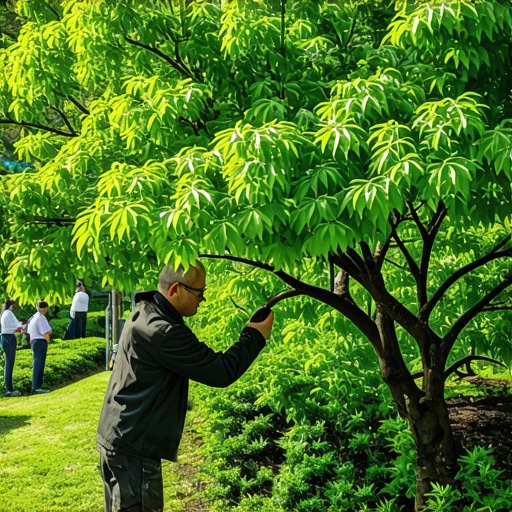
The Structural Engineering of Acer Palmatum
Properly pruning Japanese Maples involves identifying and removing inward-facing limbs to improve air circulation and structural integrity within the tree’s internal canopy. By eliminating branches that grow toward the center, you prevent bark inclusion and reduce the risk of fungal pathogens that thrive in stagnant, humid environments. It is not about aesthetics; it is about the vascular health of the specimen.
I always drill into my new crew members: if you do not fix the structural skeleton first, every plant you put in the ground is just expensive compost. Last season, I watched an apprentice try to ‘shape’ a Dissectum by shearing the exterior. I stopped him cold. You do not shear a Japanese Maple like a boxwood. You surgically remove the internal clutter so the tree can breathe. If you cannot see the ‘bones’ of the tree, you are doing it wrong. We are looking for the branch bark ridge and the branch collar. These are the anatomical markers that dictate where a cut will heal or where it will rot. Most homeowners ignore the internal architecture until a heavy snow load snaps a major scaffold limb because of a weak attachment point. Do not be that homeowner.
“A tree’s ability to compartmentalize decay is directly related to the precision of the pruning cut at the branch collar.” – ANSI A300 Pruning Standards
How do I identify which branches to prune on a Japanese Maple?
To identify problematic limbs, look for secondary branches that cross the central axis or rub against primary scaffold limbs. These inward-facing limbs often lack access to photosynthetic light, leading to twig dieback and providing an entry point for pests like scale or aphids. Use a 10x jeweler’s loupe if you have to; looking for the early signs of canker or necrosis on these shaded limbs will tell you everything you need to know about the tree’s vitality.
| Tool Type | Branch Diameter | Specific Use Case |
|---|---|---|
| Bypass Pruners | Up to 0.5 inch | Small interior twigs and deadwood |
| Loppers | 0.5 to 1.5 inches | Secondary inward-facing limbs |
| Pruning Saw | Over 1.5 inches | Major structural corrections |
The 2026 pruning cycle requires a deep understanding of dormancy cycles. While most ‘pros’ tell you to prune whenever you have free time, the horticultural reality is that late winter is the surgical window. We want to make our cuts just as the carbohydrate reserves are moving from the roots to the buds. This ensures the cambium layer can immediately begin forming callus tissue. If you wait until the leaves are fully pushed, you are stealing the tree’s energy. Inward-facing limbs are particularly egregious because they steal nitrogen and phosphorus for growth that ultimately serves no purpose for the tree’s long-term canopy development.
Will pruning my Japanese Maple too much kill it?
Removing more than 25 percent of the living canopy in a single season can trigger a stress response, leading to epicormic sprouting or ‘water sprouts’ that grow vertically and weaken the tree. Stick to the Rule of Thirds: never remove more than one-third of a specific limb’s lateral growth to maintain auxin production and root-to-shoot balance. If the tree is already stressed from poor irrigation or soil compaction, reduce your pruning intensity to 10 percent of the canopy.
- Step 1: Sterilize all tools with 70 percent isopropyl alcohol to prevent Verticillium wilt.
- Step 2: Identify the ‘Three Ds’: Dead, Damaged, or Diseased wood.
- Step 3: Locate limbs growing toward the trunk (inward-facing).
- Step 4: Execute a clean cut just outside the branch collar. Do not flush cut.
- Step 5: Remove crossing branches that cause mechanical friction.
Integration with your total landscaping strategy is vital. If you are doing a yard cleanup, do not just throw the maple clippings in the back of the truck. Inspect them. If you see black streaks in the wood, you have a fungal issue that needs systemic fungicide treatment. Furthermore, if you are planning a sod install under the drip line of a Japanese Maple, stop. The root zone of these trees is shallow. Digging for sod will sever the feeder roots. Instead, use a high-quality arborist wood chip mulch to regulate soil temperature and moisture levels. Your irrigation system should be calibrated to deliver water to the drip line, not the trunk. Excess moisture on the bark leads to root rot and phytophthora.
“Internal canopy thinning increases light penetration, which is the primary driver of anthocyanin production in red-leaf cultivars.” – Journal of Environmental Horticulture
When dealing with inward-facing limbs, you must also consider hydrostatic pressure within the plant cells. Pruning during a drought is a death sentence. Ensure the tree has had at least 1 inch of water per week before you start cutting. The tree needs turgor pressure to facilitate the healing process. If the soil is like concrete, your landscaping priority should be core aeration and organic matter incorporation before you ever touch a saw. A Japanese Maple is an investment in botanical architecture. Treat it with the same engineering precision you would a structural load-bearing wall. Every cut is a permanent alteration to the vascular highway of the organism. Make it count. Check your 811 markings if you are doing heavy landscaping nearby, as irrigation lines often tangle with maple roots over time. Keep the canopy open, the tools sharp, and the soil biology active. That is how you grow a specimen that lasts a century.