
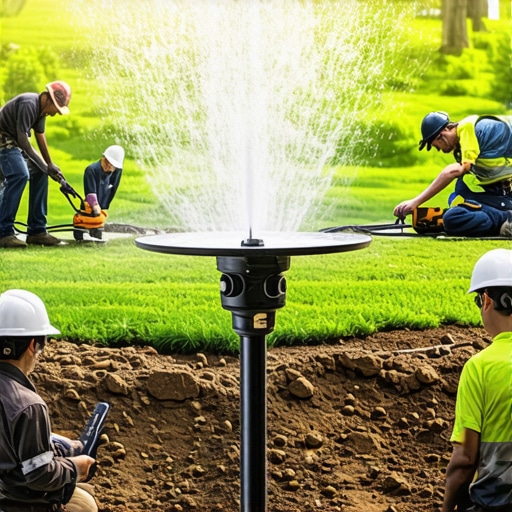
The Forensic Autopsy of a Dying Irrigation Zone
To repair 2026 sprinkler zone failures, you must check the solenoid diaphragm for debris and adjust the flow control stem to match the lateral line’s hydraulic capacity. Most failures stem from pressure drops caused by friction loss or worn valve seals that prevent full gate opening.
I recently got called out to tear up a $30,000 patio that was sinking because the previous contractor ignored the irrigation manifold buried beneath the pavers. The lateral line had a hairline fracture, and the hydrostatic pressure was washing out the modified stone base every time the cycle ran. It was a mess. The homeowner thought they had a ‘dry patch’ in the yard cleanup. They had a structural failure instead. If you don’t understand the physics of water under pressure, you aren’t a landscaper; you’re just a guy with a shovel. Most 2026 zone failures aren’t about the timer. They are about the valve’s ability to maintain a consistent PSI across the entire circuit. When a zone fails to pop up or provides weak spray, the ‘tweak’ is rarely a new head. It is a hydraulic recalibration of the solenoid. It is about the science of the flow.
The Physics of Water: Why Your Sod Install is Failing
Your new sod install requires exactly 1 inch of water per week, but if your irrigation zone is dropping below 30 PSI at the furthest head, that water isn’t reaching the roots. It is evaporating in a fine mist. We see this constantly during yard cleanup projects where the system was never sized for the plant load. Friction loss is the enemy. Every foot of PVC pipe and every 90-degree elbow saps energy from the water stream.
“Irrigation efficiency is not merely about water volume; it is about the uniformity of application and the management of soil moisture sensors to prevent anaerobic conditions.” – Texas A&M AgriLife Extension
Why is one zone of my sprinkler system not working?
When one zone fails while others thrive, the culprit is almost always the solenoid valve’s diaphragm or a broken common wire. If the valve doesn’t fully retract, the pressure drop prevents heads from lifting. Check the bleed screw first to manually trigger the zone. It’s simple. It works. It isolates the problem immediately.
| Component | Failure Symptom | Scientific Fix |
|---|---|---|
| Solenoid Diaphragm | Low pressure/No pop-up | Flush debris from the valve seat |
| Flow Control Stem | Misting/Over-pressurization | Dial down to 40 PSI at the head |
| Lateral Line | Localized flooding/Sinking | Pressure test for subsurface leaks |
| Nozzle Filter | Distorted spray pattern | Sonicate or replace 100-mesh screen |
How do I increase water pressure in my irrigation zones?
To increase pressure, you must reduce the GPM (Gallons Per Minute) demand on the zone by installing high-efficiency rotary nozzles or splitting the zone into two separate circuits. You cannot manufacture pressure that doesn’t exist at the meter. You must manage the friction loss within the pipe diameter. Most residential systems use 3/4-inch PVC, which maxes out at 8-10 GPM before the velocity causes water hammer. Respect the pipe. Don’t overtax the manifold.
The 5-Step Irrigation Audit Checklist
- Check Static vs. Dynamic Pressure: Measure PSI at the spigot and at the furthest head while running.
- Inspect the Valve Manifold: Look for ‘weeping’ around the bonnet screws.
- Assess Head-to-Head Coverage: Ensure every head is being hit by the spray of the neighboring head.
- Verify Solenoid Ohms: Use a multimeter; a healthy solenoid should read between 20 and 60 ohms.
- Analyze Soil Compaction: Use a penetrometer to ensure water isn’t just running off the surface of your landscaping.
Landscape professionals often ignore the soil pH when diagnosing irrigation issues. If your soil is high in sodium, it becomes ‘tight,’ preventing water infiltration regardless of how much you tweak the sprinklers. You need to treat the soil biology, not just the hardware. Every yard cleanup should include a core aeration to break up that thatch layer. It helps. It breathes. It saves money.
“The most common cause of retaining wall and hardscape failure is the lack of integrated drainage systems to manage the hydrostatic pressure of saturated backfill.” – ICPI Tech Spec No. 2
The Final Tweak: Reclaiming Your Turf
The real secret to a 2026-ready system is the pressure-regulating head. If your heads are ‘fogging,’ you are wasting 30% of your water to the wind. Replace those old sprays with PRS (Pressure Regulating Stem) heads set to 30 PSI. The difference is night and day. You’ll see the droplets get heavier. They’ll actually hit the soil. That’s the goal. Stop misting the neighborhood and start soaking the roots. Your sod will thank you. Your wallet will too. Don’t be the guy who buys a new controller when the problem is a $2 rubber diaphragm in the ground. Be smarter than the machine.