
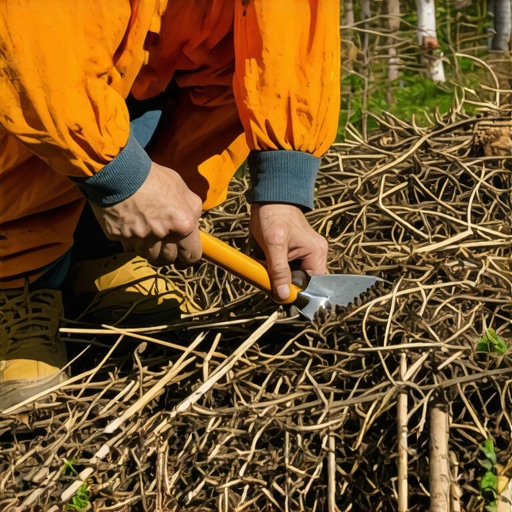
Why the $20 High-Carbon Steel Billhook is Essential for 2026 Yard Cleanup
Clearing 2026 brush piles requires a high-carbon steel billhook to efficiently sever woody stems and invasive vines at the soil line. This $20 manual tool provides the mechanical advantage needed for precise yard cleanup without the fuel costs or soil compaction risks associated with heavy machinery. It is the primary instrument for preparing a site for a professional sod install or irrigation system deployment.
I always drill into my new crew members: if you don’t fix the soil grading first, every plant you put in the ground is just expensive compost. I remember a job back in 2014 where an apprentice tried to clear a half-acre of overgrown Japanese Honeysuckle with a gas-powered string trimmer. He spent six hours burning through spools of plastic line and barely made a dent. I handed him my old $20 brush hook, showed him how to find the root flare, and we had the area cleared to bare dirt by lunch. The lesson was simple: engineering beats brute force. You cannot install a high-end landscape over a graveyard of woody debris. Those roots will rot, creating subterranean voids that lead to sinkholes in your new turf. If you want a level lawn, you start by manually excavating the brush at the source.
“Managing woody plant encroachment requires understanding the carbohydrate reserves in the root system; manual severance at the base during dormant seasons can significantly reduce regrowth cycles.” – Texas A&M AgriLife Extension
How do you clear heavy brush by hand?
Clearing heavy brush by hand involves using a hooked blade to tension the plant material before applying a shearing force at a 45-degree angle. This technique minimizes the physical impact on the operator while maximizing the cutting depth through lignified plant tissues. By focusing on the base of the plant, you ensure the removal of the crown, which is vital for preventing the regrowth of invasive species before a sod install.
The Physics of the Brush Hook vs. Mechanical Mulching
The brush hook utilizes a curved blade to trap stems against the cutting edge, preventing the slipping common with straight machetes. This tool allows a landscaper to apply precise pressure to 1-inch thick saplings and tangled briars that would choke a standard mower. Proper landscaping prep involves stripping this biomass to expose the true grade of the soil for irrigation trenching.
When we talk about 2026 site preparation, we are talking about soil integrity. A brush hog or a skid-steer with a mulching head is a blunt instrument. It grinds organic matter into the top three inches of the soil profile. While this looks clean on the surface, it creates a massive nitrogen imbalance. As the wood chips decompose, the microbes responsible for the breakdown consume every available molecule of nitrogen, leaving none for your future grass. This is why so many DIY sod projects fail within six months; the grass turns yellow and dies because the soil is literally starving. Using a $20 hand tool allows you to remove the biomass entirely, preserving the nitrogen for your sod install. We measure soil health in parts per million of nitrates, and a clean manual clearing always tests higher than a mechanically mulched site.
| Removal Method | Equipment Cost | Soil Compaction Risk | Nitrogen Retention | Precision |
|---|---|---|---|---|
| Manual Billhook | $20 – $35 | Negligible | High | Surgical |
| Gas Brush Cutter | $400 – $800 | Low | Medium | Moderate |
| Skid-Steer Mulcher | $150/hr Rent | Extreme | Low (N-Depletion) | Low |
What is the best tool for clearing woody vines?
The best tool for clearing woody vines is a high-carbon steel billhook or a brush hook with a 12-inch to 15-inch blade. These tools allow the user to hook the vine and pull it away from the host plant or structure before making a clean cut. This prevents damage to underlying landscaping or irrigation lines that might be hidden beneath the overgrowth.
Pre-Sod Preparation: Grading and Irrigation Logic
Successful sod installation requires a cleared site that has been graded to a 2 percent slope away from all permanent structures. Removing brush piles with hand tools ensures that you do not disturb the underlying soil structure or crush existing irrigation pipes. A clean slate is required to achieve the 95 percent compaction rate necessary for a stable hardscape or lawn base.
Once the brush is gone, the real work of the landscaping professional begins. You have to look at the hydrostatic pressure and drainage. If you have a pile of brush sitting in a low spot, it is likely masking a drainage issue. Water follows the path of least resistance. When I clear a site, I am looking for the tells of standing water: anaerobic soil smells, grey clay deposits, or moss. If you slap sod over that without installing a French drain or a catch basin, you are just building a swamp. We use 4-inch perforated HDPE pipe wrapped in a silt sock, buried in a trench of 3/4-inch clean crushed stone. This isn’t optional; it is civil engineering for your backyard.
“Subsurface drainage systems must be designed to carry the peak flow of a 10-year storm event to prevent soil saturation and subsequent root rot in turfgrass applications.” – ICPI Hardscape Standards
- Identify the Root Flare: Cut brush at the lowest point possible to prevent tripping hazards.
- Soil Testing: Check pH levels after clearing; brush piles often acidify the soil.
- Grade Verification: Use a transit level to ensure water moves away from the foundation.
- Irrigation Audit: Clear all debris before marking out sprinkler head locations.
- Debris Disposal: Haul woody material off-site to prevent nitrogen nitrogen-fixing microbes from robbing the soil.
The Biological Reality of 2026 Site Reclamation
Reclaiming a yard from overgrowth involves more than just aesthetics; it is a total restoration of the local soil microbiology. Hand clearing prevents the heavy soil compaction that kills the mycorrhizal fungi essential for plant nutrient uptake. Without these fungal networks, your new landscaping will require double the fertilizer and water to survive the first season.
Every time a heavy machine rolls over your yard, it crushes the pore space in the soil. Roots need oxygen just as much as they need water. In a compacted yard, the bulk density of the soil rises to a point where roots simply cannot penetrate the earth. They grow sideways, becoming girdled and weak. By using manual tools like the brush hook for your 2026 cleanup, you keep the soil light and friable. This is the difference between a lawn that looks good for a month and a lawn that lasts twenty years. I tell my clients: you can pay me to do it right now, or you can pay me twice as much to fix it after the cheap way fails. Use the hook. Clear the pile. Save the soil. It is a simple equation with a 100 percent success rate.