
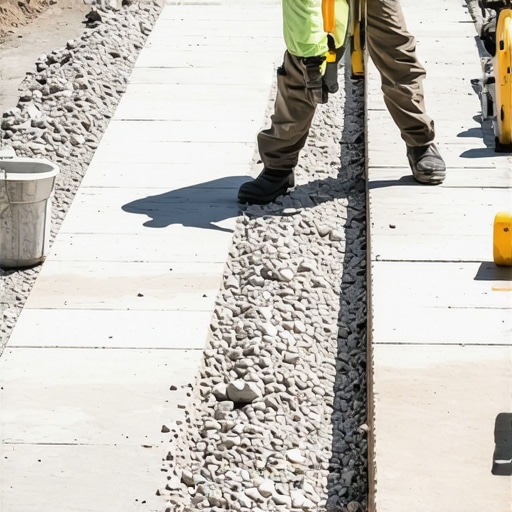
I recently got called out to tear up a $30,000 patio that was sinking because the previous contractor ignored the most basic law of civil engineering: you cannot build a permanent structure on an unstable, waterlogged foundation. The homeowners were devastated. Their high end pavers looked like a topographic map of a mountain range after just two seasons. When we started the excavation, the problem was immediately obvious. The crew had used stone dust as a base, which had turned into a literal soup because of a poorly positioned irrigation head and zero drainage considerations. This is the hallmark of the mow and blow hack. They care about the visual of the first day, not the structural integrity of year ten. In the hardscape world, if you do not respect the dirt, the dirt will reclaim your work. [IMAGE_PLACEHOLDER]
The Physics of Sinking Pavers and Structural Failure
To repair sinking pavers in 2026, you must excavate the failed subgrade, install a non woven geotextile, and utilize a graduated crushed limestone base compacted to 98 percent density. This process addresses the root cause of settlement: poor drainage and inadequate base thickness for your specific soil type. Most failures occur because the sub base was not compacted in small enough lifts or the wrong material was used. Water is the primary enemy. When water enters the base, it lubricates the particles. Without proper crushed limestone gradation, those particles slide past each other. This is called lateral displacement. It results in the ruts and dips you see in your yard.
“A retaining wall doesn’t fail because of the stone; it fails because of the water trapped behind it.” – Hardscape Engineering Axiom
How much modified gravel do I need for a patio base?
Calculating your base material requires a deep understanding of your soil’s load bearing capacity and the intended use of the surface. For a standard pedestrian patio in 2026, you need a minimum of 6 inches of compacted #57 or #411 crushed limestone. To calculate the volume, multiply your square footage by the desired depth in feet, then multiply by 1.35 to account for the compaction factor. Do not guess. If you under-order, you will be tempted to skimp on the final lift. That is where the failure starts. Compaction is not optional. It is the job.
Is crushed limestone better than sand for a base?
Sand is a bedding layer, not a base layer. Using sand as a primary base is a recipe for disaster because sand particles are rounded and do not interlock. Crushed limestone, specifically angular stone, creates a mechanical bond when compacted. These jagged edges lock together like a jigsaw puzzle. This creates a bridge that distributes weight across the subgrade. If you use sand for the entire base, the first heavy rain will wash the fines out. The pavers will shift. It is inevitable.
| Material Type | Best Use Case | Compaction Rating | Drainage Ability |
|---|---|---|---|
| #57 Crushed Limestone | Structural Base Layer | High | Excellent |
| #10 Screenings | Top Level Leveling | Medium | Fair |
| ASTM-C33 Sand | Bedding Layer (1 inch) | Low | Good |
| Stone Dust | Avoid (Traps Water) | Low | Poor |
The Forensic Autopsy: Why Your Patios Settle
When we diagnose a failing landscape, we look at the interaction between the hardscape and the surrounding environment. Often, a yard cleanup reveals that the homeowner has been piling mulch against the edge of the pavers, creating a moisture trap. Or worse, a new sod install was performed without adjusting the grading. This forces water back toward the patio base. You must ensure the surrounding soil is graded at a 2 percent slope away from all hard surfaces. Hydrostatic pressure is a silent killer of stone work. If the water has nowhere to go, it will sit under your pavers and heave during the freeze thaw cycle of 2026. This is especially true in regions with heavy clay soil. Clay holds moisture like a sponge. You cannot compact wet clay. You must remove it and replace it with stable limestone.
- Excavate 8 to 12 inches deep depending on soil type.
- Lay down a 4 ounce non woven geotextile fabric.
- Apply crushed limestone in 2 inch lifts.
- Use a vibratory plate compactor with at least 4,000 lbs of centrifugal force.
- Check the grade with a laser level every single lift.
“Soil compaction is the most critical and most often neglected step in any pavement installation.” – ICPI Tech Manual
Integrating Irrigation and Landscaping with Hardscapes
You cannot talk about pavers without talking about irrigation. A common mistake I see is irrigation lines buried too close to the patio edge. If a pipe leaks, it saturates the crushed limestone base. The limestone loses its friction. The patio sinks. We always sleeve our irrigation lines when they pass under or near a hardscape. This allows for future repairs without tearing up the stone. Furthermore, when performing a sod install around a new repair, you must account for the thickness of the grass. Many contractors install the sod too high, which blocks the water from shedding off the pavers. This creates a lip that catches water and directs it into the joints. Your landscaping should support your drainage, not fight it. Proper yard cleanup involves clearing these drainage paths and ensuring the polymeric sand in the joints is intact. If the sand is gone, water enters the base. It will rot. Do not skip the joint stabilization.
What is the best way to prevent weeds in paver joints?
Weeds do not grow from the bottom up; they grow from the top down. Seeds blow into the joints and take root in the organic debris that accumulates over time. Using high quality polymeric sand that hardens like mortar is the only way to prevent this. During your annual yard cleanup, you should power wash the joints (carefully) and replace any missing sand. This keeps the system watertight. A dry base is a stable base.
The Final Word on 2026 Standards
Repairing a patio is twice as hard as building it right the first time. You have to deal with the contaminated old base and the settling of the surrounding soil. If you are hiring a contractor, ask them about their compaction equipment. If they show up with a hand tamper, fire them. A hand tamper cannot achieve the 95 to 98 percent Proctor density required for a lasting repair. You need the heavy machinery. You need the science of crushed limestone. Anything less is just expensive compost. Take the time to do the engineering work. Your back and your wallet will thank you in five years.