
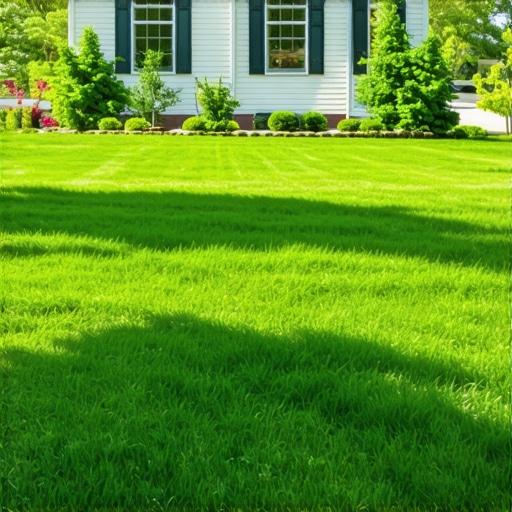
Why Traditional Turf Is Failing Your 2026 Landscape Design
Traditional turf like Kentucky Bluegrass or Tall Fescue requires excessive nitrogen and water to survive in the changing climate of 2026. Transitioning to a no-mow clover mix reduces water consumption by 40% while providing natural nitrogen fixation, effectively eliminating the need for synthetic fertilizers that leach into local groundwater. Most homeowners think a green lawn requires a chemical cocktail. They are wrong.
I always drill into my new crew members: if you don’t fix the soil grading and chemistry first, every plant you put in the ground is just expensive compost. I’ve seen guys throw down $5,000 worth of premium sod install only for it to choke out because the soil was a compacted mess of alkaline clay. You can’t out-water a bad soil structure. Clover, specifically microclover (Trifolium repens), is different. It’s a legume. It has a symbiotic relationship with Rhizobium bacteria. These bacteria live in nodules on the clover’s roots and convert atmospheric nitrogen into a form the plant can actually use. You’re essentially installing a self-fertilizing engine in your front yard. This isn’t just landscaping; it’s engineering a biological system that works while you sleep.
“Clover’s ability to fix nitrogen—up to 150 lbs of nitrogen per acre per year—makes it a superior choice for low-input sustainable landscapes.” – Penn State Agricultural Extension
The Forensic Breakdown: Why Your Current Sod Is Dying
Your lawn is likely struggling due to a thick layer of thatch—a graveyard of dead organic matter that prevents water from reaching the root zone. When you perform a yard cleanup, you aren’t just raking leaves; you are managing the gas exchange of the soil. A thick thatch layer invites Rhizoctonia solani, or brown patch fungus. Clover doesn’t build thatch the same way. It stays low, stays green, and stays alive when the neighbor’s fescue is turning into toasted straw.
| Feature | Traditional Sod (Turf) | Microclover Mix |
|---|---|---|
| Watering Needs | High (1-1.5 inches/week) | Low (0.5 inches/week) |
| Nitrogen Input | 4-6 lbs per 1000 sq ft/year | Zero (Self-fixing) |
| Mowing Frequency | Weekly | Every 4-6 weeks (Optional) |
| Drought Tolerance | Poor (Goes dormant/dies) | High (Deep taproots) |
How much clover seed do I need for a 1,000 square foot lawn?
To achieve a dense, walkable carpet of clover, you need exactly 2 to 4 pounds of microclover seed per 1,000 square feet if starting from bare soil. If you are over-seeding an existing lawn during a landscaping renovation, you can drop that to 1 pound, provided you have performed a deep core aeration to ensure seed-to-soil contact. Don’t just toss it on top. It will fail.
Does clover ruin my existing irrigation system?
No, but it will change how you use it. A standard irrigation schedule for turf involves short, frequent bursts that keep the top inch of soil moist. This is a recipe for disaster with clover. You want to force the clover’s taproots to dive deep. Switch your controllers to run longer cycles, less often. This forces the roots to chase the moisture down through the soil profile. Deep roots mean a resilient yard.
The Ground-Up Build: Site Prep and Installation
If you want a 2026-ready front yard, you start with a forensic site prep. First, we strip the old, dying turf. This isn’t just a yard cleanup; it’s a structural reset. We check the soil pH. Clover thrives in a range of 6.0 to 7.0. If you’re at a 5.5, the nitrogen-fixing bacteria will go dormant. You might as well be planting in plastic. We add lime to raise it or sulfur to drop it. Accuracy matters. Use a digital probe, not a color-strip kit from a big-box store. Precision is the difference between a professional result and a DIY mess.
- Step 1: Mechanical Aeration. Pull 3-inch plugs. Don’t use those spike shoes; they just cause lateral compaction.
- Step 2: Soil Amendment. Spread a 1/4 inch layer of organic compost to introduce beneficial microbes.
- Step 3: Seeding. Use a broadcast spreader set to a narrow opening. Clover seeds are tiny.
- Step 4: Compaction. Use a water-filled roller to press the seed into the dirt. Air pockets are the enemy.
“A landscape system is only as stable as its drainage and soil microbiology; bypass the biology, and the system collapses under environmental stress.” – Agronomy Manual Volume IV
Once the seed is down, the first 14 days are critical. Keep the surface moist, not saturated. If you see puddling, your irrigation is poorly calibrated. You’ll rot the seed before it even cracks the hull. After the third leaf emerges, back off. Let the soil dry out. Let the plant hunt for water. It’s a biological imperative. If you coddle the clover, it will never develop the drought resistance you’re paying for. Most people over-water. They kill their plants with kindness. Stop it. Let the plant work for its living. By year two, this mix will be so thick it will naturally suppress 90% of broadleaf weeds. The clover literally shades out the competition. It’s aggressive, but in a way that serves the homeowner. No more sod install cycles every five years. This is a permanent solution for a changing world.