
What is Midday Syringing?
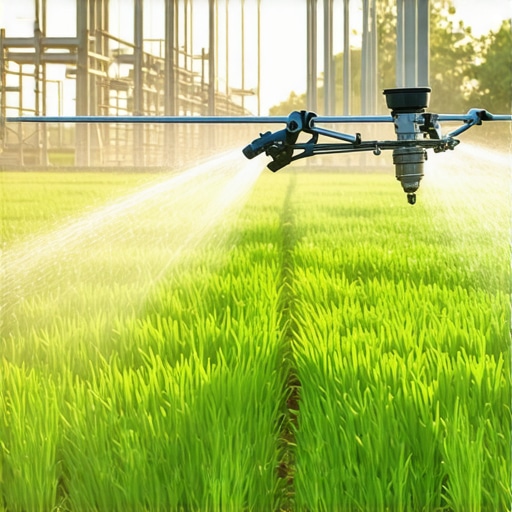
Midday syringing is a specialized turf management practice where light misting is applied to the turfgrass canopy during peak thermal stress. By utilizing evaporative cooling, syringing reduces leaf temperatures by 10 to 15 degrees, preventing thermal death without saturating the root zone or inducing fungal pathogens. It is the tactical application of physics to biology. When the 2026 heat waves hit, your sod install relies on this precise moisture management to survive the 1:00 PM to 4:00 PM window of maximum solar radiation. It is not about watering the soil; it is about cooling the plant tissue. As a veteran in this game, I have seen too many rookies confuse syringing with irrigation, leading to drowned roots and rotted crowns.
The Forensic Autopsy: Why 2026 Heat is Killing Your Investment
A homeowner called me in a panic after they completely torched their front lawn by applying a high-nitrogen starter fertilizer during a 98-degree heatwave without any irrigation backup. They thought they were being proactive with their yard cleanup and feeding. Instead, the salts in that fertilizer created a massive osmotic imbalance. The fertilizer literally sucked the water out of the newly installed sod roots. By the time I arrived, the blades were straw-colored and the soil was a brick. This is what we call ‘chemical cooking.’ It was not just a lack of water; it was a total failure to understand the landscaping physics of a heat dome. If they had practiced the syringing method I am about to detail, they could have buffered that thermal load and saved a $15,000 project. Instead, I had to charge them for a full excavation and a second sod install. Soil grading was fine, but the biology was dead. Don’t be that guy. Listen to the science.
The Thermodynamics of Sod Failure: Leaf Canopy vs. Root Zone
Most people think grass dies in heat because the soil is dry. That is only half the story. On a 95-degree day, the temperature of the grass blade itself can spike to 110 degrees or higher due to direct solar radiation and the stoppage of transpiration. When a plant gets too hot, it closes its stomata to save water. This stops the natural cooling process. The plant then begins to ‘cook’ from the inside out. This is where irrigation systems often fail if they are only programmed for early morning cycles. Early morning water provides the turgor pressure for the day, but it does nothing for the thermal spike at 2:00 PM. Syringing mimics the natural cooling of a light rain shower without the moisture load that triggers Pythium blight. You are essentially creating a micro-refrigeration cycle on every blade of grass.
“Light, frequent applications of water, known as syringing, can reduce the temperature of the turfgrass canopy by as much as 10 to 15 degrees Fahrenheit.” – Texas A&M AgriLife Extension
Syringing vs. Irrigation: Understanding the Difference
The distinction between these two methods is found in the volume of water and the intended target. Use this table to calibrate your 2026 irrigation strategy. Failure to differentiate these will result in either a melted lawn or a fungal nightmare.
| Factor | Traditional Irrigation | Midday Syringing |
|---|---|---|
| Objective | Root zone hydration | Canopy temperature reduction |
| Timing | 4:00 AM to 8:00 AM | 12:00 PM to 3:00 PM |
| Duration | 20 to 45 minutes | 2 to 5 minutes |
| Water Volume | 0.5 to 1.0 inches | Trace (less than 0.1 inch) |
| Target | Soil depth (6 inches) | Leaf surface only |
Yard Cleanup and Soil Prep: The Forgotten Cooling Steps
Before you even think about a sod install, your yard cleanup must be surgical. If you leave a layer of old, decaying organic matter (thatch) under the new sod, you are building a thermal insulator that traps heat against the soil. Thatch has a high specific heat capacity. It gets hot and stays hot. In my 20 years of landscaping, I have seen more sod ‘melt’ because of poor site prep than because of actual equipment failure. You must ensure the soil is aerated and the grade allows for a uniform application of water. If you have low spots, water will pool during syringing, and you will get ‘scald.’ This is when the sun heats the pooled water to temperatures that literally boil the grass roots. Grading is not just for drainage; it is for thermal management.
How much water is needed for midday syringing?
The goal of syringing is to wet the leaf blades without significantly increasing soil moisture. You should only run your irrigation zones for 2 to 5 minutes. The water should evaporate off the blades within 15 to 20 minutes. If the grass stays wet for hours, you have over-watered. You are looking for a fine mist, not a soak. Most modern rotor heads require about two full rotations to achieve this. If you are using spray heads, 120 seconds is usually the limit. Keep it light. Keep it fast.
Can syringing cause fungal growth?
While the old wives’ tale says ‘watering in the sun burns the grass,’ the real concern is usually fungus. However, syringing actually reduces fungal risk compared to heavy midday watering. Because the volume of water is so low, it evaporates quickly. Fungi like Brown Patch or Pythium require leaf wetness for 10 to 14 hours. Syringing only wets the leaf for 20 minutes. The cooling benefit far outweighs the negligible fungal risk, provided you aren’t doing it at 7:00 PM when the sun is going down. Stop all syringing by 4:00 PM.
The 2026 Sod Install Protocol: A Step-by-Step Checklist
If you are installing sod during the peak of summer, you are already behind the 8-ball. Follow this protocol to ensure the sod install takes root despite the heat. This is the exact process my crews use for $50,000 estates.
- Verify Soil Moisture: Use a penetrometer or a simple screwdriver. If you can’t push it 6 inches into the ground, it’s too dry for new sod.
- Monitor Canopy Temps: Use an infrared thermometer. If the grass temp exceeds 90 degrees, initiate syringing.
- Check Nozzle Uniformity: Ensure your irrigation heads have matched precipitation rates. Streaks of dead grass are usually due to ‘shadowing’ from poor head placement.
- Pulse the Zones: Program your controller for a ‘Cycle and Soak’ but for syringing. 2 minutes on, then off.
- Avoid Foot Traffic: Wet, hot grass is extremely susceptible to crown damage. Stay off the lawn.
“Syringing is most effective when applied just as the plant begins to show signs of wilt, typically during the period of maximum solar radiation.” – Crop Science Society of America
Hydrostatic Pressure and Soil Grading Impacts
When dealing with landscaping and hardscapes near your sod, remember that stone and concrete are heat sinks. A patio next to your new sod will radiate heat long after the sun goes down. This increases the local vapor pressure deficit. You might need to syringe the edge of the grass near the stone more frequently than the center of the lawn. Also, ensure your yard cleanup included checking the 811 Dig Safe marks for your irrigation lines. A single nicked line reduces PSI across the entire zone, turning your cooling mist into a useless trickle. Pressure is everything. Without at least 30 PSI at the head, you won’t get the atomization needed for effective evaporative cooling. It will just be big, heavy drops that roll off the leaf and do nothing.
Final Maintenance Directives for 2026
The 2026 season will be a test of endurance for your landscaping. Syringing is your primary weapon. It is a scientific approach to a biological problem. By managing the latent heat of vaporization on the leaf surface, you can keep your sod alive through the most brutal afternoons. Remember: early morning for deep roots, midday for cool leaves. Do not skip the yard cleanup and do not skimp on the irrigation tech. High-quality nozzles that produce a fine mist are worth their weight in gold. If you see the grass turning a blue-gray color, you are already late. Start the mist. Protect your investment. Physics does not negotiate, and neither should you when it comes to your lawn’s survival.