
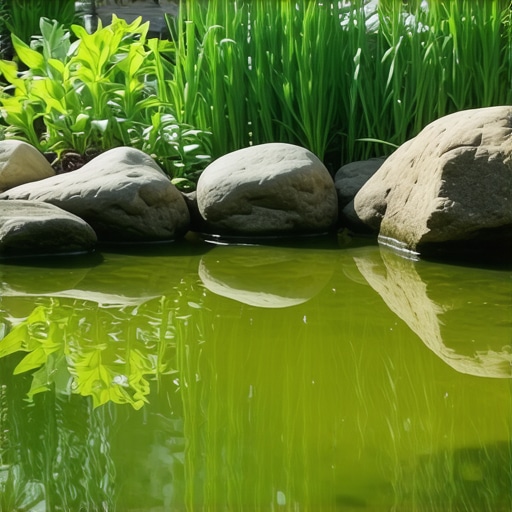
Stop Your Pond Filter from Clogging Every Single Week: A Professional Guide to Biological Balance
I recently got called out to tear up a $30,000 pond installation that was less than two years old. The homeowner was out there every Saturday morning, elbows deep in stagnant, foul-smelling water, scrubbing out mechanical filter pads that were choked with black muck. The previous contractor had installed a pump that was far too powerful for the filter’s surface area, essentially pressure-washing the debris deep into the media instead of allowing it to settle. This is a classic hardscape autopsy: a failure of engineering masquerading as a maintenance problem. If you are cleaning your pond filter every week, you do not have a cleaning problem; you have a system design failure. A properly balanced ecosystem pond should only require a deep filter purge twice a season, maybe once a month during the peak of summer. Anything more is a sign that your nitrogen cycle is broken and your mechanical load is off the charts.
The Fundamental Physics of Filter Failure
Pond filters clog because the rate of organic input exceeds the mechanical capacity of the pads and the metabolic rate of the biological colonies. High-load systems often suffer from poor pre-filtration, excessive fish waste, and external runoff that introduces nitrogen and phosphorus, fueling rapid algae growth.
Why Yard Cleanup and Landscape Design Affect Pond Clarity
When we talk about yard cleanup, most homeowners think about raking leaves off the grass. In the world of high-end pond management, cleanup is a strategic barrier. If your pond is at the bottom of a slope without a proper berm, every time it rains, your sod install or fertilizer-heavy lawn is leaching nutrients directly into the water. This is a phosphorus bomb. One gram of phosphorus can lead to the growth of 100 grams of algae. If your filter is constantly green and slimy, it is because you are trying to mechanically filter out a biological explosion caused by your landscape’s runoff. We often recommend a sod install with a slight reverse grade away from the water feature or the installation of a French drain to divert irrigation runoff.
“A pond is not a swimming pool; it is a closed-loop biological reactor where every input must be processed or removed mechanically.” – International Pond Professionals Association
The Role of Irrigation Drift in Filter Clogging
Your irrigation system might be the silent killer of your pond’s clarity. If spray heads are hitting the surface of the pond, they are introducing chlorinated tap water, which can stall the very bacteria you need to process waste. More importantly, it disturbs the surface tension, pushing floating debris past the skimmer and directly into the submerged pump intake. Once that debris hits the pump impeller, it is macerated into tiny particles that your filter pads cannot easily trap, leading to a rapid, thick bypass that clogs the media from the inside out. Adjust your irrigation nozzles to ensure zero overspray.
| Filter Component | Primary Function | Maintenance Interval (Pro) | Failure Symptom |
|---|---|---|---|
| Skimmer Basket | Mechanical (Large Debris) | Weekly (Autumn) | Pump cavitation / Noise |
| Filter Mat (Coarse) | Mechanical (Fine Debris) | Monthly | Reduced flow / Overflow |
| Bio-Media (Kaldnes/Lava) | Biological (Ammonia) | Quarterly | Fish gasping / Ammonia spike |
| UV Clarifier | Sterilization (Algae) | Annually | Pea-soup green water |
How much modified gravel do I need for a pond base?
For a standard ecosystem pond, you need approximately 1 ton of 3/4-inch washed gravel for every 100 square feet of pond surface area to provide enough surface area for beneficial bacteria. Do not use limestone, as it will spike your pH and lead to calcium deposits in your filter media. This surface area is your “secondary filter.” If your main filter is clogging, it often means your pond’s internal rock-work is choked with silt, forcing the external filter to do 100% of the biological heavy lifting. It cannot handle that load. Use high-pressure irrigation hoses to blow out the gravel during a spring cleanup to reset the system.
- Inspect the Skimmer: Ensure the weir door is moving freely to trap floating debris before it sinks.
- Test for Ammonia: If ammonia is above 0 ppm, your biological media is either too small or the bacteria are dead.
- Check Pump GPH: Your pump should turn over the entire pond volume every hour. Too much flow causes “channeling” through the filter.
- Assess Fish Load: 1 inch of fish per 10 gallons of water is the limit for standard filtration.
The Forensic Diagnosis: Mechanical vs. Biological Loading
Mechanical loading refers to physical debris like leaves and fish waste, while biological loading refers to the dissolved nutrients that feed algae and bacteria. A filter that clogs weekly is usually overwhelmed by mechanical solids that should have been captured by a high-volume skimmer or a settlement chamber.
When we perform a pond renovation, we look at the Total Kjeldahl Nitrogen (TKN) levels. High TKN usually points back to a lack of yard cleanup or decaying organic matter at the bottom of the pond. If you didn’t do a thorough sod install and left bare soil near the edge, that fine silt is entering the water. Silt is a filter killer. It fills the microscopic pores of your bio-media, effectively suffocating the Nitrosomonas and Nitrobacter colonies that keep the water safe. You end up with a filter that looks clean on the outside but is biologically dead on the inside. It will rot. You must use a flocculant to clump those fine particles so the filter can actually grab them.
“Total suspended solids (TSS) in a closed aquatic system must be managed through staged filtration to prevent anaerobic pockets and mechanical bypass.” – Penn State Agricultural Extension
How do I stop my pond filter from smelling like rotten eggs?
The rotten egg smell is hydrogen sulfide gas, produced by anaerobic bacteria living in the “muck” that has bypassed your filter. To fix this, you must increase the Dissolved Oxygen (DO) levels and perform a rigorous yard cleanup of the pond floor. Install an aeration manifold. Oxygen is the fuel for the aerobic bacteria that eat the muck. Without oxygen, your filter pads become a breeding ground for pathogens rather than a cleaning tool. Don’t skip the aerator. It is the most important piece of equipment for a clear pond.
The Long-Term Solution: Engineering for Low Maintenance
Stop buying the cheap, blue-and-white filter pads from the big-box stores. They are designed to fail. Professional-grade Matala mats or reticulated foam have a much higher “void space,” allowing water to pass through even when they are 50% full of debris. This prevents the pump from burning out and extends your cleaning cycle from 7 days to 30 days. Furthermore, ensure your landscaping around the pond includes native plants that act as a buffer. Plants like Pickerelweed or Canna Lilies can be planted directly into the filter (in a Bog Filter configuration) to suck up nitrates before they can feed the algae that clogs your mats. This is how you win. You don’t out-scrub the algae; you out-compete it. The goal is a system where the landscaping does the work for you. If you have to touch your filter every week, you have failed to build an ecosystem. You have built a chore. Fix the grade, stop the irrigation overspray, and upgrade your media. Your Saturdays are worth more than a bucket of pond muck.