
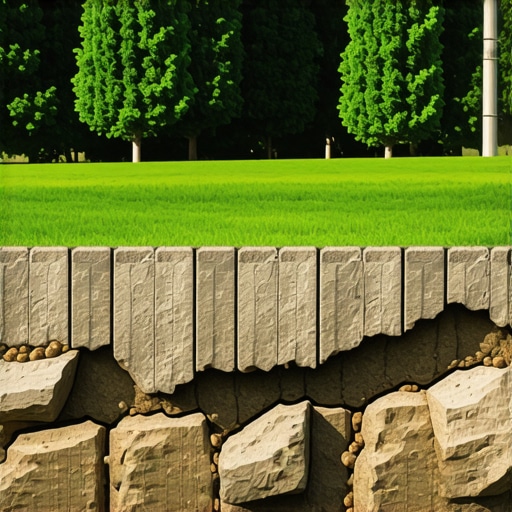
The Forensic Autopsy of a Failing Retaining Wall
The first sign is usually a hairline fracture in the mortar or a subtle lean that you only notice from the street. Then comes the bulge: a terrifying protrusion in the center of the wall that signals a catastrophic structural failure is imminent. This is not a cosmetic issue; it is a physics problem involving hydrostatic pressure and soil mechanics. I recently got called out to tear up a $30,000 patio that was sinking because the previous contractor used ‘dirt’ as backfill instead of clean, angular stone. The wall was bowing so severely that the blocks were literally shearing. They had spent thousands on high-end pavers but zero dollars on the 12 inches of critical drainage stone required behind the face. Now, they are paying me double to fix it. It is a classic case of ignoring the invisible forces that govern every landscape project.
The Primary Causes of Retaining Wall Bulging
A bulging retaining wall is primarily caused by hydrostatic pressure buildup behind the structure due to poor drainage and improper backfill. When water cannot escape through designated weep holes or perforated pipes, it saturates the soil, increasing its weight and lateral force against the wall units. This pressure eventually exceeds the shear strength of the block or timber.
“A retaining wall doesn’t fail because of the stone; it fails because of the water trapped behind it.” – Hardscape Engineering Axiom
The Physics of Hydrostatic Pressure and Soil Saturation
When it rains, gravity pulls water down through your yard. If your landscaping design does not include a dedicated path for this water, it pools behind your wall. Saturated clay soil can weigh up to 120 pounds per cubic foot. Without a drainage system, that weight pushes horizontally. This is why we use 57 stone (clean, crushed aggregate) as backfill. Unlike dirt, stone has void space that allows water to drop straight down to a collection pipe rather than pushing against the blocks. If your wall is bulging, the soil behind it has likely turned into a heavy slurry, and the wall is the only thing holding it back. It will eventually snap. Do not wait for it to fall.
How much modified gravel do I need for a patio base?
For a standard residential patio base, you need a minimum of 6 inches of compacted 21A or 3/4-inch modified gravel, though high-clay areas require 8 to 12 inches. Calculating the volume requires multiplying the square footage by the depth in feet: for 500 square feet at 6 inches, you need roughly 15.5 tons of aggregate. Compact this in 2-inch lifts using a vibratory plate compactor to ensure a 98 percent Standard Proctor Density. Skipping this leads to settling and heaving during freeze-thaw cycles.
The Materials of a Permanent Drainage System
Effective wall drainage relies on the specific interaction between non-woven geotextile fabric, angular aggregate, and perforated PVC piping. Using the wrong material, like pea gravel or woven fabric, will lead to system clogging and wall deflection within three to five years.
“The use of drainage composites or clean stone backfill is essential to prevent the accumulation of water and the subsequent increase in lateral earth pressure.” – Penn State Agricultural Extension
| Material Type | Function in Wall | Why It Fails if Substituted |
|---|---|---|
| 57 Stone (Clean) | Primary Drainage Layer | Pea gravel is too round and rolls: dirt clogs the system immediately. |
| Non-Woven Geotextile | Soil Separation | Woven fabric does not allow water to pass quickly enough: silt will pass through without it. |
| Schedule 40 PVC (Perf) | Water Evacuation | Corrugated black pipe (flexible) collapses under the weight of the stone and soil. |
| Compacted 21A Gravel | Foundation/Base | Sand or dirt will wash away: causing the entire wall to tip forward. |
What is the best pipe for retaining wall drainage?
The industry standard for retaining wall drainage is 4-inch perforated Schedule 40 PVC pipe. Unlike the cheap, corrugated black tubing found at big-box stores, rigid PVC will not crush under the weight of the backfill and allows for easier root removal or hydro-jetting if a clog occurs. Always install the pipe with the holes facing downward into the gravel bed to allow the water table to rise into the pipe and flow away.
Remediation: How to Fix the Bulge
Fixing a bulging wall is a forensic reconstruction process that requires excavating the failure zone and rebuilding the internal drainage components. You cannot simply push a wall back into place: the structural integrity is compromised once the blocks have shifted. Follow this technical checklist for remediation:
- Excavate the Backfill: Dig out at least 12 to 18 inches of soil behind the wall to the depth of the footing.
- Install Geotextile: Line the trench with non-woven fabric to prevent soil fines from migrating into your stone.
- Set the Drainage Pipe: Place the perforated PVC on a slight grade (1/8 inch per foot) leading to a daylight exit.
- Backfill with 57 Stone: Fill the cavity with clean stone, not the dirt you just dug out.
- Apply Grid Reinforcement: For walls over 3 feet, use geogrid to mechanically stabilize the soil mass.
- Fix the Grading: Ensure the surface soil slopes away from the wall to minimize water entry.
The Impact of Irrigation and Sod on Wall Health
A major hidden culprit in wall failure is a poorly designed irrigation system. I have seen hundreds of walls destroyed because a sod install included sprinkler heads placed directly at the top of a wall. Over-watering saturates the backfill daily, keeping the hydrostatic pressure at a constant peak. When we perform a yard cleanup, we often find that the drainage outlets are buried under mulch or overgrown grass. You must keep these outlets clear. If you are installing new sod, ensure the grading is handled first. The soil should be pitched so that surface water runs around the ends of the wall, not over the face. This surface defense is your first line of protection against structural rot. If your landscaping contractor tells you that ‘the water will just soak in,’ fire them on the spot. Water always finds the path of least resistance: usually, that is through your expensive stonework.
The Maintenance Protocol
A retaining wall is a living engineering project. It requires an annual inspection to ensure longevity. Check your weep holes for debris. If you see silt or sand coming out of the holes, your filter fabric has failed. Look for efflorescence (white salt staining) on the block face; this indicates that water is moving through the concrete rather than through the drainage pipe. If you catch these signs early, you can often clear the drainage lines before the wall starts to bulge. Stop buying cheap chemical fertilizers that can degrade the structural bond of concrete blocks. Focus on the soil pH and the physical mechanics of water movement. Landscaping is a science: treat it that way. [{“@context”:”https://schema.org”,”@type”:”FAQPage”,”mainEntity”:[{“@type”:”Question”,”name”:”Why is my retaining wall bulging in the middle?”,”acceptedAnswer”:{“@type”:”Answer”,”text”:”Bulging is caused by hydrostatic pressure. When water builds up behind the wall due to poor drainage, it pushes against the structure with immense force, exceeding the wall’s structural capacity.”}},{“@type”:”Question”,”name”:”Can I fix a bulging wall without tearing it down?”,”acceptedAnswer”:{“@type”:”Answer”,”text”:”Usually no. Once the wall has shifted, the internal alignment and base are compromised. You must excavate the soil, replace it with proper drainage stone, and often rebuild the affected section.”}},{“@type”:”Question”,”name”:”What is the best material for retaining wall backfill?”,”acceptedAnswer”:{“@type”:”Answer”,”text”:”Clean, angular 57 stone or crushed aggregate is best. It provides the necessary void space for water to flow downward to the drainage pipe rather than pushing horizontally against the wall.”}}]}]