
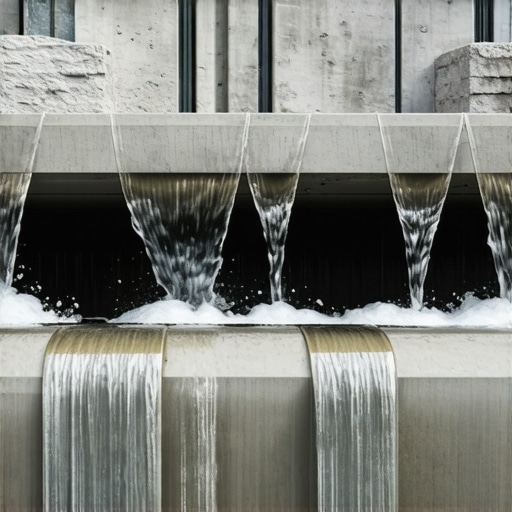
Diagnosing the Structural Integrity of Concrete Water Features
Stopping leaks in a concrete waterfall without a liner requires a deep understanding of capillary suction and the hydrostatic pressure exerted by water against porous masonry. If your waterfall is losing water, the failure usually resides in either structural fissures caused by thermal expansion or the inherent permeability of the concrete mix itself. To fix this permanently, you cannot rely on topical paints or cheap hardware store sprays. You must treat the concrete as a reactive chemical substrate. Success depends on modifying the crystalline structure of the concrete to become an impermeable barrier. Do not skip the prep work. It will fail.
The Forensic Autopsy: A $40,000 Hardscape Disaster
I recently got called out to tear up a $30,000 patio and water feature that was sinking because the previous contractor thought he could seal a concrete basin with standard masonry sealer. Within six months, the water had permeated the concrete, saturated the modified stone base, and turned the subgrade into a slurry. The entire feature had tilted three degrees, causing a massive structural crack. We had to excavate the entire sod install around the feature, which was rotting from the constant dampness. The lesson is simple: concrete is a sponge. If you don’t use a negative-side crystalline waterproofing agent or a high-solids epoxy, the water will find a way through. It is not a matter of if, but when. This is why yard cleanup and site inspection are the first steps in any remediation project.
“A retaining wall doesn’t fail because of the stone; it fails because of the water trapped behind it.” – Hardscape Engineering Axiom
The Science of Concrete Porosity and Leak Detection
Concrete is naturally full of microscopic voids and capillaries formed during the hydration process as excess water evaporates. In a waterfall environment, these capillaries act like straws, pulling water into the structure. To stop a leak without a liner, you must identify if you are dealing with a static leak (the basin) or a dynamic leak (the falls). A dynamic leak usually occurs when water splashes behind stones or escapes through joints where the concrete has pulled away from the rock face. Irrigation systems often complicate this by adding external moisture to the soil, making it harder to spot the exit point of the waterfall leak. Shut off your irrigation for 48 hours before testing.
How do I find a leak in my concrete waterfall?
To find a leak in a concrete waterfall, perform a static level test by filling the basin, turning off the pump, and marking the water line. If the water drops, the leak is in the basin itself. If the level remains stable while the pump is off, the leak is in the plumbing or the waterfall spillway where water is escaping the concrete channel. Use a concentrated fluorescein dye near suspected cracks while the pump is running. The dye will follow the water flow, revealing the exit path. This is standard engineering protocol. It eliminates guesswork.
The Chemical Repair Matrix: Materials Comparison
| Material Type | Mechanism of Action | PSI Strength | Best Use Case |
|---|---|---|---|
| Crystalline Waterproofing | Grows crystals in concrete pores | Up to 400 PSI | Integral basin sealing |
| Hydraulic Cement | Expands as it sets to plug holes | 5,000 PSI | Active, high-pressure leaks |
| Polyurethane Injection | Expands into deep structural cracks | Flexible | Moving settlement cracks |
| High-Build Epoxy | Creates an impermeable surface film | 8,000 PSI | Heavy flow wear zones |
Step-by-Step Remediation Without Liners
Once the leak is identified, the repair process must be methodical. First, the surface must be mechanically cleaned. Use a pressure washer at 3,500 PSI to strip away algae and calcium deposits. If you have efflorescence (white salty crust), it means water is already moving through the concrete. You must acid etch the surface with a muriatic acid solution to open the pores. This is not optional. If the pores are clogged, your waterproofing agent cannot penetrate.
1. Structural Crack Repair
For cracks wider than 1/16 of an inch, use a grinder to V-groove the crack. This increases the surface area for the bonding agent. Pack the groove with hydraulic cement. Unlike standard mortar, hydraulic cement expands as it cures, creating a mechanical wedge that resists water pressure. Do not use silicone caulk. It will peel within a season. It is a hack solution that has no place in professional hardscaping.
2. Crystalline Waterproofing Application
The gold standard for liner-less waterfalls is crystalline technology. These products contain active chemicals that react with free lime and moisture in the concrete to form non-soluble crystalline fibers. These fibers fill the capillaries and shrinkage cracks. Apply the slurry to a damp (not dripping) surface. The beauty of this system is that it becomes a permanent part of the concrete matrix. If a new micro-crack forms later, the crystals will re-react with water to self-heal the gap.
3. Sealing the Rock-to-Concrete Interface
The most common failure point is where the decorative stone meets the concrete spillway. Water often wicks behind the stone. Use a professional-grade waterfall foam or a black pond epoxy to bridge these gaps. Ensure the foam is UV-rated, or it will degrade into a yellow powder within two years. After the foam cures, trim it back and coat it with a layer of cementitious grout mixed with a fortifying polymer to match the surrounding stone.
“Waterproofing of concrete structures must account for both the positive and negative side pressure to prevent delamination of surface coatings.” – American Concrete Institute Standards
How much modified gravel do I need for a waterfall base?
While this depends on the weight of the feature, a standard concrete waterfall requires a minimum of 6 to 8 inches of compacted 21A modified gravel. This base must be mechanically compacted in 2-inch lifts to ensure a 98 percent Proctor density. Without this engineering base, the concrete will settle, leading to the very cracks you are trying to fix. If your sod install is showing signs of sinking near the feature, your base has already failed. You cannot fix a plumbing leak if the foundation is moving.
Long-Term Maintenance and Prevention
After the repair, the waterfall needs a 28-day full cure before the chemical sealants reach maximum efficacy. During this time, keep the surface moist to promote crystal growth. Check your irrigation heads nearby. Excessive overspray can cause the soil around the concrete to heave during freeze-thaw cycles, putting unnecessary stress on the basin. A clean yard is a stable yard. Remove leaf litter from the basin weekly. Rotting organic matter produces humic acid, which can slowly etch the concrete surface over decades. Keep the pH of your water neutral. If you are using a chlorination system, monitor it closely. High chlorine levels can attack certain epoxy resins.
Water Feature Integrity Checklist
- Inspect for efflorescence on the exterior of the concrete shell.
- Check the pump vault for signs of water bypass or scouring.
- Test the auto-fill valve to ensure it is not masking a slow leak.
- Verify that the sod install around the feature is graded away from the basin.
- Clear all debris from the spillway to prevent water from backing up and overtopping the shell.
Fixing a concrete waterfall is about chemistry and physics, not aesthetics. If you treat the substrate with the respect it deserves, you can achieve a leak-free environment that lasts for decades. If you cut corners on the crystalline application or the structural prep, you are just throwing money into a hole in the ground. Do it once. Do it right. Use the right tools. It will save you thousands in the long run.