
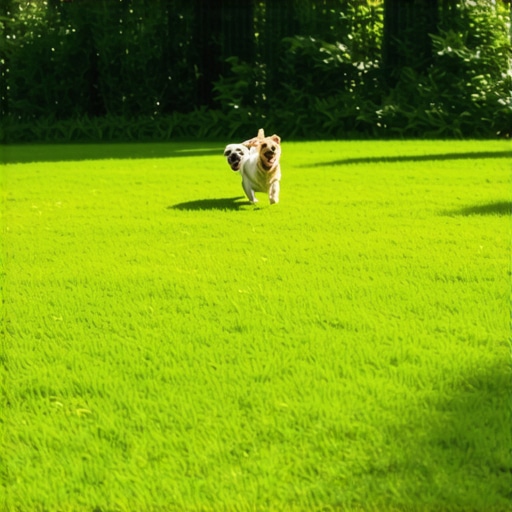
The Forensic Autopsy of a Dog-Ravaged Yard
The ground is a mix of greasy mud, slick patches of exposed clay, and those telltale necrotic yellow circles with dark green rings. You see a path worn three inches deep into the soil along the fence line where the shepherd-mix runs. This is not just a cosmetic issue; it is a structural failure of the biological mat we call turf. When a 60-pound dog pivots at high speed, the shear force exerted on the grass blades and the crown is massive. Most standard residential lawns are not engineered for this kind of PSI. They succumb to a combination of mechanical tearing and chemical toxicity. I have seen yards that look like a tactical training ground because the homeowner chose a seed based on a pretty picture rather than a spec sheet. If your lawn looks like a wetland after a light rain, your soil is compacted to the point of being anaerobic. It will rot. Roots cannot breathe in a concrete-like medium. This is the reality of modern landscaping with pets: you are managing a high-impact sports surface, not a golf course.
The Chemical Nightmare: A Cautionary Tale
A homeowner called me in a panic after they completely torched their front lawn by applying three bags of high-nitrogen weed-and-feed on top of their dog’s favorite bathroom spots. They thought the extra fertilizer would ‘green up’ the brown spots. Instead, they created a toxic salt concentration that killed the soil microbiology for ten inches in every direction. When dog urine, which is essentially concentrated liquid nitrogen and salts, meets synthetic urea-based fertilizers, the pH spikes and the grass roots undergo osmotic shock. The water is literally sucked out of the plant cells. By the time I arrived, the soil was sterile and the ‘seed’ they threw down was sitting on top of the parched earth like bird food. We had to excavate four inches of topsoil, perform a full yard cleanup of the chemical residue, and start over with a sulfur-buffered soil amendment. It was a $4,000 mistake that could have been avoided with a $20 soil test.
Best Grass Seed for High-Traffic Dog Areas Answer
The best grass seed for high-traffic dog areas consists of Rhizomatous Tall Fescue (RTF) or hybrid Bermudagrass, selected for their high tensile strength and self-repairing rhizomes. These cultivars withstand mechanical shear and nitrogen-heavy urine significantly better than standard Kentucky Bluegrass or fine fescue varieties.
“A lawn is a living ecosystem that requires a balance of oxygen, water, and nutrients; excessive traffic from large animals increases bulk density of soil, leading to the collapse of pore spaces necessary for root respiration.” – Agronomy Field Manual, 4th Edition
The Engineering of Durable Turfgrass
When we talk about ‘best’ in the context of dogs, we are looking at two specific traits: tolerance and recovery. Genetic advancement in turfgrass has given us cultivars that are actually tougher than their predecessors. Tall Fescue (Festuca arundinacea) is the backbone of most high-traffic mixes. It has a deep root system, sometimes reaching down 36 inches if the soil allows. This depth provides stability and access to water during droughts. However, standard fescue is a bunch-type grass. If a dog tears a hole in it, that hole stays there until you reseed. This is why I only recommend RTF (Rhizomatous Tall Fescue). RTF has the ability to send out lateral underground runners (rhizomes) to fill in bare spots. It is the only fescue that behaves like a spreading grass. For warmer climates, Bermudagrass is the king. It is a biological monster that grows so fast it can outpace the damage of a mid-sized terrier. But beware: Bermuda needs full sun and becomes dormant (brown) in the winter.
Calculating the PSI of a Canine Pivot
A 70-pound Labrador sprinting at 20 miles per hour and making a hard turn exerts a force on the grass that exceeds most residential grading standards. This is where soil compaction comes into play. As the dog runs, the air pockets in the soil are squeezed out. Without air, the roots suffocate. This is why irrigation and aeration are non-negotiable. If you aren’t pulling three-inch cores at least twice a year in dog-run areas, your soil will become as hard as a sidewalk. No seed in the world can grow in a sidewalk. You must maintain a bulk density below 1.5 grams per cubic centimeter to ensure the grass has a fighting chance. If your yard feels hard under your boots, it’s already too late for simple seeding. You need a mechanical intervention.
| Grass Variety | Traffic Tolerance | Recovery Rate | Urine Resistance | Best Use Case |
|---|---|---|---|---|
| RTF Tall Fescue | High | Moderate | Medium | Cool-season lawns, shady areas |
| Perennial Ryegrass | Extreme | Very Fast | Low | Quick repairs, overseeding |
| Bermudagrass | Extreme | Very Fast | High | Full sun, southern climates |
| Kentucky Bluegrass | Moderate | Slow | Low | Low-traffic, aesthetics only |
The Professional Seeding Protocol
Throwing seed on the ground is a waste of money. To get a dog-proof lawn, you follow a strict engineering process. First, perform a yard cleanup to remove all dead organic matter and thatch. Thatch is a barrier that prevents seed-to-soil contact. Second, use a power seeder or a slice seeder to put the seed exactly 1/4 inch into the dirt. Third, apply a starter fertilizer with a high phosphorus count (the middle number) to encourage root development rather than leaf growth. Fourth, you must keep the dog off the area for at least 21 days. This is where most people fail. A single paw print on a germinating seedling is a death sentence for that plant. If you cannot fence off the area, consider a sod install of TifTuf Bermuda or a high-end fescue blend. Sod gives you an immediate three-quarter-inch root mat that can handle light traffic much faster than seed.
“Effective drainage is the prerequisite for any high-use turf area; without a 2% slope or subsurface drainage, the soil will reach a liquid limit during rain events, making it susceptible to total structural failure under hoof or paw.” – ICPI Hardscape and Drainage Standards
How do I fix dog urine spots in my lawn?
To fix dog urine spots, you must first neutralize the concentrated nitrogen salts by flushing the area with at least two gallons of water immediately after the dog urinates. Once the spot is brown, the grass is dead; you must rake out the dead material, apply a pinch of pelletized gypsum to help leach the salts, and reseed with a high-traffic blend. Regular irrigation helps keep the nitrogen diluted across the entire lawn rather than concentrated in ‘hot spots.’
Is clover better for dogs than grass?
Clover is often marketed as a pet-friendly alternative because it does not turn yellow from urine, but it lacks the structural integrity for high-speed running. Clover has a very low tensile strength and will be shredded into a muddy slurry by large dogs. A better approach is a 5% micro-clover mix blended with Tall Fescue, which provides the nitrogen-fixing benefits of clover with the durability of grass.
The Restoration Checklist
- Test soil pH and aim for 6.5 to 7.0 for optimal nutrient uptake.
- Core aerate to a depth of 3 inches to relieve compaction.
- Top-dress with 1/4 inch of organic compost to improve soil microbiology.
- Select RTF Tall Fescue or Hybrid Bermuda seed.
- Maintain a mowing height of 3 to 4 inches to protect the grass crowns.
- Install a localized irrigation system for the dog’s favorite areas to flush salts.
The Long-Term Forecast
Maintaining a lawn with dogs is a continuous war against physics and chemistry. It is not a ‘set it and forget it’ project. You are now a turf manager. This means you monitor for compaction daily. You adjust your mowing height based on the season. You understand that your landscaping choices—from the type of seed to the depth of your French drains—determine whether you have a yard or a mud pit. Don’t buy the cheap seed in the yellow bag at the grocery store. It is filled with weed seeds and annual ryegrass that will die the first time the temperature hits 90 degrees. Buy professional-grade, blue-tag certified seed. Your dog is a high-performance athlete; give them a high-performance surface to play on. Stop chasing ‘lush’ and start chasing ‘resilient.’ Resilience is what survives the 4:00 PM zoomies.