
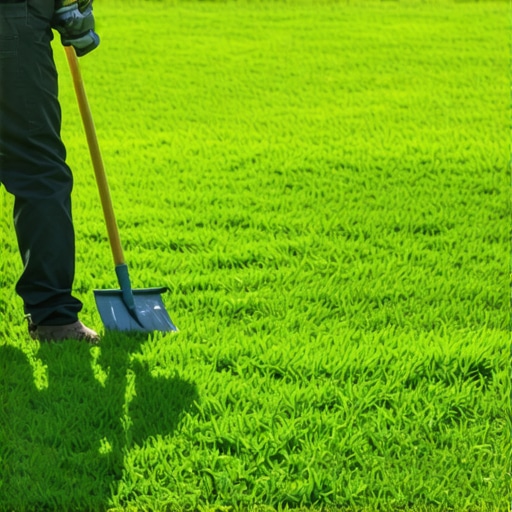
The Spongy Death of Your St. Augustine Lawn
Walk across your yard. If it feels like you are stepping on a mattress rather than solid earth, you have a structural failure in your turf canopy. This is not a sign of health; it is the physical manifestation of a thatch layer that has exceeded its biological limit. In my 20 years of running a landscaping firm, I have seen more lawns destroyed by ‘thatch neglect’ than by drought. When that organic layer exceeds three-quarters of an inch, it acts as a waterproof barrier, preventing irrigation from reaching the roots and trapping gas in the soil. It is a slow suffocation that most homeowners mistake for a need for more fertilizer.
The Chemical Nightmare: A Lesson in Over-Fertilization
A homeowner called me in a panic last July after they completely torched their front lawn by applying a high-nitrogen ‘quick green’ fertilizer every three weeks. They wanted that deep green color at any cost. What they didn’t realize was they were feeding the thatch, not the soil. The nitrogen surge caused the St. Augustine stolons to produce organic matter faster than soil microbes could break it down. By the time I arrived, the thatch was two inches thick. They tried to fix it by ‘power raking’ in the middle of a heatwave. They didn’t just remove the thatch; they ripped up every single primary runner. The lawn was 80% bare dirt within a week. We had to perform a full sod install because they ignored the timing and the biology of the plant. Don’t be that homeowner.
When is the Best Time to Dethatch St. Augustine?
The best time to dethatch your St. Augustine lawn is during late spring to early summer, specifically when the grass is in its most aggressive growth phase and night temperatures consistently stay above 65 degrees. This window, usually between May and June, ensures the stolons have enough carbohydrate reserves to repair the mechanical damage caused by vertical mowing before the dormant season arrives.
“Vertical mowing should only be done when the grass is growing most rapidly, which is usually during the late spring or early summer months.” – University of Florida IFAS Extension
How do I know if my St. Augustine needs dethatching?
Measurement is the only way to diagnose this. Take a spade and cut a 3-inch deep wedge out of your turf. Look at the profile between the green leaf blades and the soil surface. That brown, fibrous mat of living and dead stems is your thatch. If that layer measures more than 0.75 inches, your irrigation efficiency is dropping by 40% or more. The water simply cannot penetrate the hydrophobic lignin layer. It sits on top, evaporates, and leaves your root zone bone dry despite your best efforts at landscaping maintenance.
| Thatch Thickness | Impact on Lawn Health | Required Action |
|---|---|---|
| 0.25 – 0.5 inches | Ideal: Provides insulation and cushioning. | No action needed; maintain 1-inch weekly water. |
| 0.75 – 1.0 inches | Critical: Water and nutrient runoff begins. | Schedule vertical mowing in late spring. |
| 1.5+ inches | Emergency: High risk of fungal disease and pest infestation. | Professional yard cleanup and heavy dethatching required. |
The Forensic Autopsy of Thatch Biology
St. Augustine grass (Stenotaphrum secundatum) is unique because it lacks rhizomes—underground runners. It grows exclusively via stolons, which are above-ground runners. This is why traditional ‘power raking’ machines used on Kentucky Bluegrass will slaughter a St. Augustine lawn. You cannot use a spring-tine rake. You must use a vertical mower (verticutter) with blades spaced at least 2 to 3 inches apart. These blades must be set high enough to slice the organic mat without scalping the primary stolon network. If you cut the runners, the lawn dies. Period.
How much modified gravel do I need for a patio base?
While this seems unrelated to turf, the engineering principles of drainage are identical. Just as a 4-inch compacted gravel base prevents a patio from sinking, a controlled thatch layer ensures soil stability. If you are replacing a failed lawn with a sod install, you must ensure the soil grading allows for 1% to 2% slope to prevent the hydrostatic pressure that leads to anaerobic soil conditions and rapid thatch buildup.
“Thatch accumulation in excess of 0.5 inches restricts water movement and prevents gas exchange at the root zone.” – Texas A&M AgriLife Extension
- Check Soil Moisture: Never dethatch a bone-dry or soaking-wet lawn. The soil should be slightly moist to the touch.
- Mark Irrigation Heads: Use flags to mark every sprinkler head. A vertical mower will shear off a plastic head in a millisecond.
- Mow Low First: Drop your mower height by one notch before dethatching to remove excess leaf tissue.
- Nitrogen Prep: Apply a light application of 15-0-15 fertilizer one week before dethatching to boost the plant’s recovery energy.
Post-Dethatch Recovery: The First 14 Days
Once the yard cleanup is complete and you have bagged the literal mountains of debris, your lawn will look like a disaster zone. Do not panic. This is the ‘open wound’ phase. You must immediately run your irrigation for 30 minutes per zone to prevent the exposed stolons from drying out. For the next 10 days, water for 10 minutes every afternoon. This misting keeps the surface temperature down. Avoid heavy foot traffic. Within 21 days, if you timed it right in May or June, the St. Augustine will have sent out new lateral shoots to fill the gaps. You aren’t just cleaning the yard; you are resetting the biological clock of the ecosystem. Skip the big-box store advice. Listen to the soil. Follow the growth cycle. That is how you maintain a high-end estate lawn.