
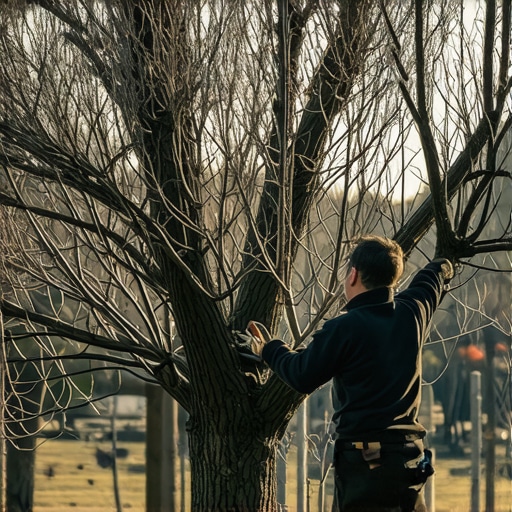
I always drill into my new crew members: if you do not fix the soil grading first, every plant you put in the ground is just expensive compost. It is the same with arboriculture. You can have the sharpest Stihl saw in the county, but if you put it to an oak tree at the wrong time of year, you are not a landscaper; you are a career executioner. I have seen too many hundred-year-old giants turned into firewood because a ‘mow-and-blow’ hack decided to prune in May to clear a power line. That is not just a mistake; it is professional negligence.
The Biological Dead Zone for Oak Pruning
The best time to trim oak trees is during the deep dormant season, specifically from November 1 to February 1, to prevent the spread of Oak Wilt. Pruning during this window ensures that Nitidulid beetles, the primary vectors for the Bretziella fagacearum fungus, are inactive and cannot infect fresh pruning wounds with fungal spores. Don’t risk it in spring.
Oak trees are not like your lawn or your annuals. They operate on a vascular system that is highly sensitive to external pathogens. When you make a cut, the tree bleeds sap. In the spring, when the sap is flowing vigorously, that smell is a dinner bell for Nitidulid beetles. These pests carry the spores of Oak Wilt from infected trees to healthy ones. Once that fungus enters the xylem, it’s a wrap. The tree’s own defense mechanism—tyloses—clogs its vascular tubes to stop the fungus, effectively dehydrating itself to death. It is a biological shutdown. If you are doing a yard cleanup and notice dead branches in an oak during April, leave them alone. Your landscaping aesthetic is not worth the life of the tree.
“Oak wilt is one of the most destructive tree diseases in the United States, killing millions of oaks in 76 states. The fungus invades the water-conducting vessels of the tree, and death can occur within weeks.” – USDA Forest Service Bulletin
How much does temperature affect oak wilt transmission?
Temperature is the primary driver of beetle activity and fungal sporulation. Nitidulid beetles become active once temperatures consistently rise above 50 degrees Fahrenheit. This is why the winter freeze is your only safe harbor. If you live in a region where the ground doesn’t stay frozen, you have to be even more vigilant. In sandy loam soils where irrigation might keep the ground warmer, the window of safety is even narrower.
| Season | Oak Wilt Risk Level | Beetle Activity | Biological Response |
|---|---|---|---|
| Winter (Nov-Feb) | Low | Dormant | Dormant / No Sap Flow |
| Spring (Mar-June) | Extreme | High | High Sap Flow / High Vulnerability |
| Summer (July-Aug) | High | Moderate | Heat Stress / Drought Risk |
| Fall (Sept-Oct) | Moderate | Increasing | Wound Closure Slows |
Integrating Tree Care with Landscaping and Sod Install
When we perform a sod install, I see homeowners wanting to lay turf right up to the trunk of a mature Red Oak. Stop. You are suffocating the root flare. The landscaping around your trees should never involve piling soil or sod against the basal flare. This traps moisture against the bark, leading to crown rot and providing a secondary entry point for pathogens. A proper yard cleanup should involve clearing debris away from the trunk, not burying it under triple-shredded mulch ‘volcanoes’ that hold moisture like a sponge.
Your irrigation system is another silent killer. Most people calibrate their zones for the grass, not the trees. If your sprinkler heads are hitting the trunk of an oak tree every morning, you are creating a localized humid microclimate that fungi love. Adjust those heads. Direct the water to the drip line, where the feeder roots actually live. This is fundamental civil engineering for your yard.
“A tree’s root system extends two to three times the spread of the branches. Compacted soil or improper irrigation within this zone is the leading cause of secondary decline.” – International Society of Arboriculture (ISA)
Can I install sod under a mature oak tree?
Installing sod under an oak is risky because the sod install process often requires tilling or adding topsoil, both of which damage the shallow feeder roots. Furthermore, the high nitrogen requirements of new sod can over-stimulate the tree or cause nutrient runoff that disrupts the soil microbiology. If you must have turf, use a shade-tolerant fescue and avoid any heavy equipment within the drip line to prevent soil compaction.
The Master Arborist’s Pruning Checklist
- Sanitize Everything: Dip your saws and loppers in 70% isopropyl alcohol between every single cut. No exceptions.
- The Three-Cut Method: Never make a single cut from the top. It will tear the bark down the trunk. Use an undercut first, then a relief cut, then the final prune at the branch collar.
- Identify the Branch Collar: Look for the swollen area where the branch meets the trunk. Cut just outside it. Do not flush cut.
- Wound Sealant: While generally discouraged for other trees, oaks are the exception. If you must cut during the high-risk season (due to storm damage), apply a thin layer of latex-based paint or pruning sealer immediately to ‘mask’ the sap scent.
- Debris Removal: Ensure your yard cleanup includes hauling away all oak trimmings. Do not chip them and use them as mulch if the tree was diseased.
Arboriculture is about longevity. If you want a quick fix, go buy a plastic plant. If you want a legacy, you follow the clock. The tree doesn’t care about your weekend schedule. It cares about the frost. Don’t skip the dormant window. It will rot. You’ve been warned.