
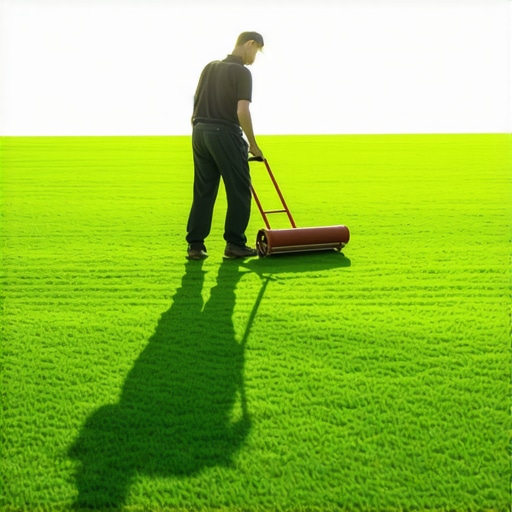
Why Your Lawn Feels Like a Minefield and How Professionals Fix It Without Excavation
To level a bumpy lawn without digging, you must perform systemic topdressing using a custom-blended mix of silica sand and organic compost applied in thin lifts of no more than 1/2 inch. This process fills micro-depressions while allowing the existing turfgrass crowns to grow through the new substrate without suffocating the root zone.
I always drill into my new crew members: if you don’t fix the soil grading first, every plant you put in the ground is just expensive compost. I’ve seen guys spend five figures on high-end sod install projects only to have the homeowner call three months later because the yard feels like a washboard. They didn’t address the sub-grade. They didn’t account for the settling of old irrigation trenches. They just slapped green over brown and hoped for the best. That is not landscaping; that is professional malpractice. When you walk across a lawn and feel that jarring dip in your hip, you aren’t just feeling uneven dirt. You are feeling the ghost of a poorly backfilled utility line or the result of years of hydrostatic pressure shifts. You cannot fix this with a shovel and a prayer. You fix it with physics and the right material ratios.
The Forensic Autopsy of an Uneven Lawn
Before you buy a single bag of material, you have to understand why the ground moved. Lawns aren’t static. They are dynamic biological systems. Bumps usually stem from four main culprits: frost heave, localized dry spots caused by poor irrigation, organic matter decomposition (like a rotting tree root), or soil compaction from heavy foot traffic. If you have a massive sinkhole, stop reading. You have a broken pipe or a stump rotting out. You need a backhoe. But for the standard ‘ankle-breaker’ lawn, topdressing is the surgical solution.
“A lawn’s surface uniformity is more critical for long-term turf health than its nutrient profile, as micro-low spots collect water, leading to anaerobic conditions and fungal pathogens like Pythium blight.” – Agronomy Manual for Professional Turf Managers
The Science of Topdressing Materials
You cannot just throw ‘dirt’ on a lawn. Most homeowners make the mistake of using bagged topsoil from a big-box store. That stuff is trash. It’s full of weed seeds and wood chips that will rot and create more bumps in two years. Professionals use a specific ratio of masonry sand and screened compost.
| Material Type | Primary Function | Best Use Case | Bulk Density (lbs/cu yd) |
|---|---|---|---|
| Masonry Sand | Structural leveling; resists compaction | High-traffic areas; heavy clay soils | 2,600 – 2,800 |
| Screened Compost | Nutrient injection; microbial life | Sandy soils; nutrient-deficient turf | 1,000 – 1,200 |
| 70/30 Blend | The Industry Standard | General residential leveling | 1,800 – 2,100 |
The Step-by-Step Leveling Protocol
First, you must scalp the lawn. Drop your mower height to the lowest setting without hitting the dirt. This exposes the high and low spots. Next, you perform a deep core aeration. This is non-negotiable. If you put new soil on top of compacted old soil, you create a perched water table. The roots won’t cross the boundary. They will sit in the new layer, get lazy, and die during the first heatwave.
- Scalp and Bag: Remove all clippings to clear the path to the soil surface.
- Core Aeration: Use a machine that pulls 3-inch plugs. Leave the plugs; they are part of your new leveling mix.
- Material Distribution: Drop your 70/30 mix in small piles across the yard.
- The Leveling Rake: Use a 36-inch or 48-inch steel leveling rake. This isn’t a garden rake. It looks like a flat ladder. Drag it in a circular motion.
- The Finish: Use a push broom to work the material down into the thatch.
How much modified gravel do I need for a patio base?
While this guide focuses on turf, if your bumps are near a hardscape, the answer is usually ‘more than you think.’ For a standard pedestrian walkway, you need a minimum of 4 inches of compacted 21A or CR-6 modified stone. If you are leveling turf that meets a patio, ensure your soil grade sits 1 inch below the paver edge to prevent water from backing up under the stone. Water is the enemy of every structure I build.
The Contrarian Truth About Sand on Clay
Internet ‘experts’ will tell you that putting sand on clay soil creates concrete. They are wrong, but only if they do it halfway. If you just sprinkle a little sand, yes, it fills the pores and hardens. But if you amend heavily—meaning you replace the volume of the soil profile with a high percentage of sand—you create a modified rootzone similar to a USGA golf green. This provides superior drainage and a surface that stays level for decades. It requires commitment, not a light dusting.
Can I level my lawn with just sand?
Only if you are prepared to manage the NPK (Nitrogen, Phosphorus, Potassium) levels like a chemist. Sand has zero Cation Exchange Capacity (CEC). It holds no nutrients. If you level with 100% sand, your lawn will look like a beach unless you are spoon-feeding it liquid fertilizers and biostimulants every two weeks. For the average homeowner, the 70/30 sand/compost mix is the safest bet. The compost provides the chemical buffer that the sand lacks.
“Surface leveling via topdressing must be synchronized with the active growth phase of the specific grass species to ensure rapid recovery and prevent crown smothering.” – Penn State Center for Turfgrass Science
The Post-Leveling Recovery Phase
Once the material is down, you have to water. Not a light mist. You need to settle the particles into the voids. This is where your irrigation system earns its keep. Check for coverage gaps. Any spot that stays dry will see the new grass seedlings (if you over-seeded) or the existing turf scorch. Expect the lawn to look like a brown mess for 14 days. Don’t panic. That is the biological price of a flat yard. If you did it right, the grass will push through, stronger and more level than before. Don’t mow for at least two weeks. Let the roots anchor into that new material.
Landscaping isn’t about the day you finish; it’s about how the yard looks three years later. If you skip the aeration or use cheap soil, you’ll be right back here next spring with the same bumpy mess. Do it once. Do it right. Stop buying cheap dirt.