
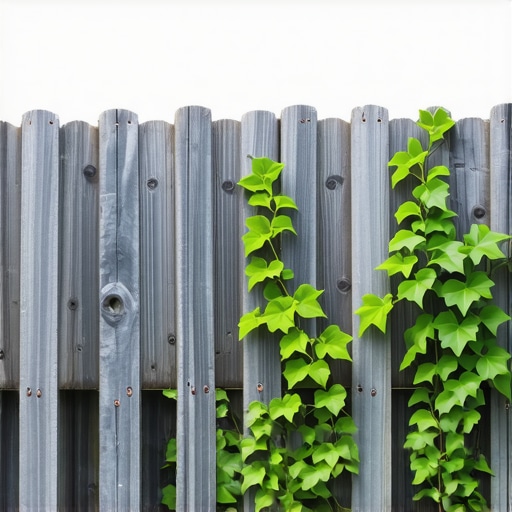
The Anatomy of an Infestation: When Your Fence Line Becomes a Biohazard
You see the glossy three-leaf clusters reaching through the chain link or scaling your cedar pickets, but by the time you notice it, the battle is already halfway lost. Poison ivy (Toxicodendron radicans) isn’t just a nuisance; it is a persistent, woody perennial that integrates its root system into the very structure of your yard. I have seen homeowners try to tackle this with a weed-whacker, only to end up in the emergency room because they aerosolized the urushiol oil. Clearing a fence line requires a surgical approach, not a brute-force one. If you rush it, you fail. Period.
The Chemical Nightmare: A Cautionary Tale
A homeowner called me in a panic last summer after they completely torched their front lawn by applying a ‘homemade’ remedy they found on a forum. They had mixed high-concentration industrial vinegar with salt and dish soap to kill the ivy on their fence. While it desiccated the leaves, the salt leached into the soil, creating a localized dead zone where no sod install could survive for years. Worse, the poison ivy roots remained untouched, and the plant pushed out new growth within three weeks. They had effectively salted their own earth while the enemy thrived. They didn’t understand that poison ivy is a structural problem that requires systemic solutions, not surface-level scorched earth tactics.
“The presence of urushiol in all parts of the Toxicodendron plant means that even dead vines can cause severe dermatitis for up to five years.” – USDA Forest Service Manual
How to Identify Poison Ivy vs. Lookalikes
Identifying poison ivy involves looking for three distinct leaflets, a lack of thorns, and aerial rootlets that give the vine a ‘hairy’ appearance on older growth. Common lookalikes like Virginia Creeper have five leaves, while Boxelder seedlings have opposite branching, whereas poison ivy branches are alternate. If you see ‘hairy’ vines climbing your fence, that is a 10-year-old plant capable of producing massive amounts of oil. Do not touch it with bare skin. Even the dormant vines in winter are loaded with urushiol. I tell my yard cleanup crews that if they aren’t 100% sure, they treat it like a chemical spill. Safety is non-negotiable.
The Fast Way to Clear Poison Ivy (Chemical vs. Mechanical)
The fastest way to clear poison ivy involves a targeted systemic herbicide application followed by a mandatory waiting period for the chemical to translocate to the root system. You cannot just rip it out and expect it to stay gone; the rhizomes will simply sprout new stems from the nodes left behind in the soil. You need to hit it when the plant is actively transporting sugars to the roots. This usually happens in late spring or early fall. Using a 41% glyphosate concentrate or a triclopyr-based brush killer is the standard for professional landscaping remediation. Don’t spray wildly. Use a cardboard shield to protect your fence and desirable plants.
How much modified gravel do I need for a patio base?
While unrelated to ivy, this is a common landscaping question: for a standard 4-inch base, you need roughly 1 ton of modified gravel (2A or CR6) for every 50 square feet. Proper compaction of this base is the only way to prevent the settling that allows weeds and vines to eventually penetrate your hardscape boundaries.
Can I pull poison ivy out by hand?
You can only pull poison ivy by hand if you are wearing full-body PPE and the soil is saturated enough to allow for complete root extraction. If you snap the root, the plant wins. Use a grubbing tool to get under the main taproot and lift. Never use a string trimmer; it flings the oil onto your clothes, skin, and the fence itself. Once the oil is on the fence, it stays there. I have seen guys get rashes months later just by leaning against a fence they thought was ‘clean’.
| Removal Method | Speed of Defoliation | Root Kill Rate | Risk Level |
|---|---|---|---|
| Manual Extraction | Instant | Low (if roots break) | High (Physical contact) |
| Systemic Herbicide | 7-14 Days | High | Moderate (Drift) |
| Steam/Heat Treatment | Hours | Zero | Low |
| Vinegar/Salt | Days | Zero | High (Soil damage) |
The Professional Eradication Protocol
If you want the ivy gone for good, follow this sequence. First, suit up. Tyvek suit, nitrile gloves taped to the sleeves, and eye protection. If you are working near irrigation lines, be careful not to puncture the PVC while digging. Second, apply your systemic herbicide directly to the leaves. If the vine is too thick, use the ‘cut-stump’ method: cut the vine and immediately paint the 41% glyphosate onto the fresh wound. This forces the chemical into the vascular system. Third, wait. Let the plant turn brown and brittle. This takes at least two weeks. Only then do you remove the dead debris. Dispose of it in heavy-duty plastic bags. Never, ever burn it. Inhaling poison ivy smoke can cause systemic internal reactions that are life-threatening.
“Effective control of woody perennials requires translocation of the active ingredient to the root system during the late summer or early fall downward flow of carbohydrates.” – Penn State Extension
Post-Removal: Fence Maintenance and Soil Restoration
Once the ivy is gone, the work isn’t over. You need to prevent re-infestation. Birds eat the berries and drop seeds along your fence line constantly. A thick layer of wood chips or a sod install can provide enough ground cover to discourage new seedlings. If the fence is wooden, check for structural damage. Ivy roots secrete an adhesive disc that can rot cedar and pressure-treated pine over time. Power wash the fence with a degreasing agent like Tecnu or Dawn to remove residual oils. Keep an eye on your irrigation spray patterns; excess moisture on the fence line creates the humid micro-climate that poison ivy loves. Stay dry. Stay vigilant.