
The Fundamentals of Debris Logistics
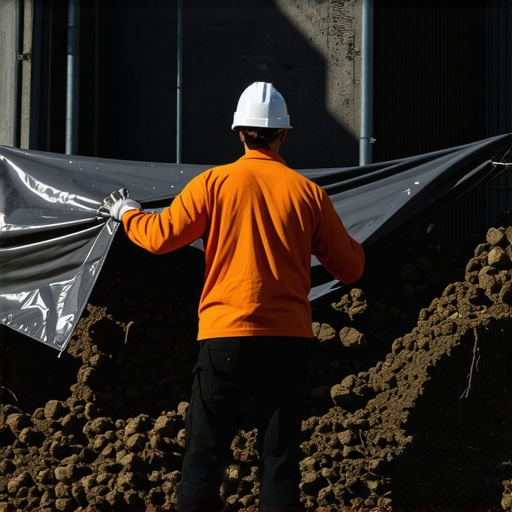
Moving massive amounts of organic debris solo is not a matter of brute force; it is an exercise in applied physics and mechanical advantage. I always drill into my new crew members: if you don’t fix the soil grading first, every plant you put in the ground is just expensive compost. This logic extends to the very first phase of any landscaping project, which is the site cleanup and debris removal. If you spend your energy fighting gravity with a wheelbarrow, you will have nothing left for the precision work of sod install or irrigation calibration. A professional approach treats the yard as a construction zone where efficiency dictates the profit margin and the health of the soil. [IMAGE_PLACEHOLDER]
Why the Tarp Tactic Beats Conventional Equipment Solo
The tarp tactic utilizes a large surface area to distribute the weight of yard cleanup debris, effectively lowering the coefficient of friction and preventing the soil compaction caused by narrow wheelbarrow tires. While a standard contractor-grade wheelbarrow holds about 6 cubic feet of material, a 10-mil heavy-duty polyethylene tarp can move 20 to 30 cubic feet of light brush or leaves in a single pull. This is a game of bulk density. Dry oak leaves have a low bulk density, whereas wet soil or sod scraps have high bulk density. You must adjust your load based on the material’s moisture content to avoid spinal strain or tarp failure.
How much weight can a heavy duty tarp hold?
A professional-grade 10-mil tarp can typically handle a tensile load of 50 to 100 pounds per inch of width. For a solo operator, the limit is rarely the tarp’s strength but rather the frictional resistance against the turf or soil. On a standard fescue lawn, a solo operator can generally pull 150 to 200 pounds of debris without specialized equipment. If the ground is wet, that capacity drops significantly as the tarp creates a vacuum effect against the mud. Use the envelope fold method: lay the debris in the center, fold the corners toward the middle, and use a 1-inch diameter braided nylon rope as a haul line. Don’t use cheap twine. It will snap.
“Surface drainage is the most important factor in the success of any hardscape or turf installation. Without proper site preparation and debris removal, the soil cannot be graded to the required 2 percent slope away from structures.” – University of Massachusetts Amherst Center for Agriculture
The Physics of Friction and Ground Pressure
When you use a wheelbarrow, the entire weight of the load is concentrated on a single 4-inch contact patch of rubber. This creates high ground pressure, often exceeding 30 PSI, which crushes the macropores in the soil and kills the microbial activity necessary for plant health. By contrast, a tarp spreads that weight over 50 or 100 square feet. This is why we use tarps even on high-end sites where we have access to a skid-steer. The machine leaves tracks; the tarp leaves nothing. When performing a yard cleanup, your goal is to minimize the footprint of your movement. Deep compaction is the enemy of a successful sod install. If you compress the soil now, the roots of your new grass will hit a brick wall of clay three inches down. It will die.
| Material Type | Bulk Density (lbs/cu.yd) | Solo Tarp Capacity (Estimated) | Wheelbarrow Trips Equivalent |
|---|---|---|---|
| Dry Leaf Litter | 250-300 | 4.0 Cubic Yards | 18 Trips |
| Green Brush/Prunings | 400-500 | 1.5 Cubic Yards | 7 Trips |
| Wet Soil/Old Sod | 2,200-3,000 | 0.1 Cubic Yard | 1 Trip |
How do you move 10 yards of mulch by yourself?
Moving 10 yards of mulch solo requires a staging strategy. Do not move the entire pile to the furthest point first. Instead, use the tarp to move large ‘batches’ to central nodes in the landscape. This reduces the ‘return trip’ time. For mulch, use a 12×16 tarp. Shovel the mulch onto the center until it is 18 inches deep. Pulling this load requires a low center of gravity. Keep your back straight and pull with your legs. If the terrain has a slight incline, you must use a winching point or a small lawn tractor. Never pull a heavy tarp uphill solo. You will blow out a disc.
Integrating Irrigation and Site Preparation
During a massive yard cleanup, you must be hyper-aware of existing irrigation components. I have seen countless DIYers and cheap contractors snag a tarp corner on a protruding pop-up sprinkler head and rip the entire lateral line out of the ground. Mark your heads with flags before you start dragging. If you are prepping for a new sod install, this is the time to check your coverage. Once the debris is cleared and the grading is set, run the system. Check for ‘donuts’ or dry spots. It is significantly cheaper to fix a broken pipe now than it is to cut into a freshly knitted lawn in three months. Check your pressure. Most rotors need 30 to 50 PSI to oscillate correctly.
“A retaining wall doesn’t fail because of the stone; it fails because of the water trapped behind it. Similarly, a lawn fails because of the compaction trapped beneath it.” – Hardscape Engineering Axiom
The Professional Checklist for Solo Site Clearing
- Identify all 811 utility markings and irrigation zones before dragging heavy loads.
- Use 10-mil polyethylene tarps or heavy canvas. Avoid the blue ‘economy’ tarps; they shred on contact with twigs.
- Apply the ‘Envelope Fold’ to prevent debris from spilling during transport.
- Monitor soil moisture. If the soil is at field capacity, wait 24 hours to avoid surface Smearing.
- De-thatch the area immediately following debris removal to open the soil for sod install.
Soil Health and the Final Grade
Once the debris is moved, the real work begins. You are not just ‘cleaning’; you are preparing a biological bed. Most people think sod install is like laying carpet. It is not. It is a transplant surgery. The soil pH should be between 6.0 and 7.0 for most cool-season grasses. If you just cleared a forest of pine needles, your soil is likely acidic. You need to apply pelletized lime. Use a drop spreader for accuracy. After the tarp has done its work, go over the area with a core aerator. This relieves any minor surface compaction. If you skip this, the irrigation water will just sheet off the surface instead of penetrating the root zone. Deep, infrequent watering is the key. You want the roots to chase the water down into the profile. One inch of water per week, applied in two sessions, is the gold standard for established turf.
The Long-Term Impact of Mechanical Compaction
The damage from heavy machinery or repeated wheelbarrow traffic is often invisible until the first heat wave of July. Compaction restricts oxygen exchange. Roots need to breathe. When you use the tarp tactic, you are preserving the soil structure. You are ensuring that the pore space remains open for water and air. This is the difference between a lawn that survives and a lawn that thrives. Don’t be a hack. Respect the dirt. The physical labor of the yard cleanup is the foundation for everything that follows. If the foundation is compacted and dead, the landscaping is doomed from day one. Do the work. Use the right tools. Keep the soil alive.